
099. A Baoli At Khura (Soon Valley), District Khushab
A Baoli is a stepwell, where steps lead to the water level, so man or beast can reach the water directly without using any mechanism to draw the water to the surface. Stepwells are found almost all over the world, especially in Asia, the Middle East, and Europe, but are most popular in South Asia. Mr. Philip Earis manages a wonderful website on this subject, which shows not only the pictures of Baolis but also their exact location on a Google map. You can visit this website at the following link: http://stepwells.org/atlas.php?cmbm=1
According to this website, more than two thousand stepwells exist in the world, an overwhelming number of them in India. Mr. Earis has included step ponds as well in this category. In Pakistan, around two dozen such wells are located. According to my knowledge, most of them are stepwells and in reasonably good condition. Excluding ponds, the number of actual stepwells in Pakistan would be around fifteen. I have seen those at Jandiala Sher Khan, Rohtas Fort, Wah Cantt, and Wan Bhachran. Except for the last one, the others are in good condition and well preserved.
My fifth Baoli was an unexpected discovery. My cousin, Sahibzada Shah Sultan, one day told me of a Baoli near his maternal grandfather’s village, Khura. He had just heard about it vaguely. Despite going frequently to that area, he had never seen it or met someone who could confirm its existence. So I was skeptical about this information.
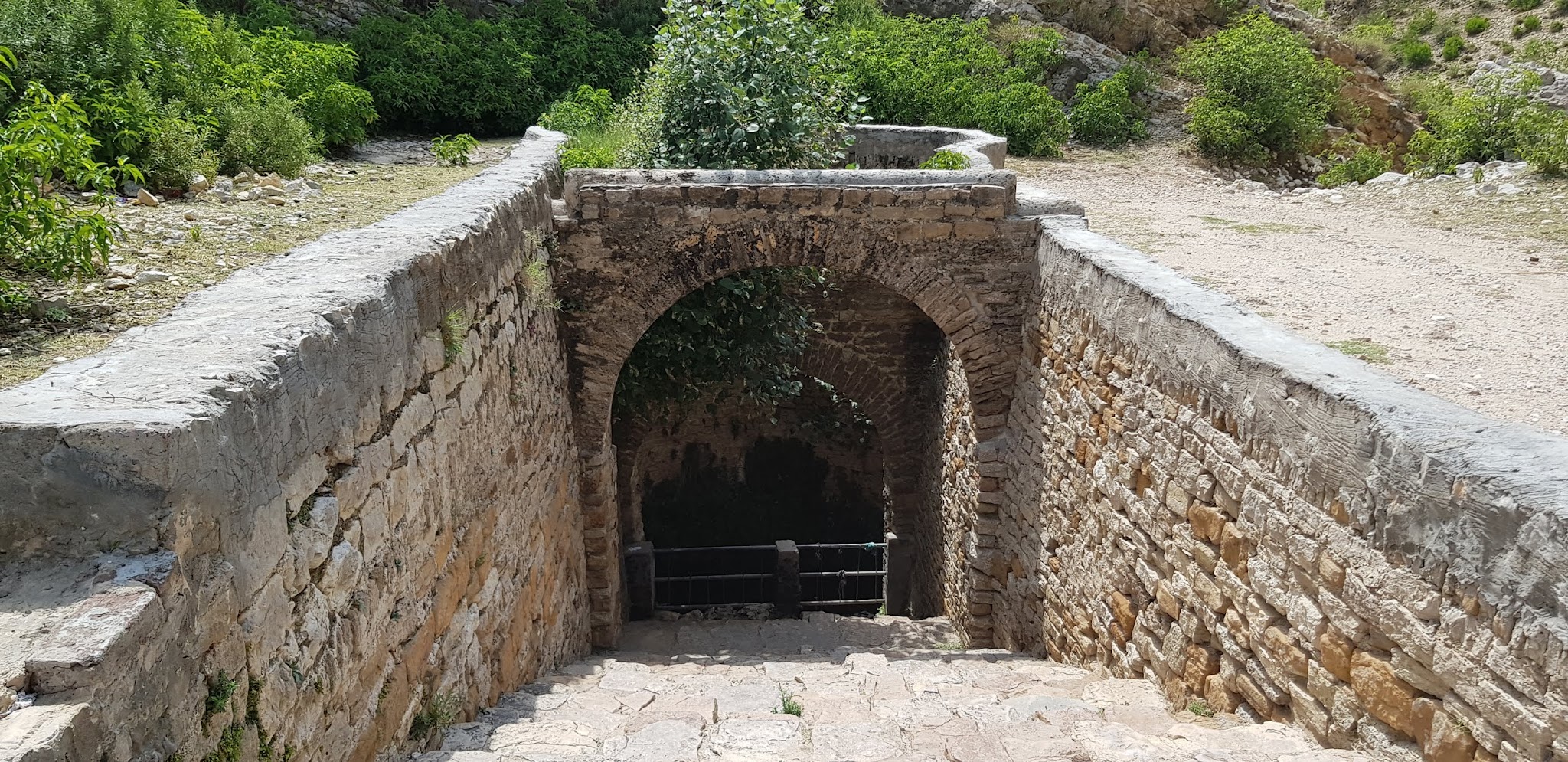
We reached Khura at noon, and the heat and humidity were unbearable. First, we took a local friend with us as our guide. Despite being a resident of Khura, he too had only heard about the Baoli, less than a kilometre away from his home, which, obviously, diminished any chances of making a substantial discovery in my eyes. Anyway, a pleasant surprise was waiting for us. We not only discovered a big stepwell, but contrary to my expectations, its condition was also very good.
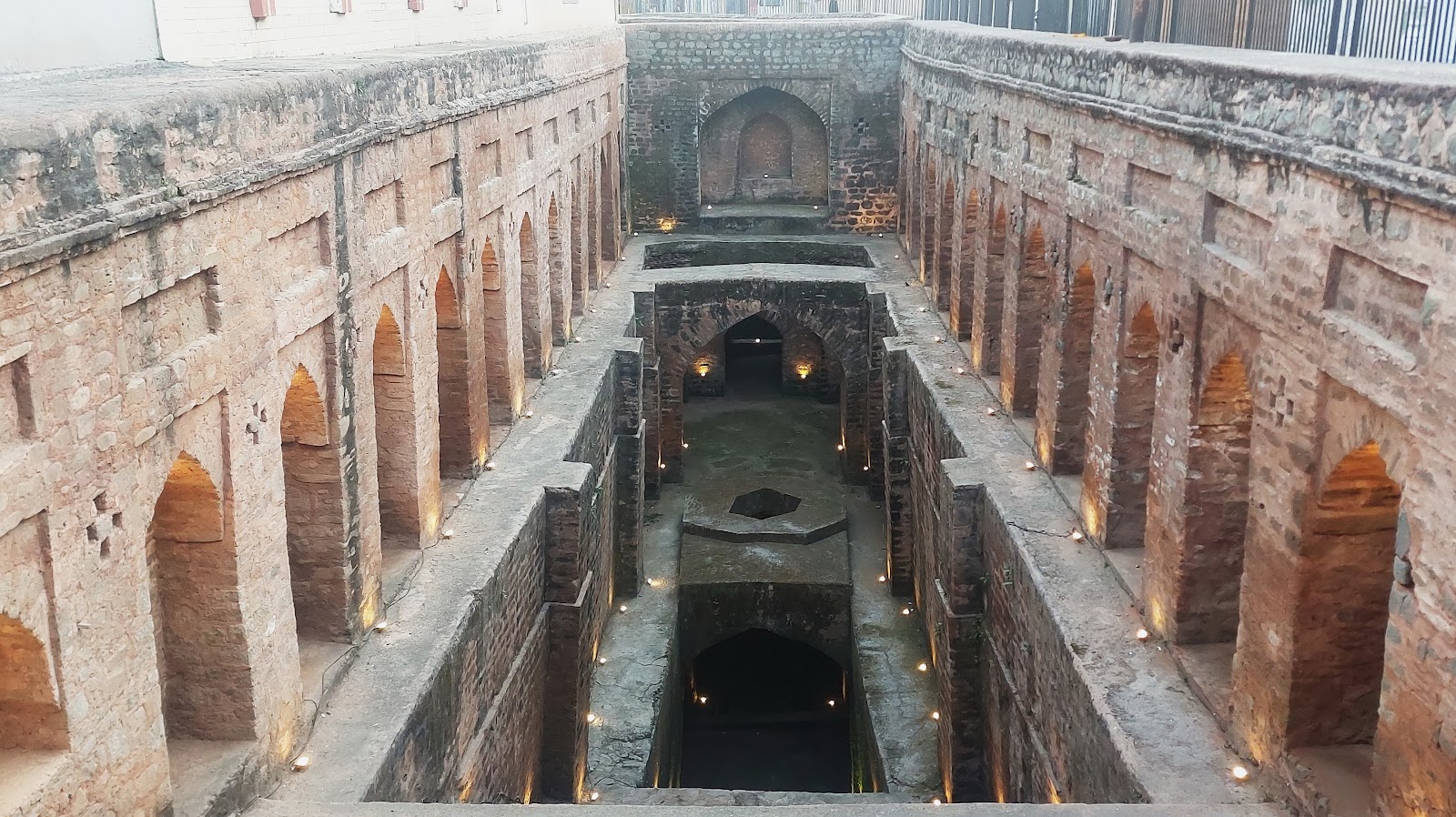
We also found water in this well-preserved Baoli. However, it was evident that it is not frequently used. The walls and stairs are made of hewn stones, and lime has probably been used as mortar. It is situated in a small valley, with a stream passing through it. Due to its natural beauty, the place itself is worth visiting. The baoli is located at: 32°31’54.32″N, 72°12’53.10″E.

A Baoli near Khura, Soon Valley. (15.07.2019.)

Looking down the baoli. (15.07.2019.)

Downstairs, at the water level. (15.07.2019.)

A view from the right side. (15.07.2019.)

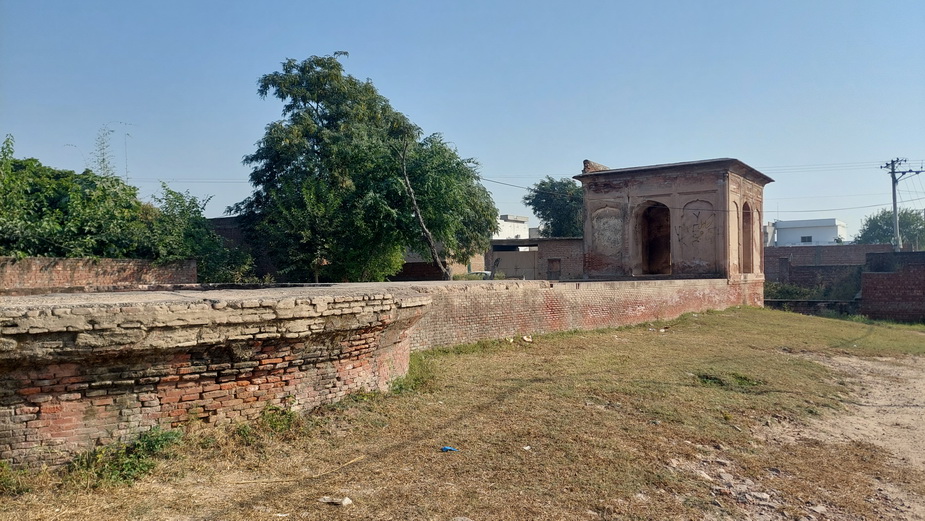
The boundary of the well. (15.07.2019.)

A small water tank to water the cattle. (15.07.2019.)

A view from a nearby hill. (15.07.2019.)

The front side of the baoli. (15.07.2019.)

Ibrahim Tariq. (15.07.2019.)

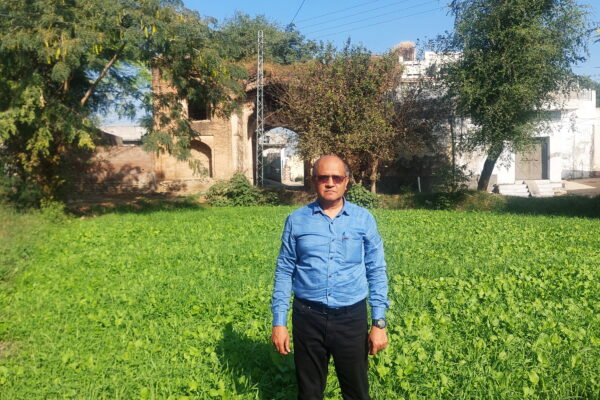
Tariq Amir. (15.07.2019.)

Ibrahim Tariq & Azim Sultan. (15.07.2019.)

Looking down the well. (15.07.2019.)

Stairs in the baoli. (15.07.2019.)

Stairs leading to the water level. (15.07.2019.)
A baoli, in some Indian dialects, is also called baori or baodi. In Pakistan, in some areas, it is called Wan, like Wan Bhachran and Wan Tarap. These two places, in District Mianwali and District Attock, respectively, are named after the baolis that exist there.
The Government of Punjab is trying to promote tourism in the Soon Valley, exploiting its natural beauty. Indeed, it can be a popular tourist destination due to its beautiful lakes, lush green valleys, and gardens. It is a paradise for hiking and trekking. Along with these attractions, the Soon Valley has many historically important places, such as the ancient temples at Amb, the ruins of an ancient city at Tulaja, a fortified place at Akrand, Buddhist sites, and, not to forget, this little baoli. All these places, along with the natural wonders of this valley, can make it a popular tourist destination.
Tariq Amir
September 4. 2019.
Doha – Qatar.
For related posts, visit:
081. Jandiala Sher Khan (An Old Baoli & A Mosque)
150. Losar Baoli at Wah & a baoli at Hattian (District Attock)
162. Shah Bagh Baoli, district Rawalpindi.