138. Delhi: When it was a district of Punjab
For some readers, this title would be intriguing. After all what Delhi, the
capital of India for many centuries, has to do with Punjab. Moreover, in the popular imagination, Delhi and Punjab do not have much common in language and
culture (that’s too is a misconception). But there is one close connection, which I would try to explain below.
The battle of Plassey in 1757 was probably the most
important milestone in the history of the British conquest of India. Victory at
Plassey provided East India Company a vast and a strong foothold in India in
the shape of Bengal. Economically the most prosperous and populous subah of
Bengal, that also included Bihar and parts of Orissa. In 1764 this occupation
was formalized when EIC defeated the combined forces of Mir Qasim the Nawab of
Bengal, Nawab Shuja ud Daula of Awadh and Shah Alam the Mughal Emperor. Shah
Alam at the mercy of the British had no option but to sign a treaty under which
he granted the East India Company Diwani of this subah, that is the right to collect
revenues in Bengal and administer it as they pleased. That was the formal
inauguration of the British Rule in India. State of Awadh (Oudh), one of the
biggest in India, too came under the influence of EIC.
The victory against Tipu Sultan in 1799 tilted the
balance of power in India in favour of EIC. In 1801 the company forced
Nawab Saadat Ali Khan of Awadh to cede Lower Doab and Rohilkhand to EIC, more
than half the territory of the richest state in India. Now the road to Delhi,
which was under the protection of Marathas, was open and was captured just two
years later in 1803 after their defeat in the Second Anglo-Maratha War. Along
with Delhi city, many districts to the west and north of the city came under
the control of EIC. These territories were named Delhi territories and were
made part of North-Western Provinces or NWP, with capital at Agra. The same
province was renamed the United Provinces of Agra and Oudh, after the
annexation of Oudh in 1856.

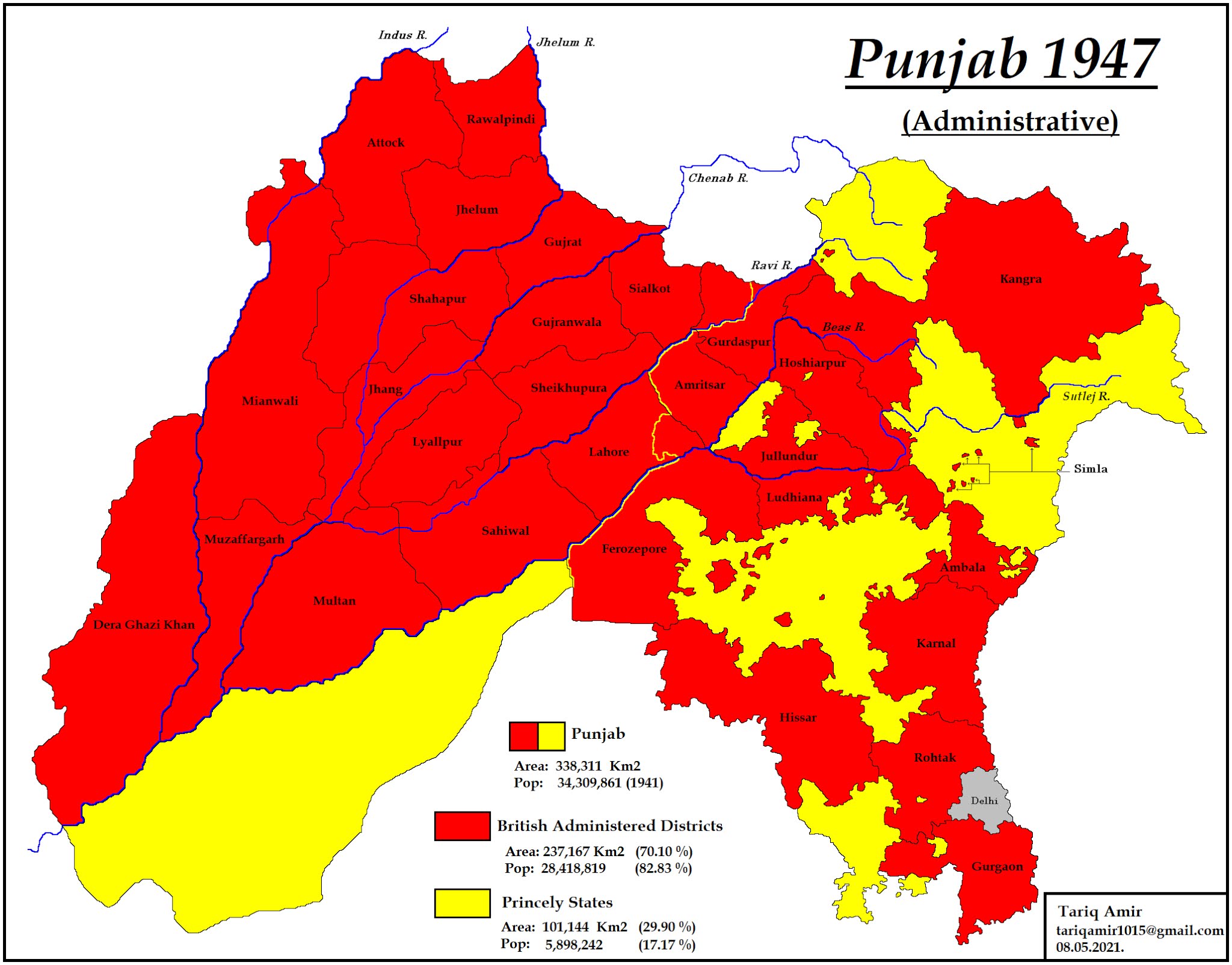
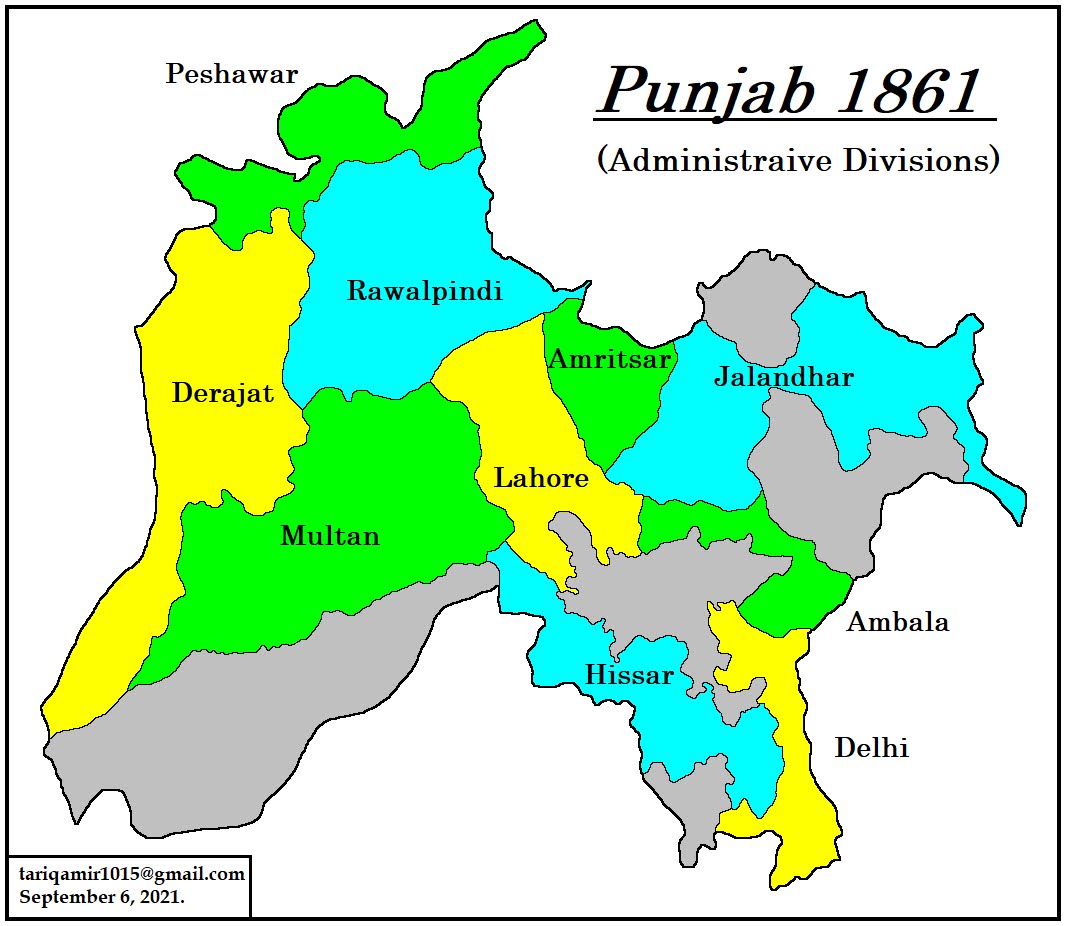
Punjab 1861 (Delhi territories roughly comprised of Delhi and Hissar divisions)

Punjab 1890 (NWFP still was the part of Punjab)
This arrangement continued until 1857, when almost
out of blue a mutiny broke out in the Bengal Army (as the largest part of the
EIC army in India was called) and Delhi fell to the rebels on 11 May 1857. The city
was recaptured by the English forces in September the same year, and the
control of other lost areas was also regained over the next year. After restoring law and order and
re-establishing control over the city and the surrounding areas, the British
authorities made some administrative changes and made Delhi and the
adjoining territories, part of Punjab. This new arrangement continued until
1911, when the government of India decided to shift the capital of India from
Calcutta to Delhi. At that point, Delhi was detached from Punjab and made a union/capital
territory. Hence, it is an interesting fact of history that Delhi was a part of
Punjab for almost half a century.

Punjab 1901 (After the separation of NWFP)

Punjab 1911 (The year Delhi was separated from Punjab)
As the city was administratively part of Punjab,
so Punjab government and Punjabi contractors played an important part in the
construction of new buildings and infrastructure for the new capital. One such
example is of Sardar Sobha Singh (father of Khushwant Singh), a successful contractor
from Hadali, district Khushab (then Shahpur). He constructed many landmarks of
New Delhi like Connaught Place and India Gate. During this phase, many Punjabis
came to Delhi and settled here. The next wave of settlers from Punjab came in
1947 when Sikhs and Hindus had to flee West Punjab and many of them were
settled in Delhi.
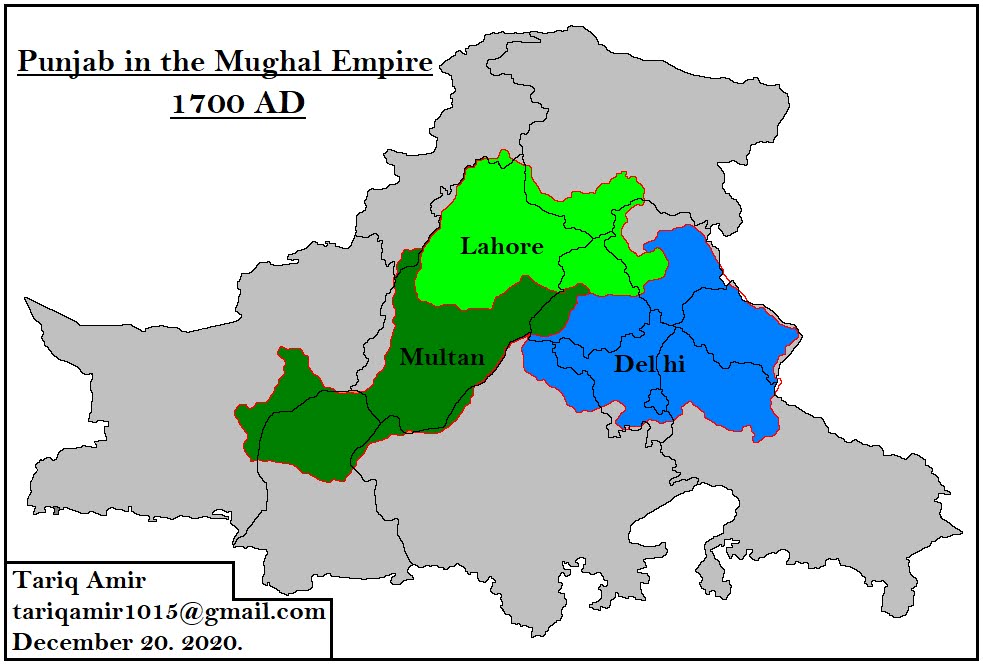
Once Lahore, Delhi, and Agra were considered three
imperial cities of the Mughals and Delhi was the most prominent of all three.
But ironically first it was ruled from Agra for half a century and then for
almost the same period from Lahore. However, it regained its lost glory in 1911, and still, it is the capital of the independent Republic of India and one of its
most important cities.
For the interest of my readers, I am sharing the census of 1911 figures for Punjab، the last census before Delhi was separated from Punjab and made the capital territory.

Census figures of Punjab for the year 1911.
(For the better view download the image or visit the following link)
https://docs.google.com/spreadsheets/d/1rE5IwTBfDRrNQk63xx7GBBsFKOzeO96-hBSyuYFocDs/edit#gid=0
I took the figures from the official census report of Punjab for the year 1911. The screenshot is given below and it is available on archive.org:

For the geographical details of the states you may visit my following post:
https://pakgeotagging.com/2021/05/137-princely-states-of-punjab.html
Tariq Amir
October 12, 2021.
Islamabad.