
175. Baoli of Mir Aslam Khan Khattak
I was vaguely aware of the existence of a Baoli (a
stepwell) along the GT Road somewhere around Jehangira for a long time.
Gradually, the picture became clearer, and I found its location on Google Earth
and marked it on the map for my visit.
The chance to visit it came on July 30, 2025. Despite having the help of Google
Maps, we faced some difficulty in reaching it, especially inside the town of
Shaidu. I have attached a Google map at the end for your convenience.
All I knew about the Baoli was that it was known as
Aslam Khan Khattak’s Baoli. I also presumed that it must be two or three
centuries old, as I was under the impression that the construction of Baolis
stopped sometime around the early 1800s. But it is clear that the construction
of Baolis continued for some more decades, though perhaps on a much smaller
scale. This Baoli too is comparatively very small. It is located 6 km west of
Shaidu, at 33°57’58.00″N, 72°7’58.41″E.

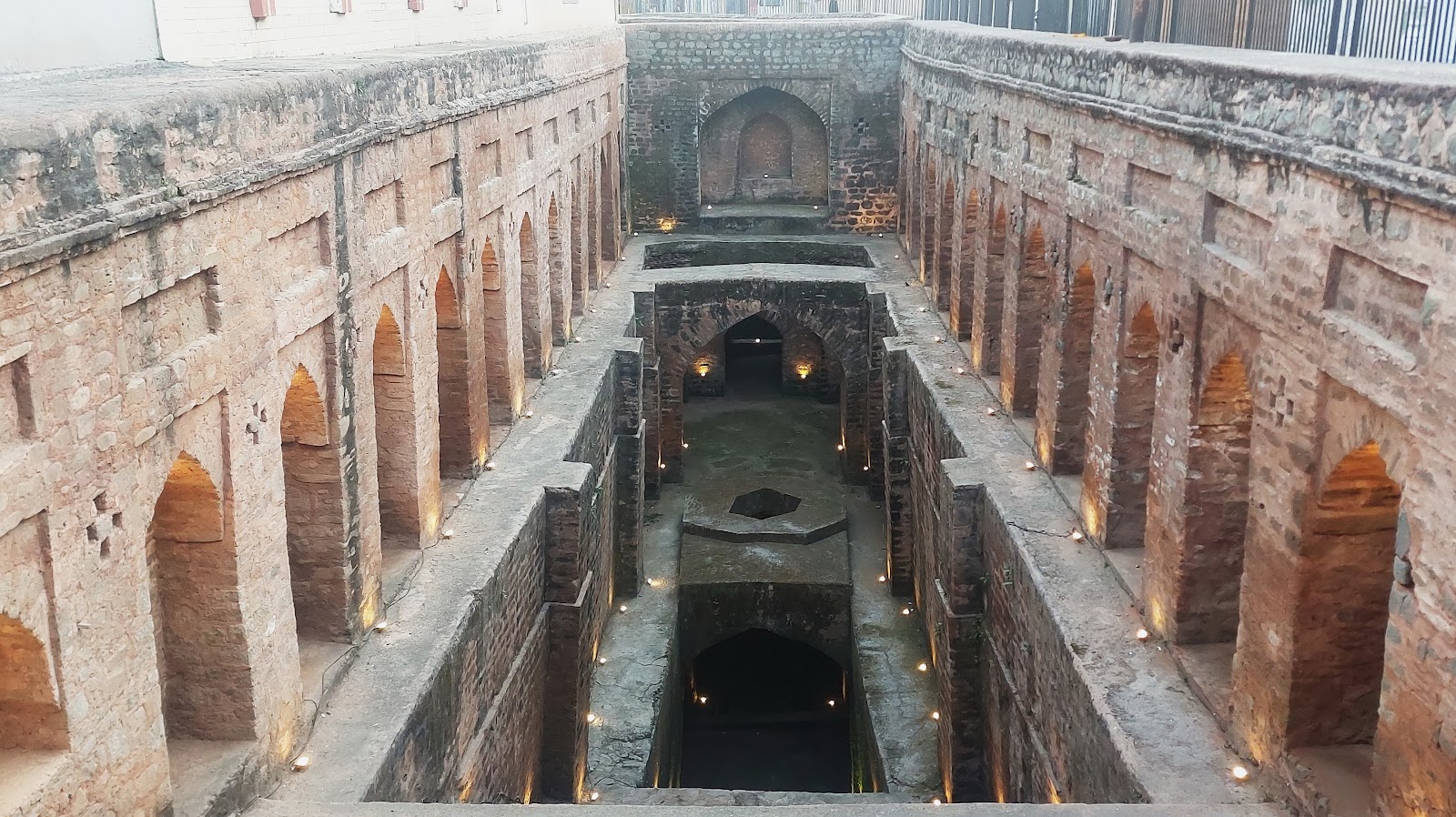
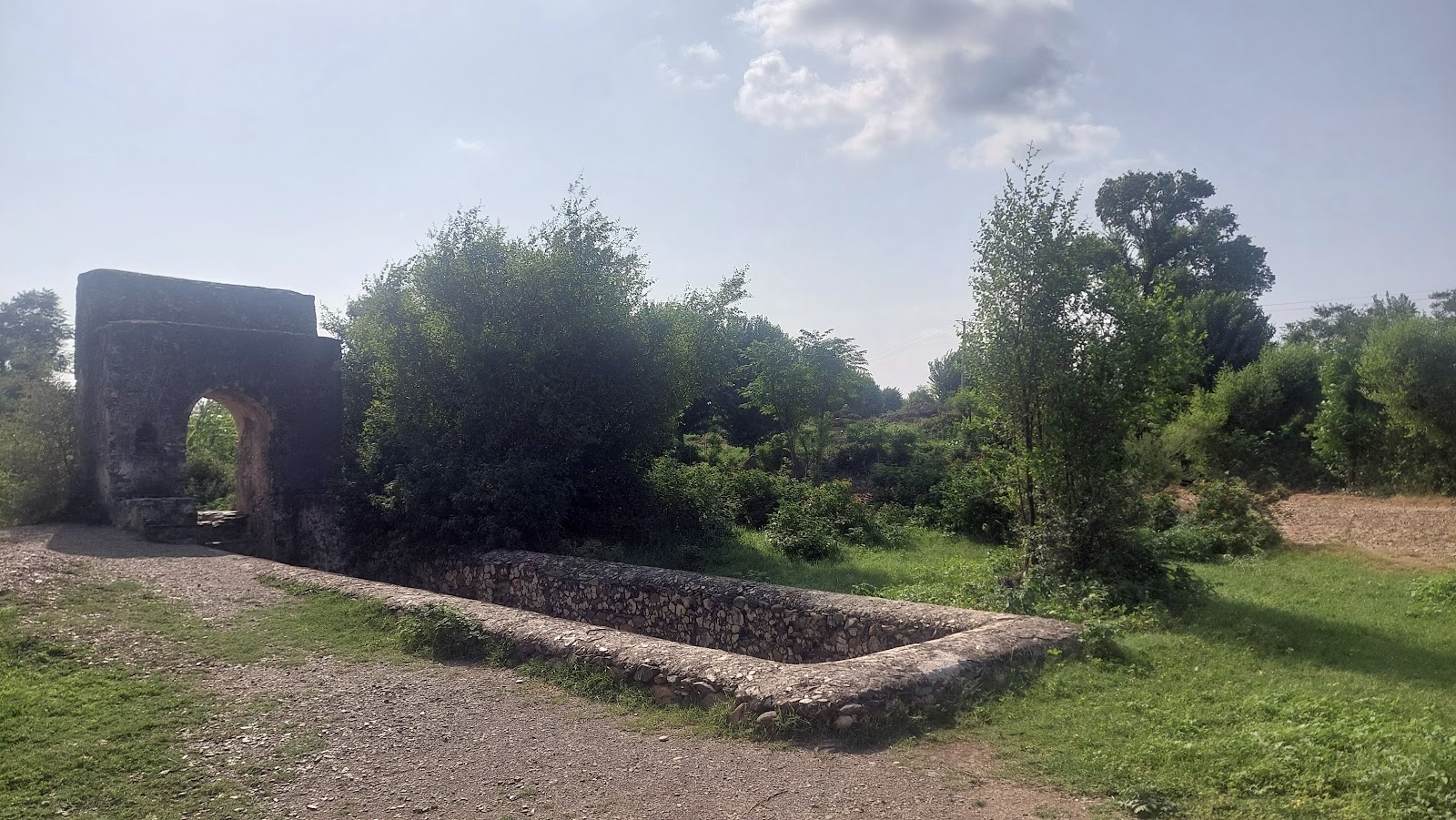
Baoli of Mir Aslam Khan. (30.07.2025.)

Entrance of the Baoli. (30.07.2025.)
It occurred to me that I should begin my research on the Baoli with the person after whom it is named, Aslam Khattak. This led me to the discovery of a remarkable figure, Mir Aslam Khan Khattak, on a website named Khattaknamah. In the words of the article on this website:
Khan Mir Aslam Khan Khattak was a famous social worker and Civil Contractor
and great human ideal, who struggled to survive at time of difficulties. What he
has done for people of his area is unprecedented. Mir Aslam Khan was born in
1841 into the Khan Khel Khattak tibe of the village Shaidu, tehsil Nowshera, district
Peshawar of the then British India. The village Shaidu is now a bustling town
of 75,000 people, in the Nowshera district of Khyber Pakhtoonkuhwa, Pakistan.
Mir Aslam Khan Khattak was 7th in descent of Khushal Khan Khattak
(1613 – 1689) who was a prominent Pashtun malik, poet, warrior, a charismatic
personality and tribal chief of the Khattak tribe.

Another view of the Baoli. (30.07.2025.)

The well of the Baoli is to the far right. (30.07.2025.)
The same article informs us that Aslam Khan was a
contractor and first worked on the construction of the Sukkur–Quetta railway
line. Later, he moved to central India and worked on different railway projects
around Nagpur. He also constructed the General Post Office of Nagpur city,
which is now considered an important heritage building. In addition, he worked
on irrigation projects at Ramtek, near Nagpur (both were in the Central
Provinces at that time, now in Maharashtra). This project continued between
1906 and 1913.
Besides being a hardworking and honest contractor, he
was a philanthropist at heart. Welfare projects for ordinary people were very
close to him, especially those related to drinking water. Hence, he built many
ponds and baolis around Nagpur and in his native area, Shaidu.

L to R: Ibrahim Tariq Ansari & Iftikhar Ahmad Bhatti. (30.07.2025.)

Stairs lead to the water. (30.07.2025.)

Looking down the well. (30.07.2025.)
Today, most of these wells or mosques have been lost. But
this baoli survives till today. It was constructed between 1895 – 1905, to
provide water to the travellers between Shaidu to Ziarat Kaka Sahib. And for
this purpose, he called an architect from Nagpur, as the locals were not familiar
with the art of Baoli construction. The writer of this post on on Khattaknamah,
gives the following account of the construction and design:
As there was not concept of baolis at
that time, Khan Mir Aslam Khan sent an architect from Nagpur, British India. The
architect easily designed the Baoli for him and construction began near his
village, under the supervision of his elder son, Ghulam Nabi Khan. Mir Aslam
Khan Baoli is designed beautifully and is divided into two parts. On the left
side, it has a deep water well, which about two to three storeys deep, and on
the other side, there are more than 50 stairs, which provide access to ground
water of the Baoli.
Mir Aslam Khan led a simple yet honourable life. In addition to undertaking welfare projects to improve the lives of ordinary people, he also contributed to the fields of health and education. For his good work and noble conduct, the people of this area still remember him with deep respect. To learn more about his many works and achievements, I recommend reading the full article.

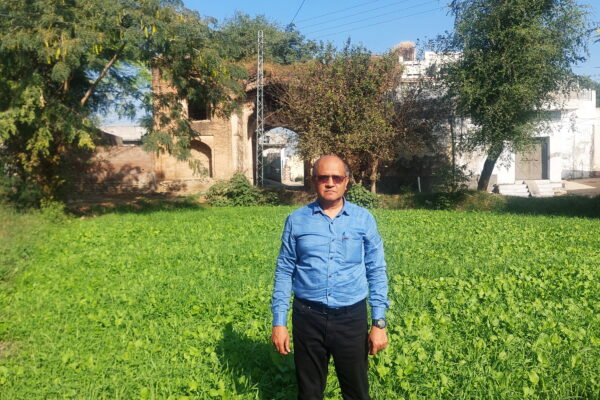
The writer. (30.07.2025.)is

At the end, it would be unfair not to praise the natural beauty of this area. It is a semi-hilly region with lush green fields and orchards. The serene landscape adds to the charm of exploring this historic site. The Baoli is still in reasonably good condition and I hope people and authorities will preserve this important historic and architectural landmark for posterity.
It is pertinent to inform my readers that the last stretch of the road to the Baoli, about 700 meters in length, is a dirt track, as it lies off the main road. For directions, please follow the map given below. There is, however, some confusion about this Baoli: some sources refer to it as Akbar Bacha Qoae, while most identify it as the Baoli of Mir Aslam Khan Khattak. I would appreciate it if someone could confirm or correct this information.
Tariq Amir
August 25, 2025.
Islamabad.
For related posts, visit:
081. Jandiala Sher Khan (An Old Baoli & A Mosque)
099. A Baoli At Khura (Soon Valley), District Khushab
150. Losar Baoli at Wah & a baoli at Hattian (District Attock)
162. Shah Bagh Baoli, district Rawalpindi.
171. Shah Allah Ditta Caves & a Baoli – Islamabad!