
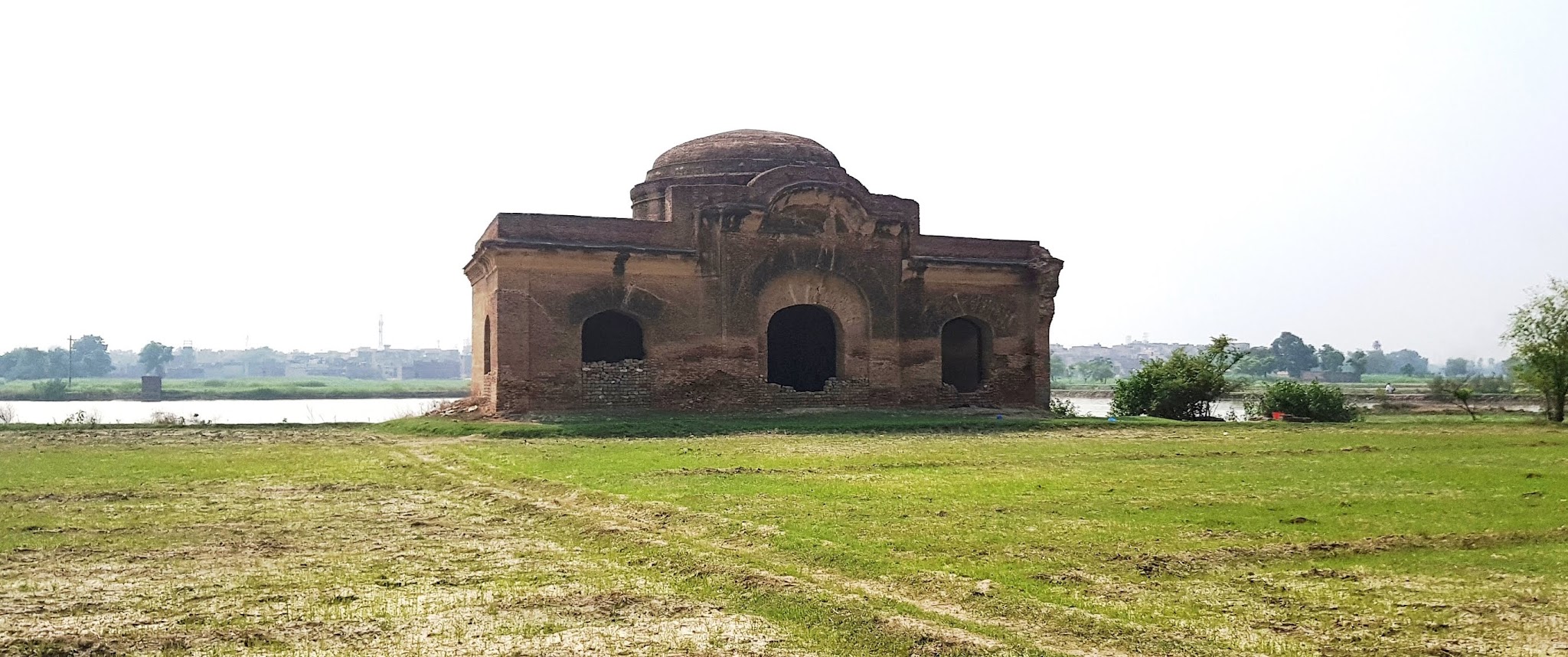
210. A historic mosque at Nizamabad, Wazirabad.
In my previous post about a baoli near Wazirabad, we observed that Wazirabad was, and still is, an important city on the historic Grand Trunk Road. It was a significant city during the Mughal and Sikh periods. Being an important administrative and communication centre of the area, many important and historic buildings from that era still exist in and around the city.
We have already visited a Baoli near Wazirabad in my previous post, and in this post, I shall show you a historic mosque in this area. This mosque is about 440 meters to the north west of the baoli.
Location of the Mosque
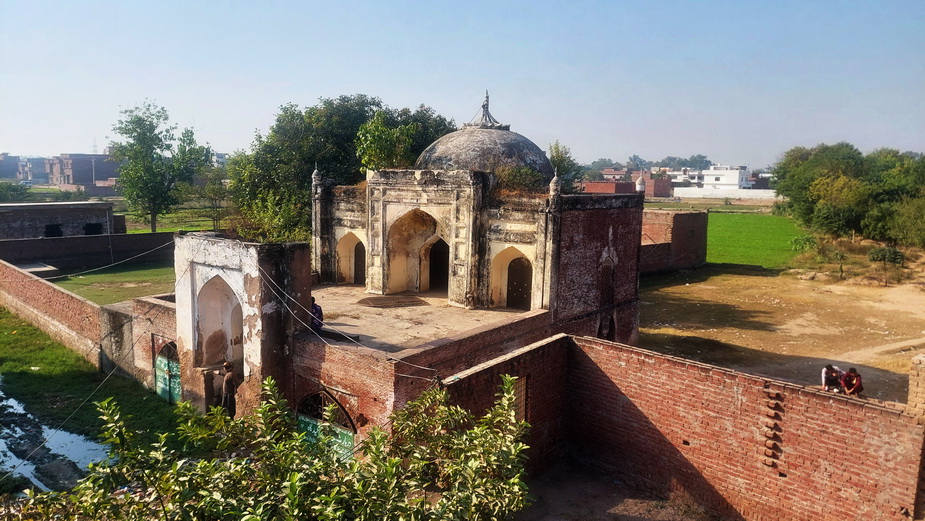
This beautiful mosque is located in Nizamabad, a suburb of Wazirabad, at 32°25’34.39″N, 74°07’26.53″E. For a clearer idea of the location and to find the route to reach it, kindly refer to the map given at the end of the article. I could not find any reference to the name or history of this mosque. However, it can be safely assumed that it was constructed during the Mughal era.


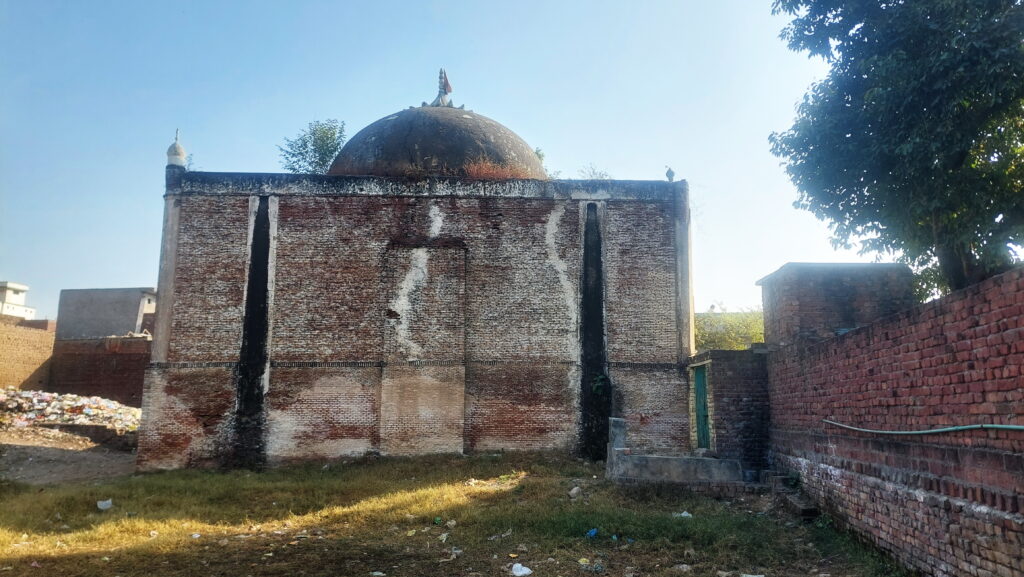
Architecture
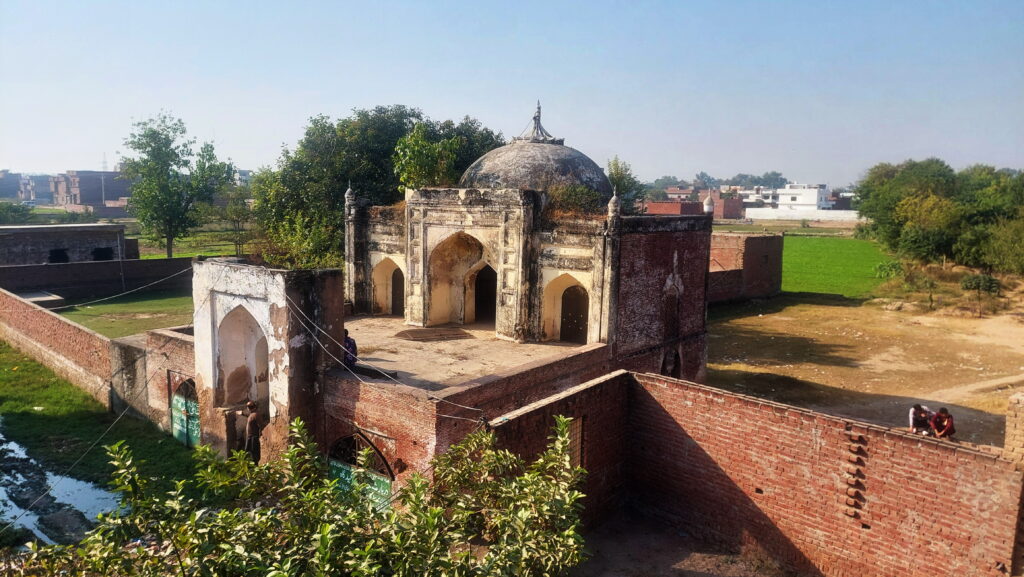
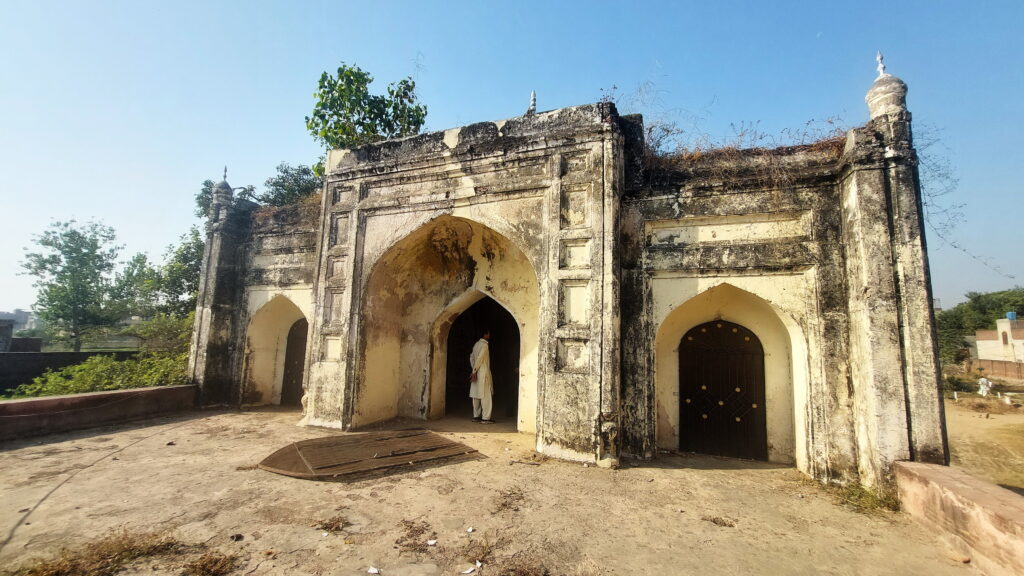
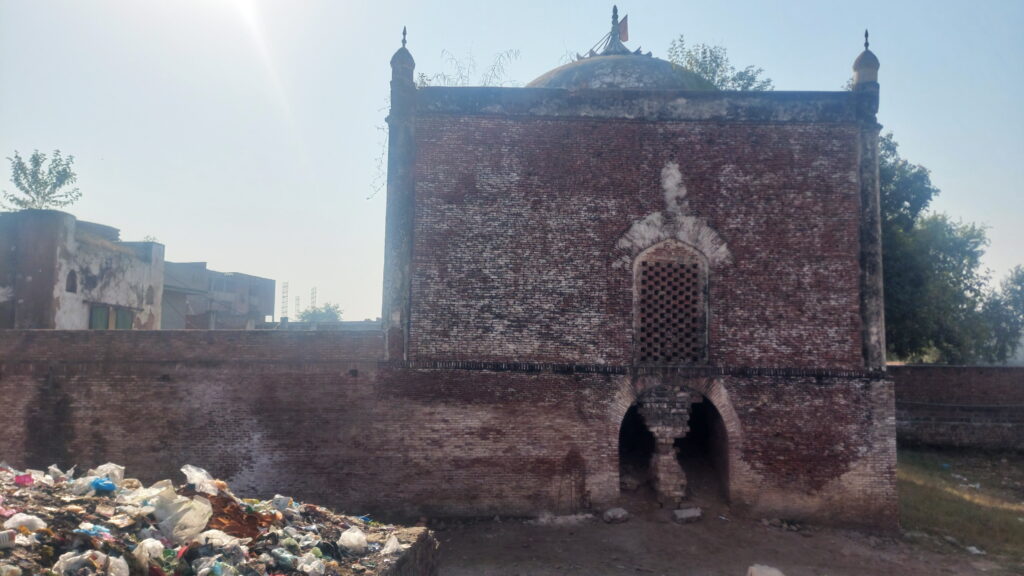
The most prominent feature of the mosque is its large central dome, which is hemispherical in shape and crowned with a finial. This type of dome is a characteristic element of Mughal mosques and tombs. The presence of such a dome strongly supports a Mughal-era origin.
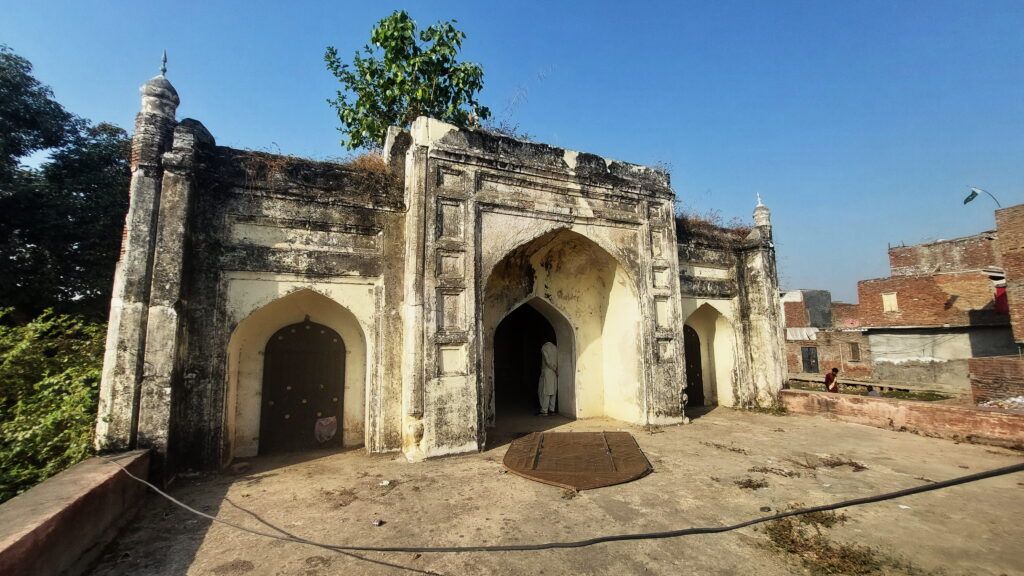
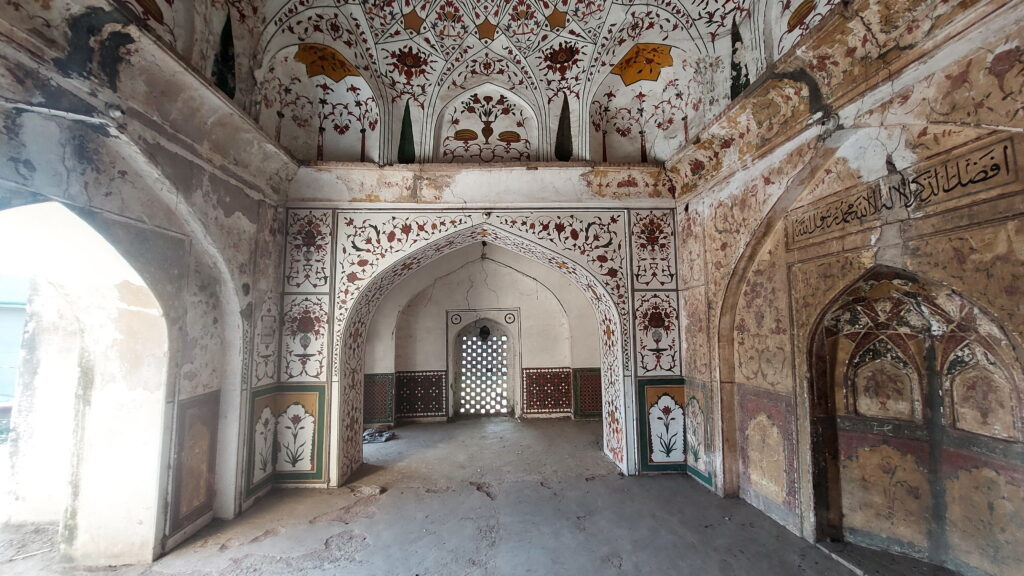
The façade of the mosque is marked by deeply recessed, cusped arches, another typical Mughal feature. These arches are well proportioned and symmetrically arranged, giving the building a balanced and dignified appearance. The emphasis on symmetry and harmony is a key principle of Mughal architecture.
The mosque is constructed mainly of brick masonry, with traces of lime plaster still visible on the walls. This method of construction was widely used in provincial Mughal buildings, especially in areas away from major imperial centres. The relatively simple decoration suggests that this was not an imperial mosque but a local or regional foundation.
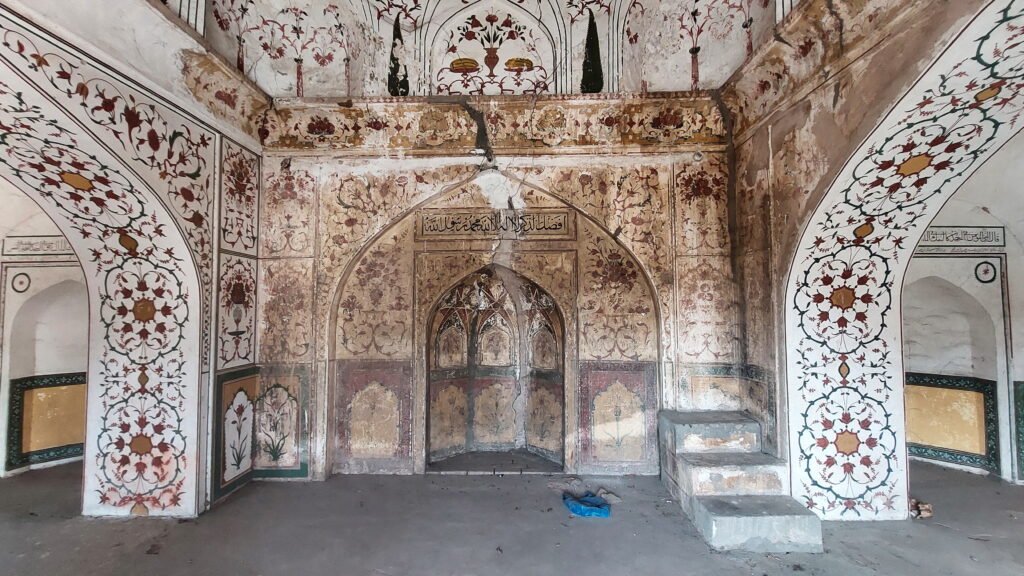
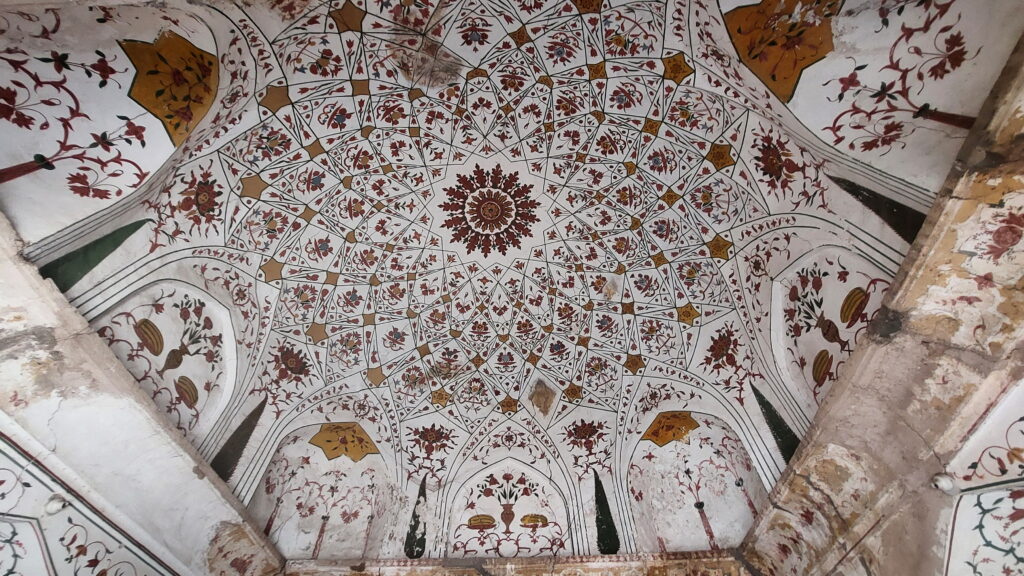
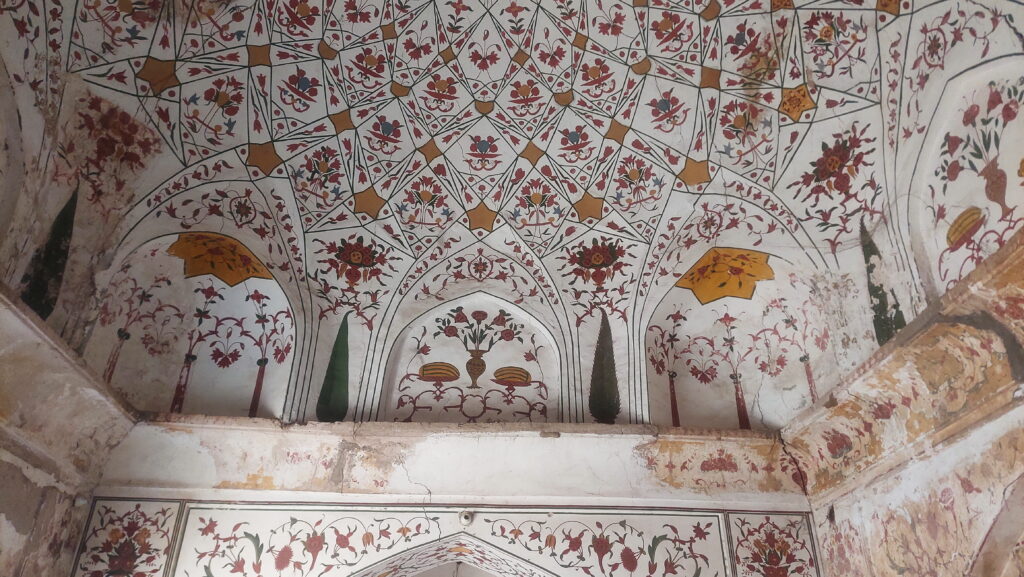
Inside the mosque the walls and arches are richly decorated with fresco-style floral paintings. These floral motifs are arranged in panels and borders, such naturalistic floral designs are a hallmark of late Mughal decorative art, especially from the Shah Jahan period onward.
The mihrab is the most elaborately decorated part of the interior. It is framed by a pointed arch and filled with delicate floral patterns painted in earthy tones of red, ochre, green, and black. Above the mihrab, there is a calligraphic panel in Arabic, a beautiful piece of caligraphyin ArabicT
Present Condition
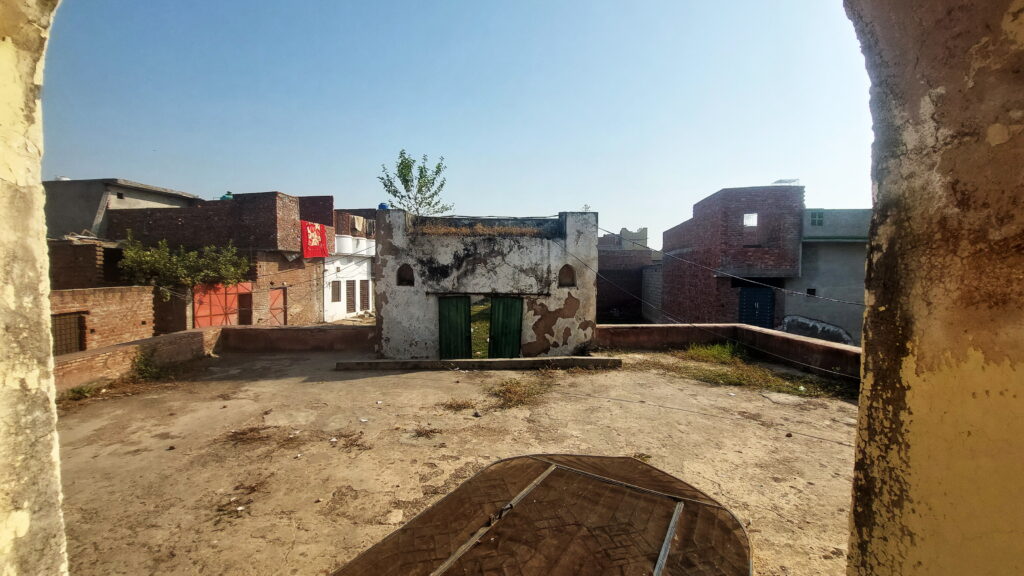
The present condition of the mosque is not good, and the building is in a bad shape. Indeed, I was surprised to see that, despite its great historic and religious value, it seems to be completely forgotten and abandoned. Despite being surrounded by a populated area, regular prayers are not offered in the mosque, and seemingly no one is taking any care of it.
I was informed that some steps were taken by the Archaeological Department to repair and restore it. We can see the results inside in the shape of some restored paintings. However, this project was abandoned at the initial stages and has not been completed since.
I appeal to the concerned department to take immediate steps to save this mosque before it becomes a victim of the hunger of land grabbers.
Tariq Amir
December 22, 2025.
Islamabad
Your message has been sent

My esteemed friend Tariq possesses an exceptional aptitude for history and research in the field. His blog serves as a testament to his remarkable capabilities in this domain. This recent work stands as yet another exemplary demonstration of his unparalleled talent.
Your appreciation is very encouraging and means a lot to me.