
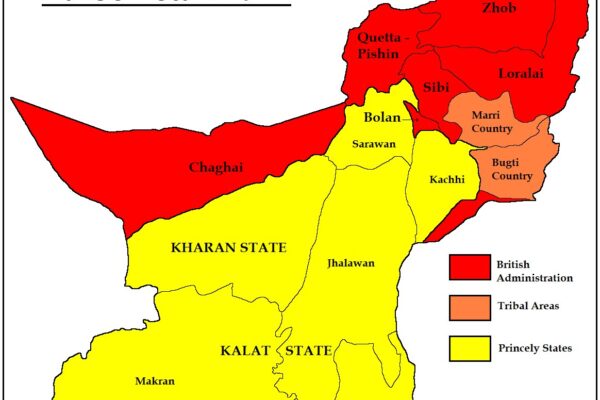
133. Demographics of Balochistan Province According to the Census of 1941 (Religions)
Balochistan (also spelled Baluchistan during the British Raj) was the farthest corner of the British Empire in India in every sense of the word. It was sparsely populated, far from the main centres of population, and located on the extreme western borders of India. The British began taking an interest in this area in the…

132. Rise of the Sikh Power in Punjab
A question often intrigued me: exactly when did the Sikhs conquer Punjab, i.e., in which year did Punjab fall to them? Gradually, I realized that it did not happen as a result of a single battle or war between two clearly identified adversaries, as, for example, we can mention the Third Battle of Panipat, the…
131. The Disputed States III: Junagadh
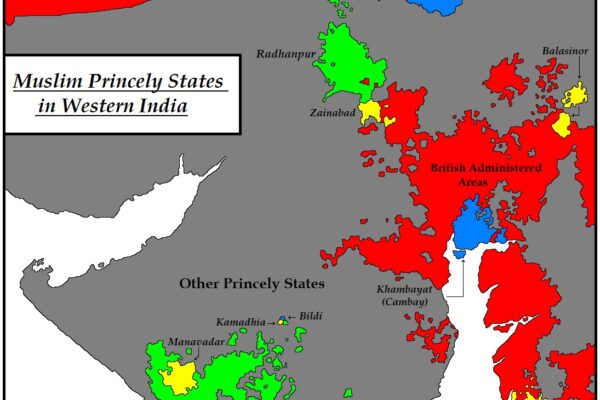
At the time of independence, as I have mentioned in my previous two posts, the issue of the accession of hundreds of princely states to India or Pakistan was very important and gave considerable trouble to both countries. In the previous two posts, I discussed some aspects of the Jammu & Kashmir and Hyderabad states….
130. The Disputed States II: Hyderabad State (Demographics 1941)
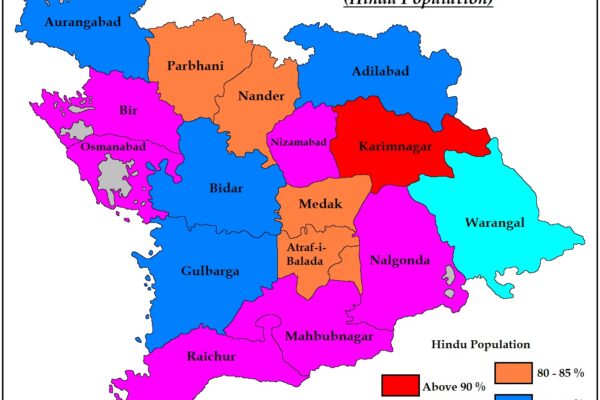
At the time of independence and partition of India, after Kashmir, the princely state which gave the most trouble to India was the State of Hyderabad of His Exalted Highness the Nizam of Hyderabad, Nawab Mir Osman Ali Khan, Asaf Jah VII. Out of almost 565 states, Hyderabad gave the most trouble to India after…

129. The Disputed States I : Jammu & Kashmir (Demographics 1941)
At the time of independence in 1947, British India had almost 565 princely states, constituting 23% of the total population and covering nearly 40% of its area. These states varied greatly in size and population. The biggest in population was Hyderabad with a population of over 16 million, while Jammu & Kashmir was the largest…
128. Demographics of North West Frontier Province According to the Census of 1941
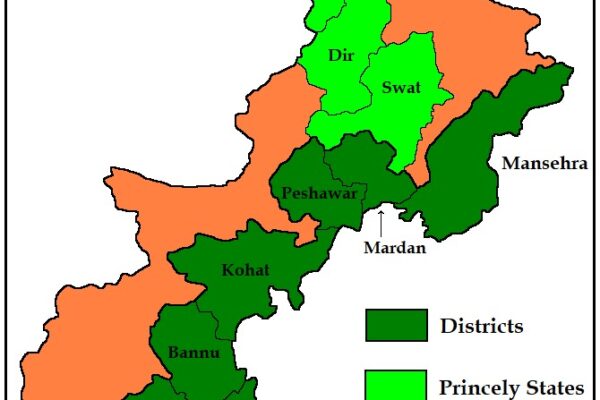
The British reached this part of India in the mid-nineteenth century, when they defeated the Sikh state of Lahore in 1849. At that time, Hazara, the Peshawar Valley, and the areas east of Waziristan were part of the Sikh state of Lahore. The British granted provincial status to these newly conquered areas of Punjab. But…
127. Demographics of Sindh Province According to the Census of 1941
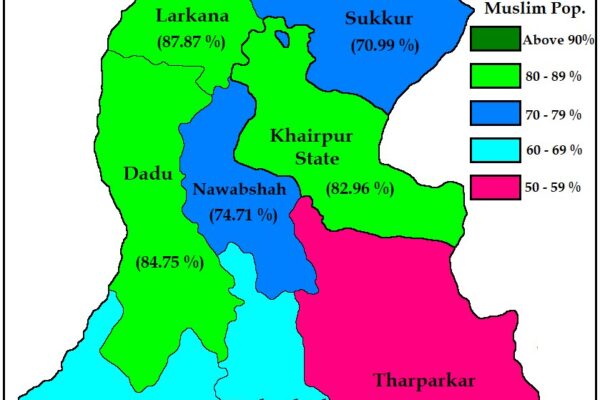
In October 2014, I wrote a post on the “Partition of Punjab in 1947” that proved to be the most popular of all my posts and drew the most comments as well. Some of the friends from the other side of the divide argued that so what if some Muslim majority Tehsils were awarded to India, as…
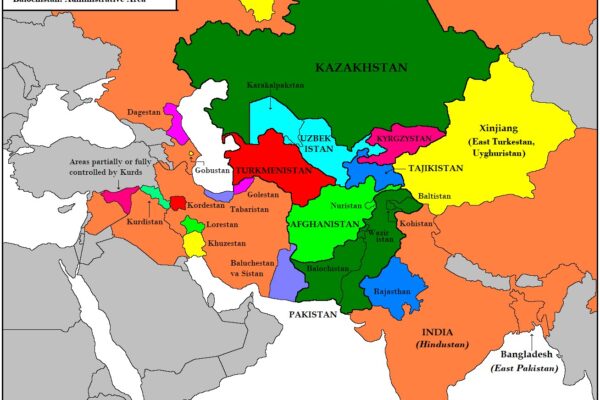
126. All the “stans” in the World
Ever wondered exactly how many “-stans” there are in the world? These are the countries or regions whose names end with the suffix -stan. In Persian, stan means “place” or “land.” For example, Uzbekistan means “land of the Uzbeks,” and Afghanistan means “land of the Afghans.” Its equivalent in English is -land, as in England…

125. Gurudwara Sri Guru Singh Sabha: Gujranwala
There are thousands of buildings hidden or simply ignored in overcrowded cities and towns across Pakistan, which are links to an era that ended abruptly in 1947. Mostly are neglected and decaying, and fast disappearing. One such building is Gurudwara Siri Singh Sabha in Gujranwala city, just 50 metres from the Clock Tower on the…
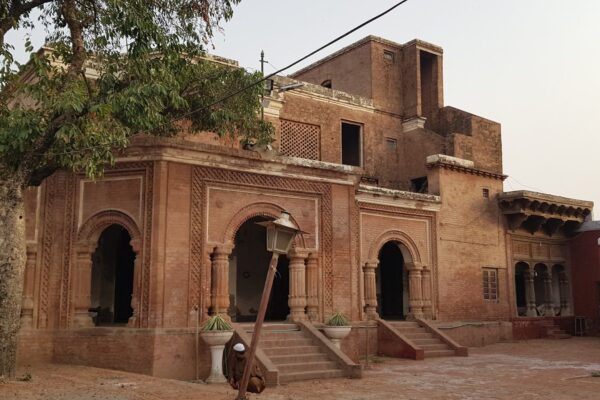
124. Kalra The Estate of Malik Khizar Hayat Tiwana: The Last Premier of Punjab
Tiwanas are a very old and aristocratic family of the district Shahpur (now Sargodha and Khushab). They are settled in many towns of Sargodha and Khushab on both sides of the river Jhelum. In the past, they held large jagirs at various places and played a very important role in the history of this part…