
220. O’Brien Islamia High School, Shahpur Saddar!
Shahpur is an old town near the banks of the River Jhelum in District Sargodha. The area between the rivers Jhelum and Chenab is called the Jech Doab, one of the five Doabs of Punjab. This is the same Doab where the kingdom of Raja Porus existed at the time when Alexander the Great invaded India. Porus gained eternal fame for confronting him valiantly. His capital is thought to have existed somewhere near the modern city of Mandi Bahauddin.
The city of Shahpur remained a part of the great Mughal Empire for more than two hundred years. But as Mughal rule crumbled, the Afghans made inroads in the 1750s. Soon another power appeared on the horizon—that of the Sikh confederacy. They captured the Salt Range, Pind Dadan Khan, and Bhera by 1767, and many other tracts east of Bhera up to the River Chenab. But Shahpur, Khushab, and Sahiwal remained independent under local chiefs until 1811, when Maharaja Ranjit Singh finally captured this whole area. Sikh rule continued for the next four decades until 1849, when the British finally annexed Punjab to their Indian Empire. Under the new administration, the government divided the whole Punjab into many divisions and districts. Shahpur was made the headquarters of a district of the same name. But due to some reasons, the government offices were established about 5 kilometers to the east of the old town. This new and well-planned settlement is called Shahpur Saddar.
Educational reforms in Punjab.
In the nineteenth and early twentieth centuries, Punjab saw several religious and social reform movements that gave great importance to education and community uplift.
The Arya Samaj, founded by Swami Dayanand Saraswati in 1875, promoted modern education among Hindus. It established the DAV schools and colleges, where Western education was combined with Vedic teachings, and also encouraged female education. The Anjuman Himayat-e-Islam, founded in Lahore in 1884, worked for the educational progress of Muslims. It set up schools, colleges, and orphanages, and played an important role in spreading modern as well as religious education. The Sikh reform movement, especially the Singh Sabha Movement, also focused on education. It established Khalsa schools and promoted Gurmukhi and religious learning along with modern subjects.
These movements made a significant contribution to the spread of education in Punjab and helped shape the social and cultural life of their respective communities. One of the schools that was set up by the Muslims for the promotion of education in Punjab was O’Brien Islamia High School in Shahpur Saddar.
The Location of the School:
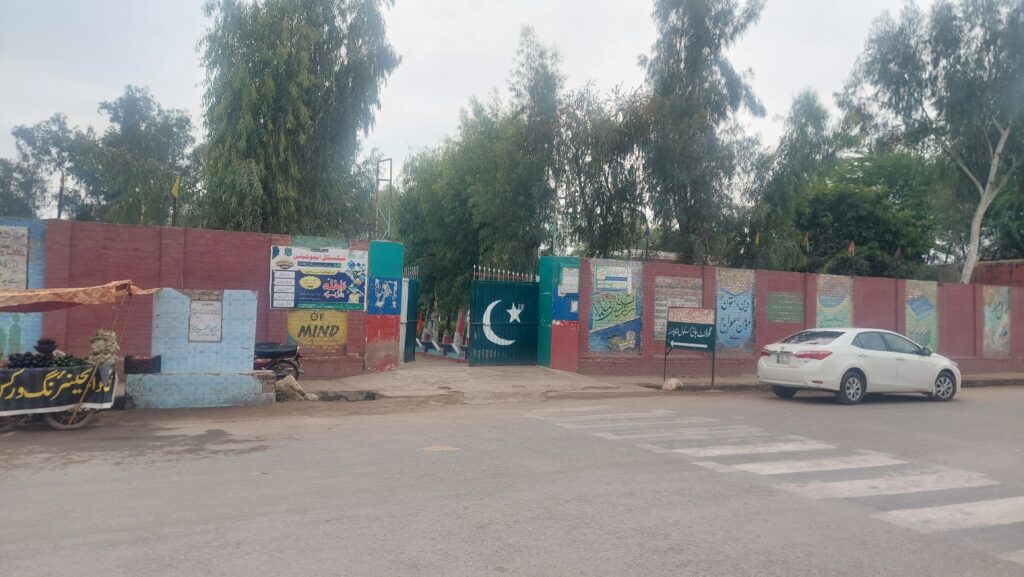
As I mentioned earlier, the school is located in Shahpur Saddar on the Jail Road, off the main Khushab – Sargodha Road, at 32°15’57.50″N, 72°28’23.98″E. This place is just 30 km north-west of Sargodha city. The old town of Shahpur is located 3 to 4 kilometers north west of Shahpur Saddar.
History of the School:
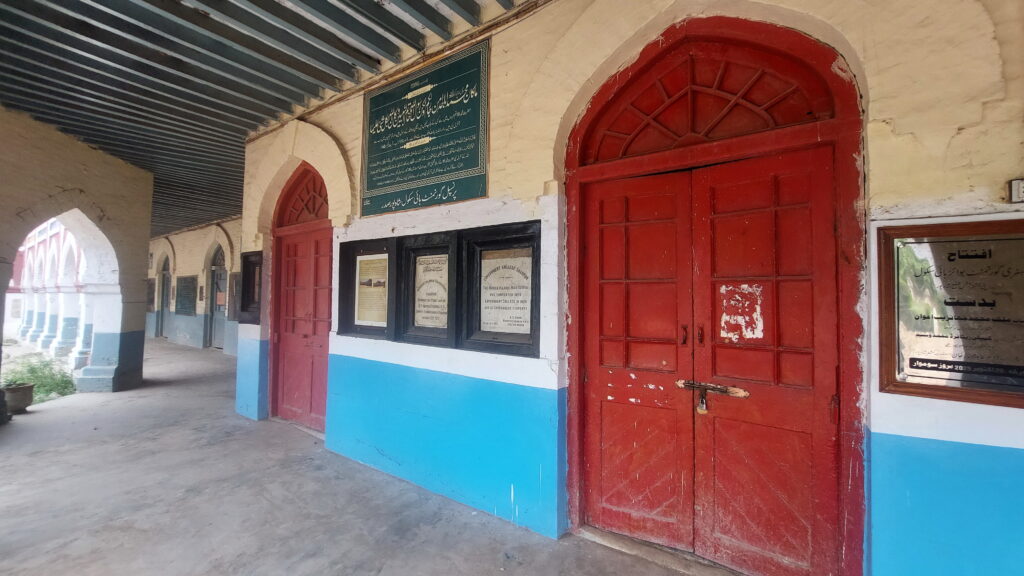
The foundation stone of the school was laid on May 31, 1916, by B. T. Gibson, the Deputy Commissioner of Shahpur District. In 1914, the district headquarters was moved from Shahpur to Sargodha. This change resulted in the vacating of many office buildings in Shahpur Saddar. Some of these were provided to the school. However, the present building does not seem to be an office or administrative building. It clearly looks like a purpose-built school building.
A few weeks ago, I read a research paper written by Tahir Mahmood, titled “Communal Life in the Market Towns of Jhelum Canal Colony.” In this paper, the writer, besides discussing other social issues, also sheds light on the efforts of the three main communities in the promotion of education. He mentions this school in the following words:
Islamia High School was established by the efforts and financial support of Mubariz Khan Tiwana. He was one of the chief collaborators of the Shahpur district and was quite influential in the district. He convinced the district administration about the requirement of a school and theO’Brien Islamia High School was established at Shahpur town in 1916. It was named after the Deputy Commissioner, Major A. J. O’Brien, who sanctioned the school.
Mubariz Khan Tiwana was inspired by the Aligarh movement of Sir Sayed Ahmed Khan and was annually contributing one lakh (one lakh is equal to hundred thousand) to Aligarh College. For his educational services in the Shahpur District he was locally known as ‘Sir Sayed’ of the district. In addition to his inspiration from Ali Garh movement, Muabriz Khan was also influenced by the educational activities of Arya Samaj in the district in general and his efforts to establish a school at Shahpur can be seen as a result of communal competition, as Muslim generally lagged behind in education in the district. However, the Arya High School15 at Shahpur was built in 1919 after the establishment of Islamia High School.
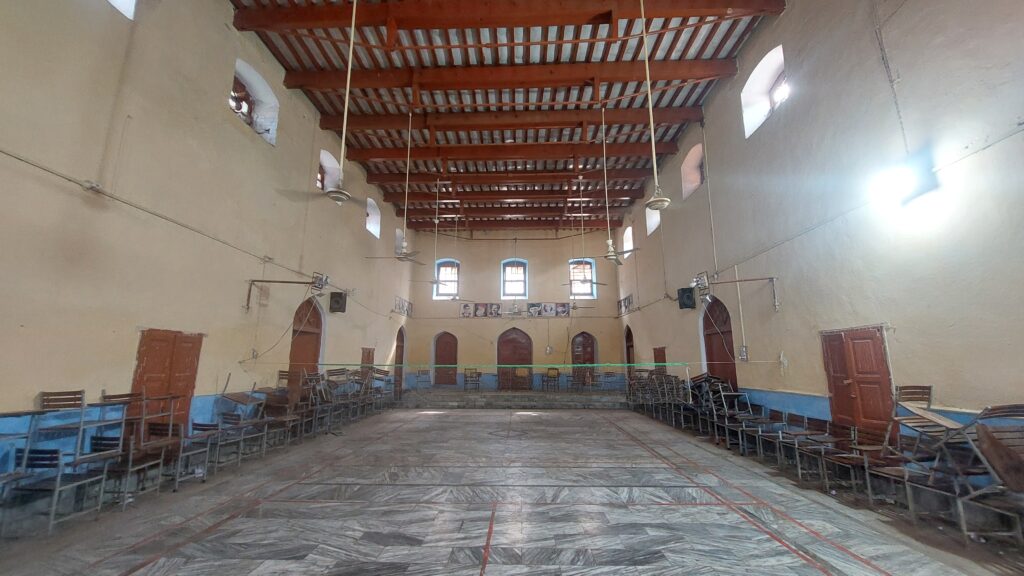
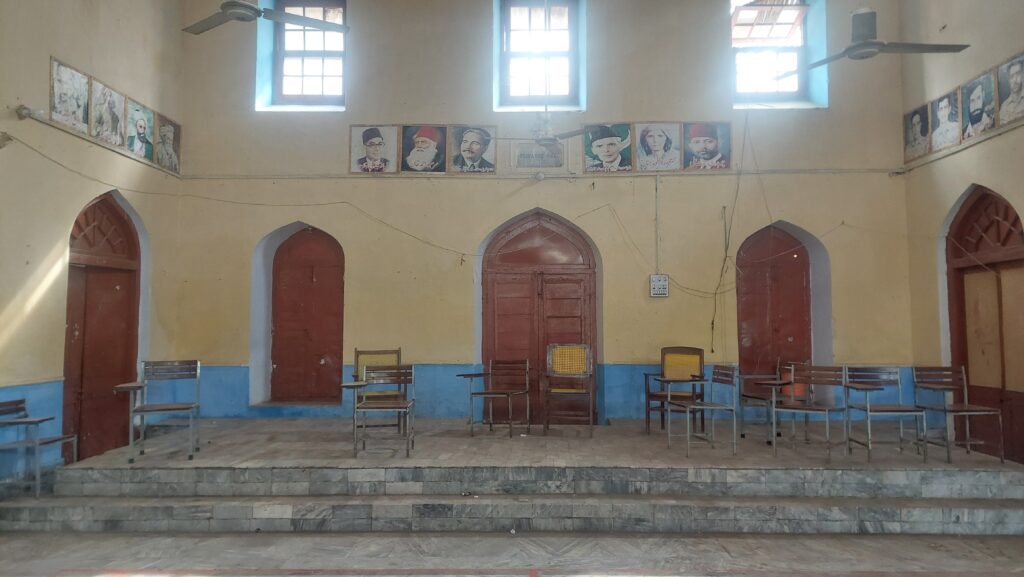
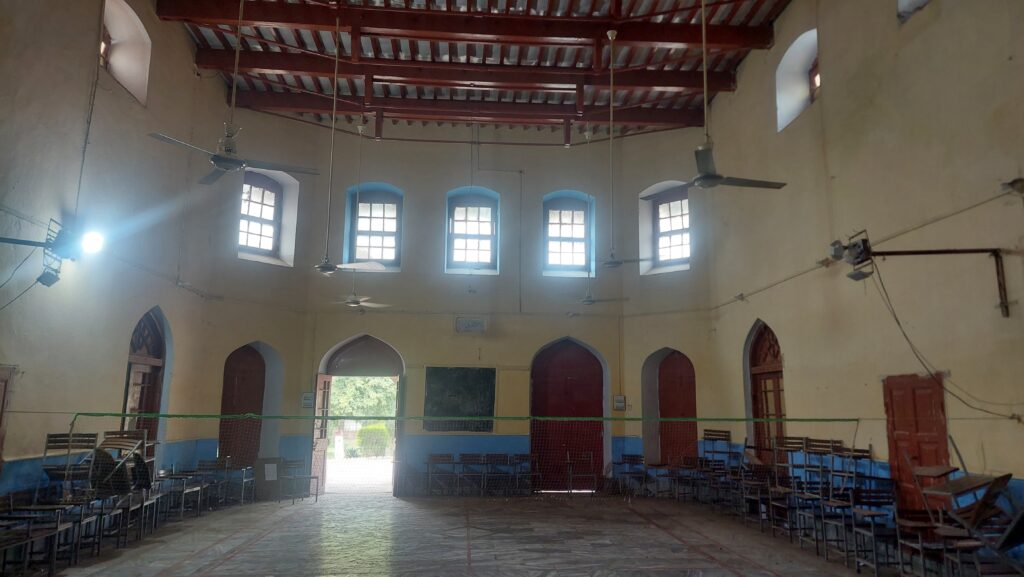
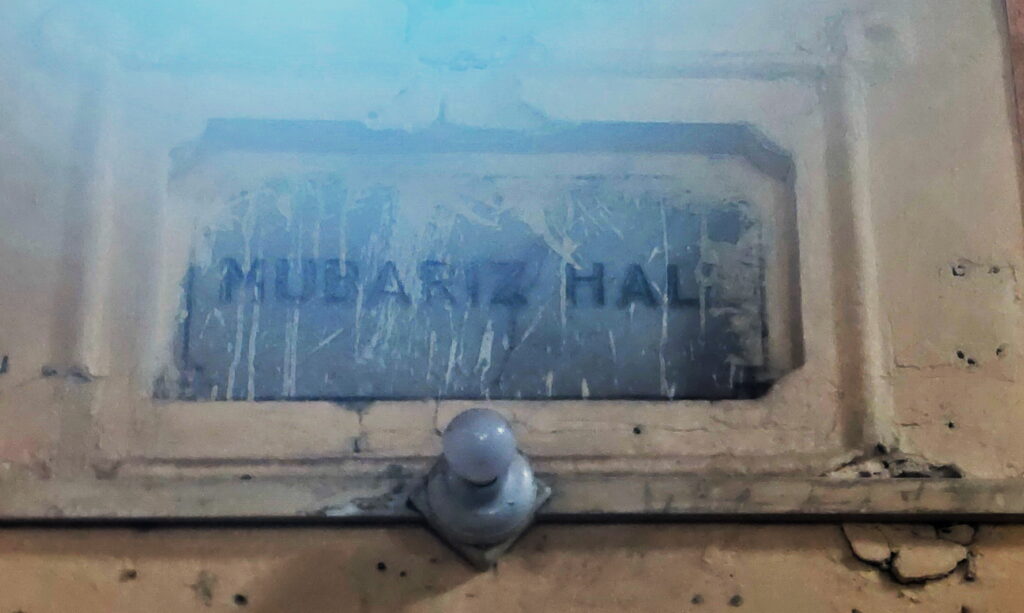
One hall of the School was named Mubariz Hall. After the death of Mubariz Khan Tiwana in 1923 his brother Mumtaz Khan Tiwana took keen interest in the development of the School. In 1929, it was taken over by the government and was raised to the intermediate level. In 1932m, graduation classes were started. In 1934, it was visited by the Governor of Punjab, Jeffery De Montmorency, and was renamed De Montmorency College Shahpur. In 1946, it was moved to Sargodha partially due to the efforts of the Hindus of Sargodha whose children could not travel to Shahpur to receive education and partially because facilities at Sargodha were better. For more details, see Sayed Sajad Shirazi and Shaikh Ahmed Riaz-ul-Huda, Rood-e-Rawan:
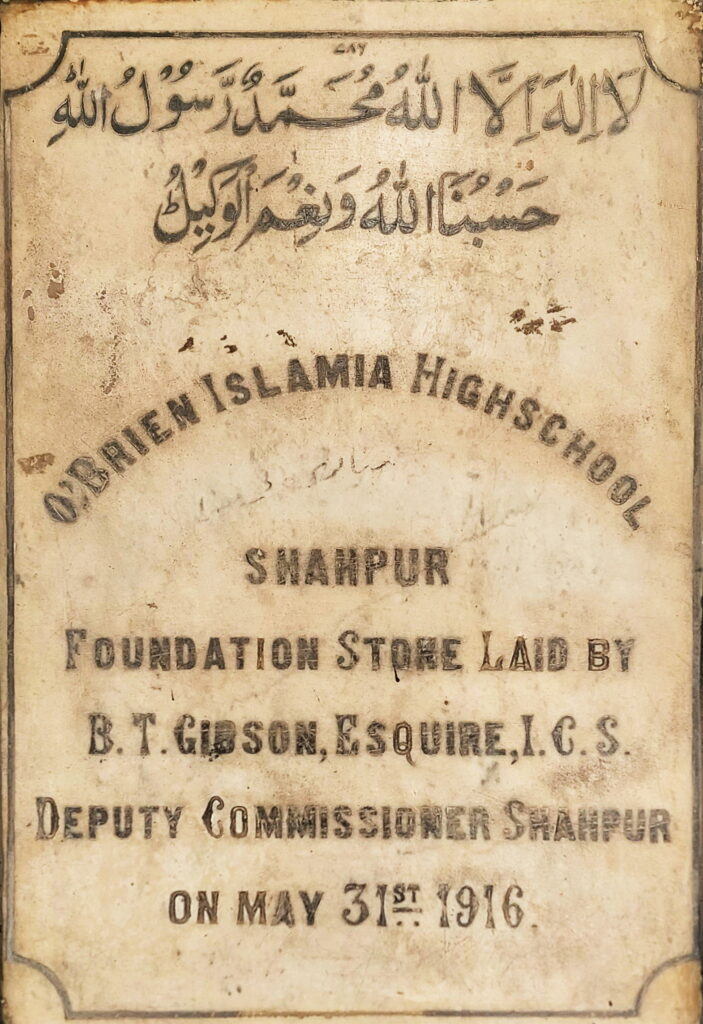
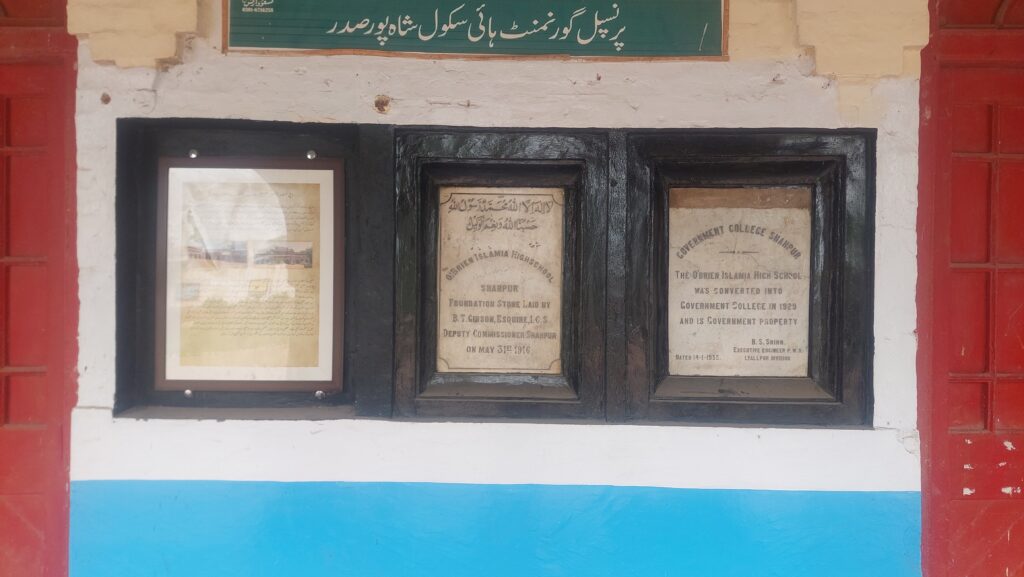
حَسْبُنَا اللَّهُ وَنِعْمَ الْوَكِيلُ
“There is no god but Allah, Muhammad is the Messenger of Allah”
“Sufficient for us is Allah, and [He is] the best Disposer of affairs.”
O’ BRIEN ISLAMIA HIGH SCHOOL
SHAHPUR
FOUNDATION STONE LAID BY
B.T. GIBSON1, ESQUIRE1, I.C.S.2
DEPUTY COMMISSIONER3 SHAHPUR
ON MAY 31ST 1916
- 1. Esquire: A general polite suffix for gentlemen of standing
2. I.C.S: Indian Civil Service
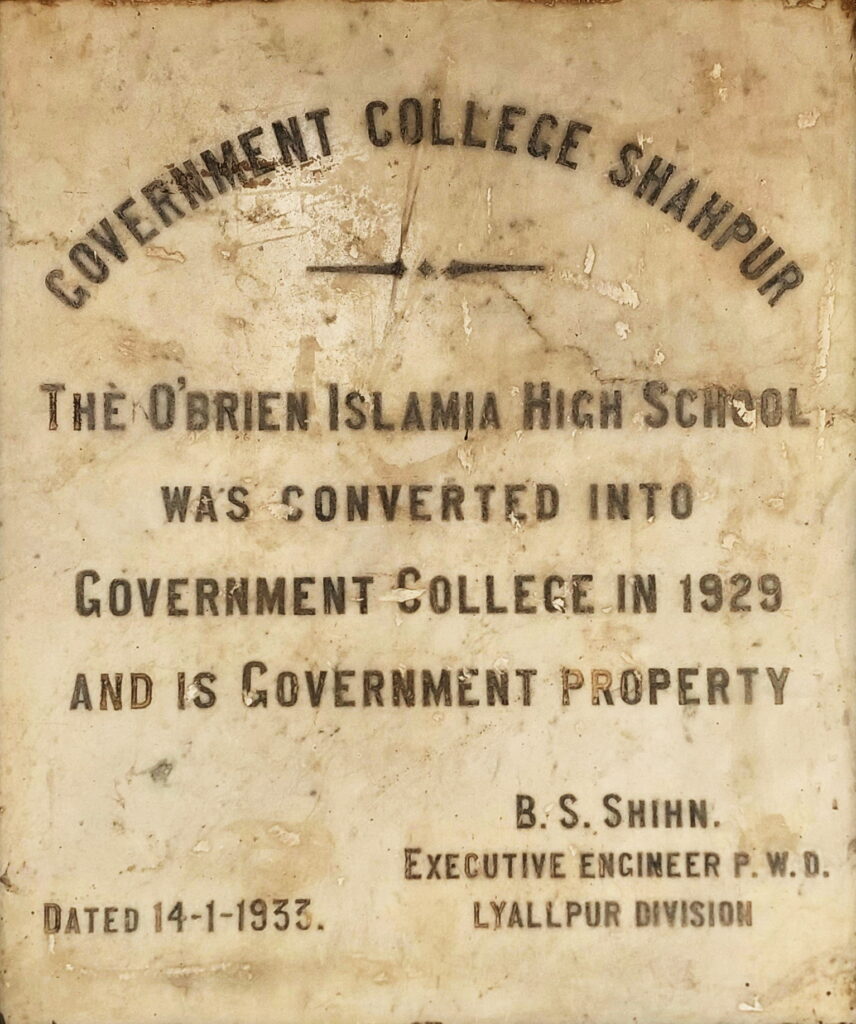
THE O’BRIEN ISLAMIA HIGH SCHOOL
WAS CONVERTED INTO
GOVERNMENT COLLEGE IN 1929
AND IS GOVERNMENT PROPERTY
B.S. SHIHN
EXECUTIVE ENGINEER P.W.D.
DATED 14-1-1933. LYALLPUR DIVISION
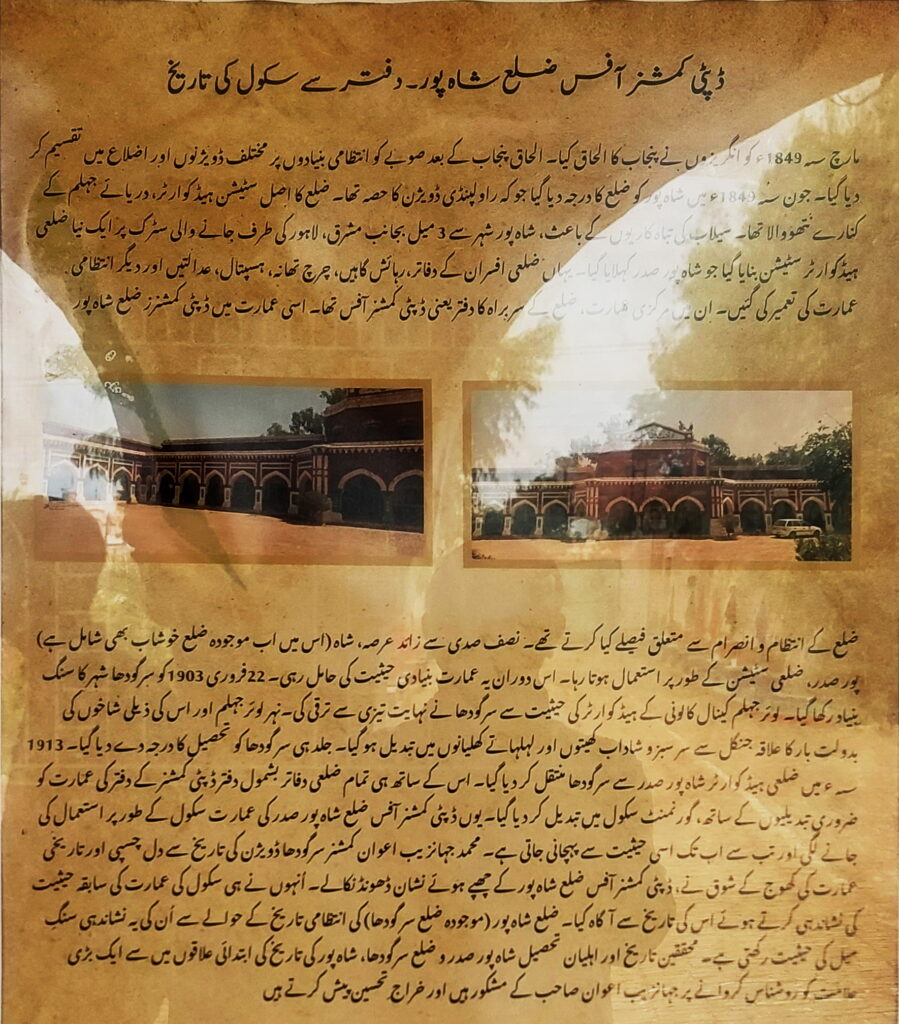
ڈپٹی کمشنر آفس ضلع شاہ پور – دفتر سے سکول کی تاریخ
مارچ سنہ 1849ء کو انگریزوں نے پنجاب کا الحاق کیا۔ الحاق پنجاب کے بعد صوبے کو انتظامی بنیادوں پر مختلف ڈویژ نوں اور اضلاع میں تقسیم کردیا گیا۔ جون سن 1849 میں ضلع شاہ پور کو ضلع کا درجہ دیا گیا جو کہ راولپنڈی ڈویژن کا حصہ تھا۔ ضلع کا اصل سٹیشن ہیڈ کوارٹر، دریائے جہلم کے کنارے نتھووالا تھا۔ سیلاب کی تباہ کاریوں کے باعث، شاہ پور شہر سے ۳ میل بجانب مشرق، لاہور کی طرف جانے والی سڑک پر ایک نیا ضلعی ہیڈ کوارٹر سٹیشن بنایا گیا جو شاہ پور صدر کہلایا گیا۔ یہاں ضلعی افسران کے دفاتر، رہائش گاہیں، چرچ، تھانہ، ہسپتال، عدالتیں اور دیگر انتظامی عمارتوں کی تعمیر کی گئی۔ ان میں مرکز عمارت، ضلع کےسربراہ کا دفتر یعنی ڈپٹی کمشنر آفس تھا۔ اسی عمارت میں ڈپٹی کمشنرز ضلع شاہ پورضلع اکے انتظام و انصرام سے متعلق فیصلے کیا کرتے تھے۔ ںصف صدی سے زائد عرصہ، شاہ پور صدر (اس میں اب ضلع خوشاب بھی شامل ہے)، ضلعی سٹیشن کے طور پر استعمال ہوتا رہا۔ اس دوران یہ عمارت بنیادی اہمیت کی حامل رہی۔ 22 فروری 1903 کو سرگودھا شہر کا سنگ بنیاد رکھا گیا۔ لوئر جہلم کینال کالونی کے ہیڈ کوارٹر کی حیثیت سے سرگودھا نے نہایت تیزی سے ترقی کی۔ نہر لوئر جہلم اور اس کی ذیلی شاخوں کی بدولت بار کا علاقہ جنگل سے سرسبز و شاداب کھیتوں اور لہلہاتے کھلیانوں میں تبدیل ہوگیا۔ جلد ہی سرگودھا کو تحصیل کا درجہ دے دیا گیا۔ 1913 ء میں ضلعی ہیڈ کوارٹر شاہ پور صدر سے سرگودھا منتقل کر دیا گیا۔ یوں ڈپٹی کمشنر آفس ضلع شاہ پور صدر کی عمارت سکول کے طور پر استعمال کی جانے لگی اور تب سے اب تک اسی حیثیت سے پہچانی جاتی ہے۔ محمد جہانزیب اعوان کمشنر سرگودھا ڈویژن کی تاریخ سے دلچسپی اور تاریخی عمارت کے کھوج کے شوق نے، ڈپٹی کمشنر آفس ضلع شاہ پور صدر کے نشان ڈھونڈ نکالے۔ انہوں نے ہی سکول کی عمارت کی سابقہ حیثیت کی نشاندہی کرتے ہوئے اس کی تاریخ سے آگاہ کیا۔ ضلع شاہ پور (موجودہ ضلع سرگودھا) کی انتظامی تاریخ کے حوالے سے ان کی یہ نشان دہی سنگ میل کی حیثیت رکھتی ہے۔ محققین تاریخ اور تحصیل شاہ پور صدر و ضلع سرگودھا، شاہ پور کی تاریخ کی ابتدائی علامتوں میں سے ایک بڑی علامات کو روشناس کروانے پر جہانزیب اعوان کے مشکور ہیں اور خراج تحسین پیش کرتے ہیں۔
History of the School
In March 1849, the British annexed Punjab. After the annexation, the province was administratively divided into various divisions and districts. In June 1849, Shahpur was granted the status of a district and was made part of the Rawalpindi Division. The original district headquarters was Nathowala, located on the banks of the River Jhelum. Due to the devastation caused by floods, a new district headquarters station was established three miles east of Shahpur city, on the road leading to Lahore, which came to be known as Shahpur Saddar.
Here, offices and residences for district officials, a church, a police station, a hospital, courts, and other administrative buildings were constructed. Among these, the central building was the office of the district head, namely the Deputy Commissioner’s Office. It was in this building that the Deputy Commissioners of Shahpur made decisions regarding the administration of the district.
For more than half a century, Shahpur Saddar (which now also includes present-day Khushab district) remained in use as the district headquarters. During this time, the building retained central importance. On 22 February 1903, the foundation of Sargodha city was laid. As the headquarters of the Lower Jhelum Canal Colony, Sargodha developed very rapidly. Due to the Lower Jhelum Canal and its subsidiary branches, the Bar region was transformed from जंगल into lush green fields and flourishing farmland. Soon, Sargodha was granted the status of a tehsil.
In 1913, the district headquarters was shifted from Shahpur Saddar to Sargodha. As a result, the building of the Deputy Commissioner’s Office at Shahpur Saddar began to be used as a school, and it has been known in that capacity ever since.
The interest of Muhammad Jahanzeb Awan, Commissioner of Sargodha Division, in history and his passion for exploring historic buildings led to the rediscovery of the traces of the Deputy Commissioner’s Office at Shahpur Saddar. It was he who identified the former status of the school building and brought its history to light. In terms of the administrative history of Shahpur district (present-day Sargodha district), his identification holds the status of a milestone. Researchers and the people of Tehsil Shahpur Saddar and District Sargodha are grateful to him and pay tribute for bringing to light one of the earliest historical landmarks of Shahpur.
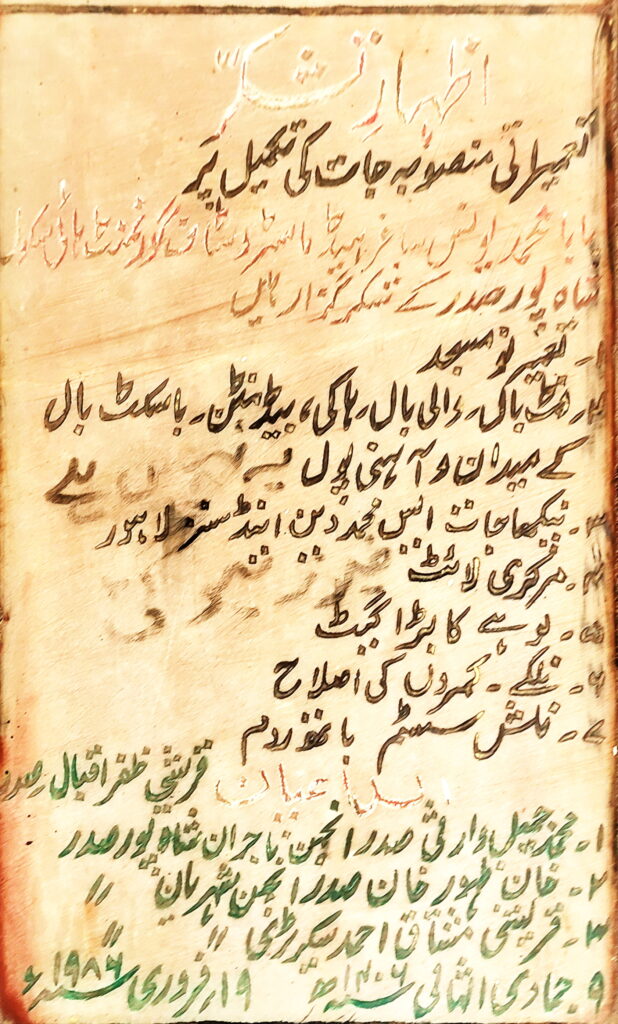
اظہارِ تشکر
تعمیراتی منصوبہ جات کی تکمیل پر
بابا محمد یونس ساغر ہیڈماسٹر وسٹاف گورنمنٹ ہائی سکول شاہ پور صدر کے شکر گزار ہیں۔
1 – تعمیر نو مسجد
2 – فٹ بال، والی بال، ہاکی، بیڈمنٹن،باسکٹ بال کے میدان و آہنی پول
3 – پنکھا جات ایس محمد دین اینڈ سنز لاہور
4 – مرکزی لائٹ
5 – لوہے کا بڑا گیٹ
6 – نلکے، کمروں کی اصلاح
فلش سسٹم باتھ روم7 –
الداعیان
1 – محمد جمیل وارثی صدر انجمن تاجران شاہ پور صدر
2 – خان ظہور خان صدر انجمن شہریان شاہ پور صدر
3 – قریشی مشتاق احمد سیکریٹری انجمن شہریان شاہ پور صدر
جمادی الثانی 1406 ھ 19 فروری 1986ء
Expression of Gratitude
On the completion of the construction projects,
Baba Muhammad Younas Saghir, Headmaster, and the staff of Government High School Shahpur Saddar express their gratitude.
- Reconstruction of the mosque
- Grounds for football, volleyball, hockey, badminton, and basketball, along with iron poles
- Fans (supplied by S. Muhammad Din & Sons, Lahore)
- Central lighting
- Large iron gate
- Installation of taps and renovation of rooms
- Flush system bathrooms
Donors:
- Muhammad Jameel Warisi, President, Anjuman Tajran Shahpur Sdadar
- Khan Zahoor Khan, President, Anjuman Shehriyan Shahpur Saddar
- Qureshi Mushtaq Ahmad, Secretary, Anjuman Shehriyan Shahpur Saddar
Jumada al-Thani 1406 AH
19 February 1986
Nawab Malik Mubariz Khan Tiwana:
We have noted above the prominent role played by Nawab Malik Mubariz Khan Tiwana in the establishment of this school. Mr. Tahir Mahmood, in his article, has described his efforts in this regard in some detail. I also did some research and found some personal details about him.
Nawab Malik Mubariz Khan Tiwana was born in 1863, the son of Sardar Bahadur Malik Jahan Khan of Jahanabad. He belonged to the Jahanabad branch of the famous aristocratic Tiwana family of Nurpur Thal, other branches being the Hamoka, Kalra, Hadali, etc. This family was conspicuous during the turbulent periods of the decay of Mughal rule in Punjab, the Sikh period, and up to the upheaval of 1857. During the British period too, this family remained prominent in war and politics. Malik Khizar Hayat Tiwana of Kalra was the last Premier of the united Punjab, who was in office from 1942 to March 1947.
According to the Shahpur Gazetteer of 1917, Malik Mubariz Khan was a preeminent personality of Shahpur District and was granted the following titles and privileges by the British Indian Government. The details are given below:
- Divisional & Provincial Darbari:
His name was included in the Gazetteer of Shahpur District 1917, as one of the eighteen title holders. - Nawab:
He was bestowed the title of Nawab on 01.01.1915 for his services rendered in the “foundation and endowment of Islamia High School, Shahpur.” One of the two persons holding this title. - Honorary Captain:
He was one of the eight Honorary Captains in the district. - District Board of Shahpur:
He was a member of the district board of Shahpur.
But the lasting honour he earned is the gratitude of countless students of the school he helped to establish. All other titles may have faded from memory, but this honour still endures and will last for generations to come. His contribution to education remains his most enduring legacy. Malik Mubariz died in 1923.
Layout & Architecture:
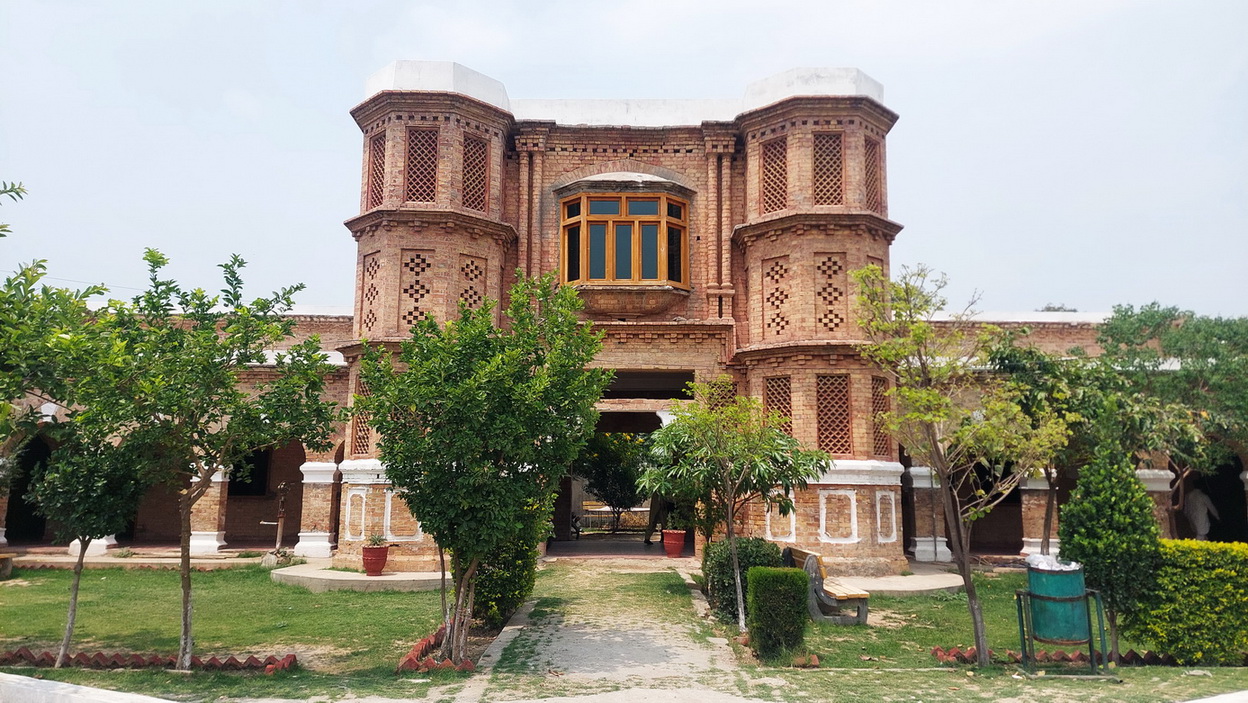
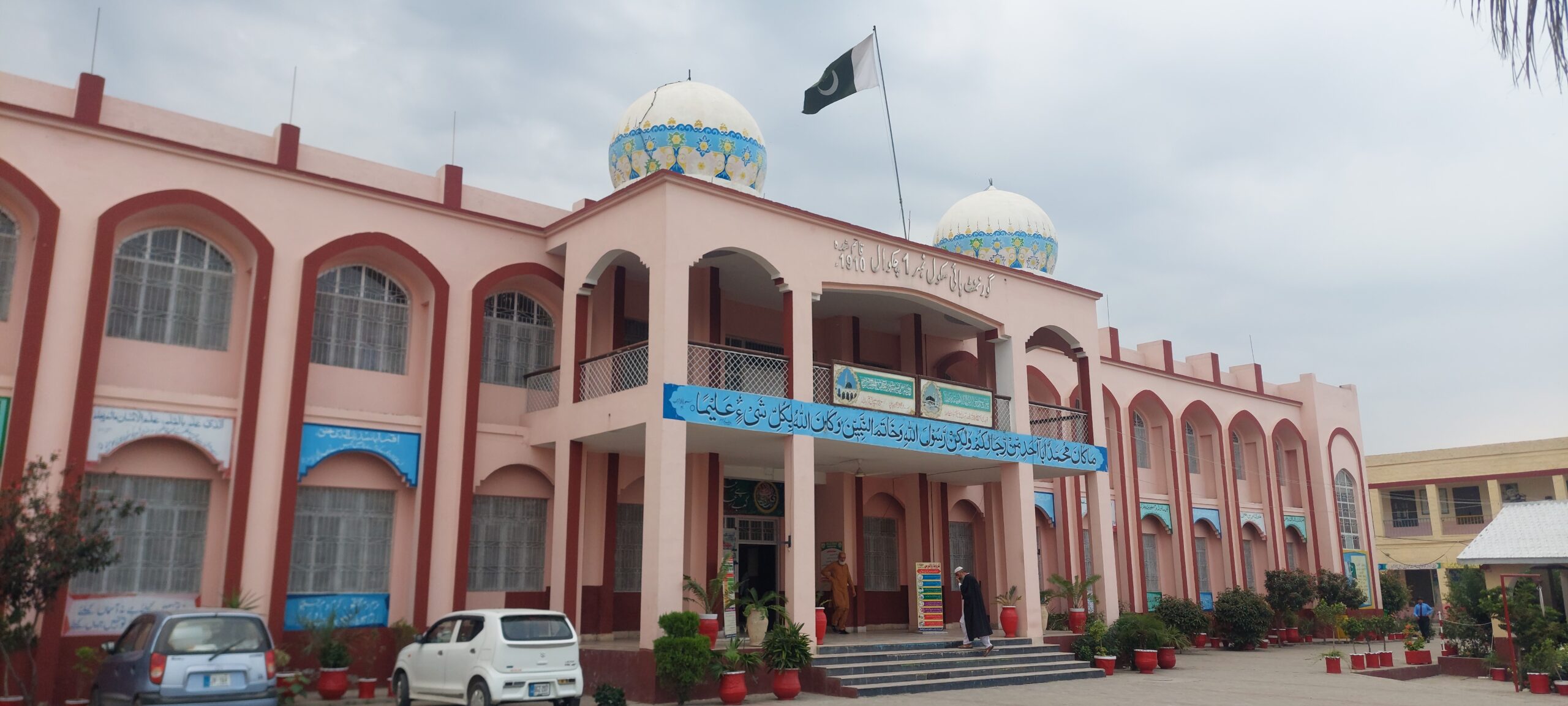
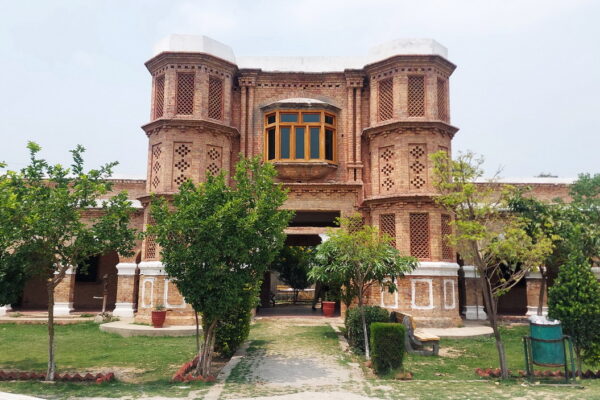
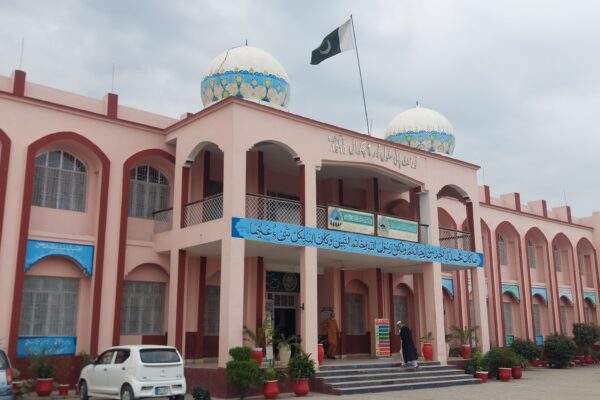
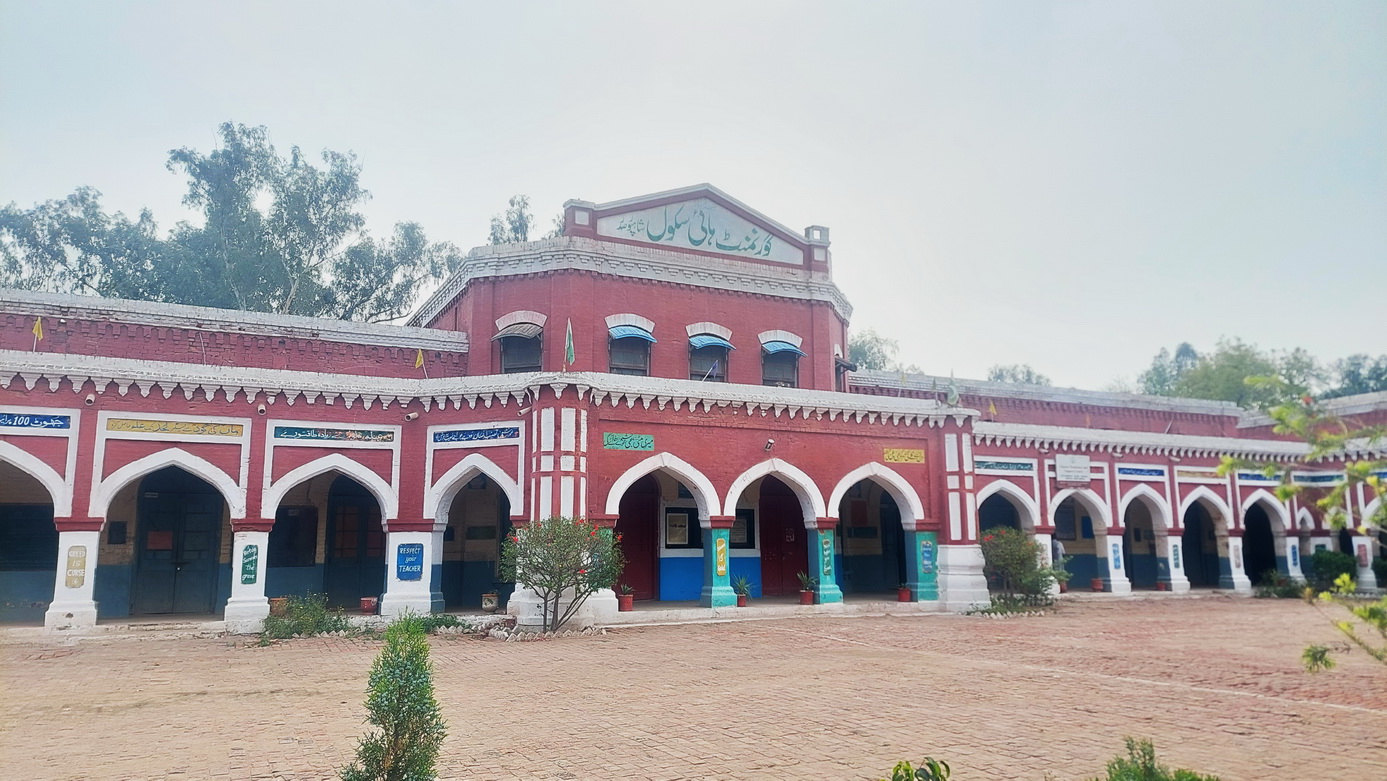
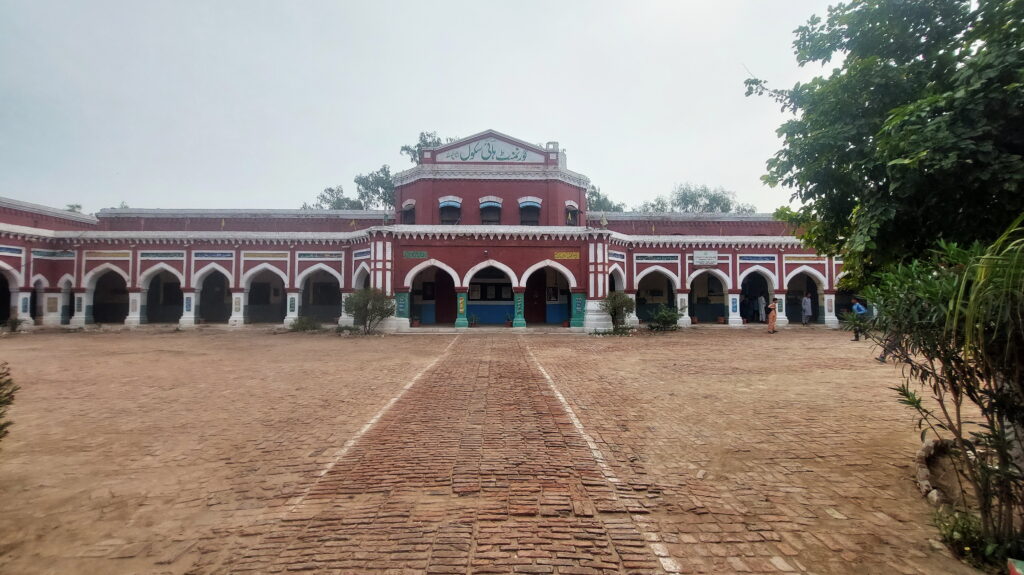
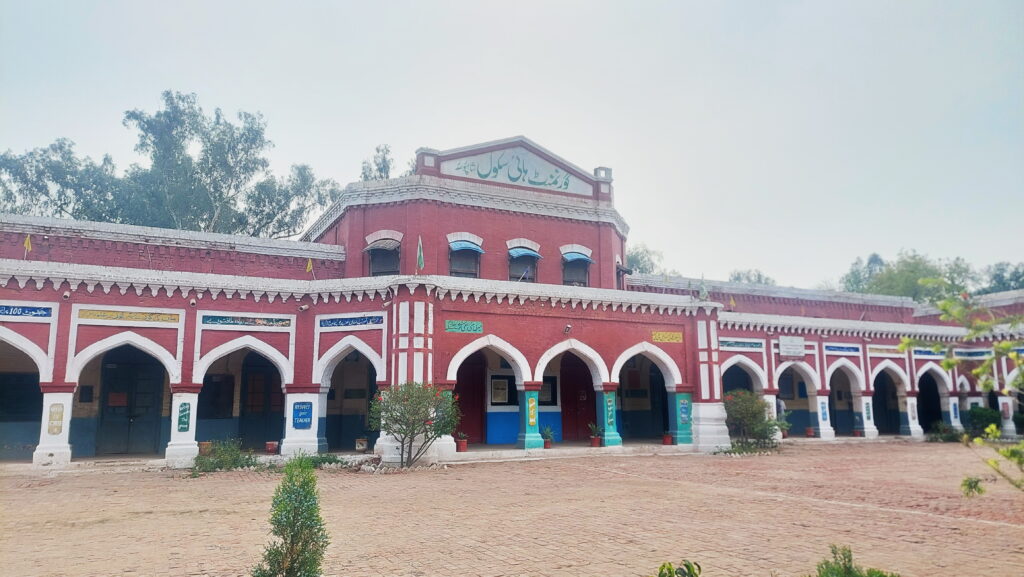
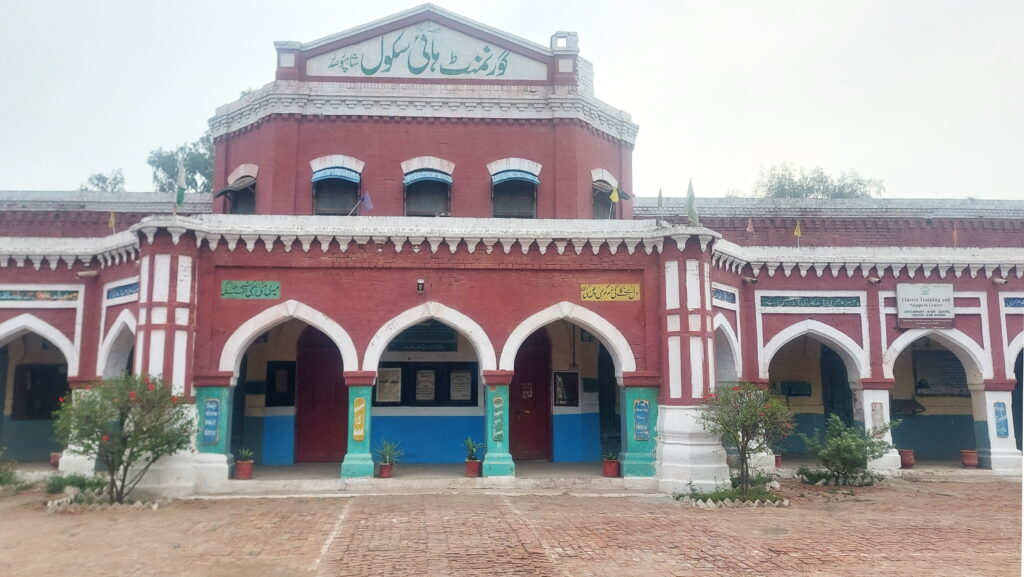
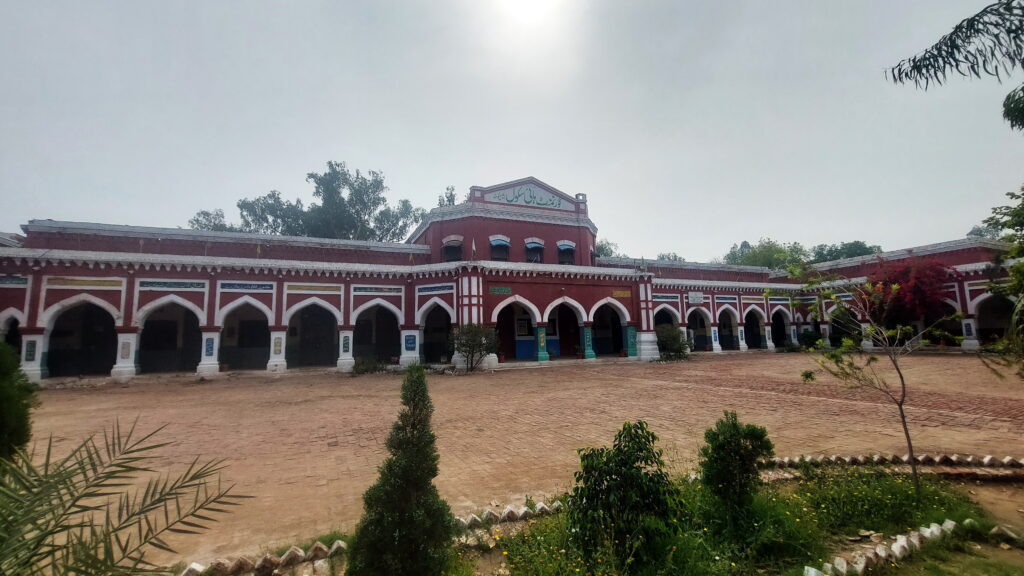
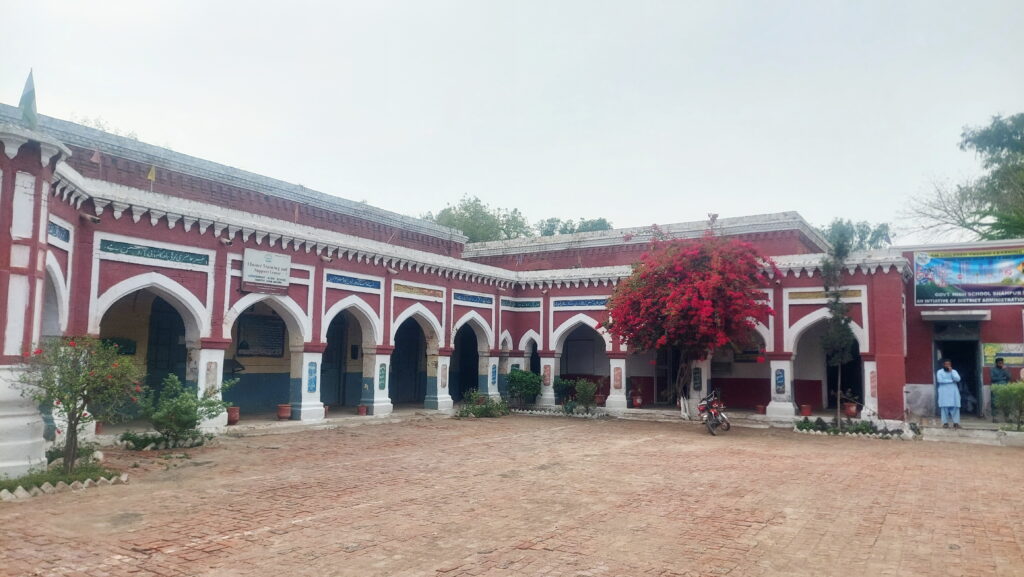
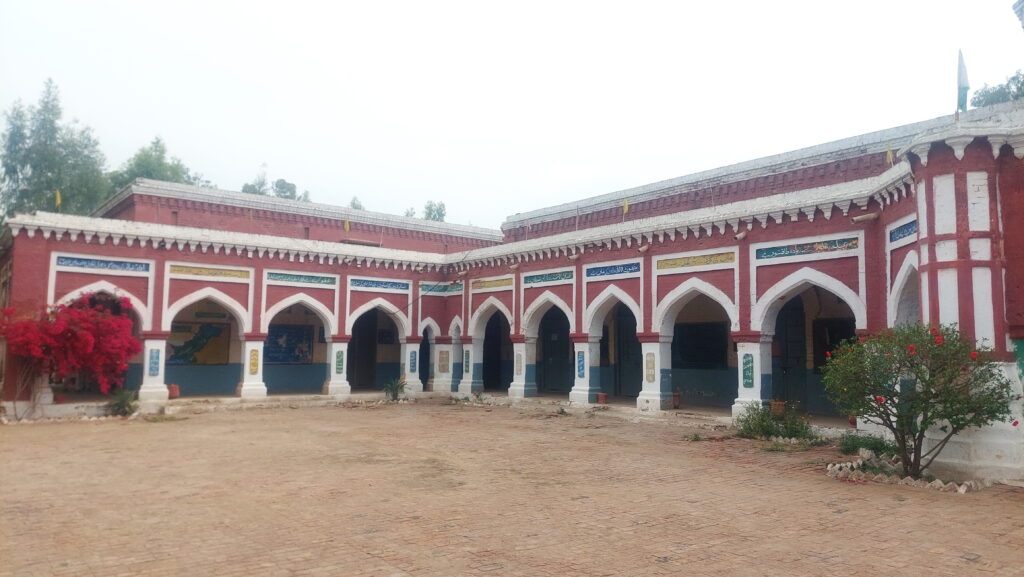
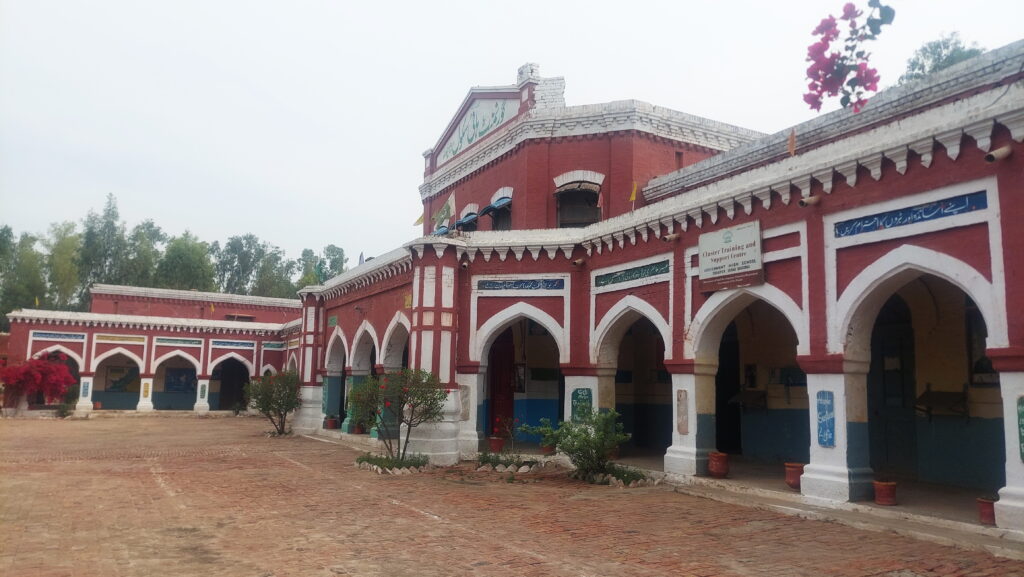
It is a big school, especially if we compare it with the schools which were built during the British period in the private sector. Its building displays all the beautiful features of architecture of that time. A big hall marks the centre of the building. The two wings span on both sides of the hall.
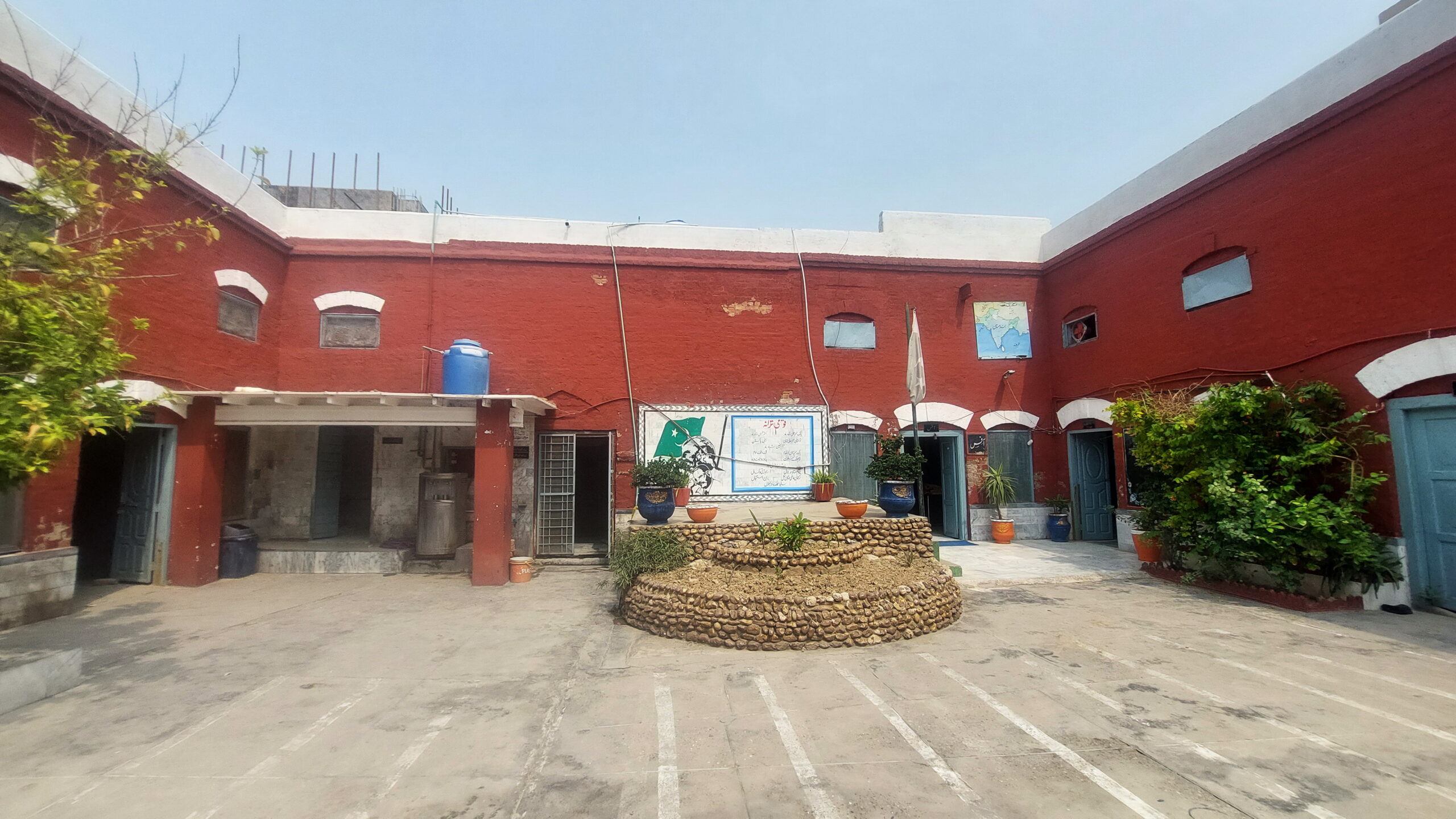
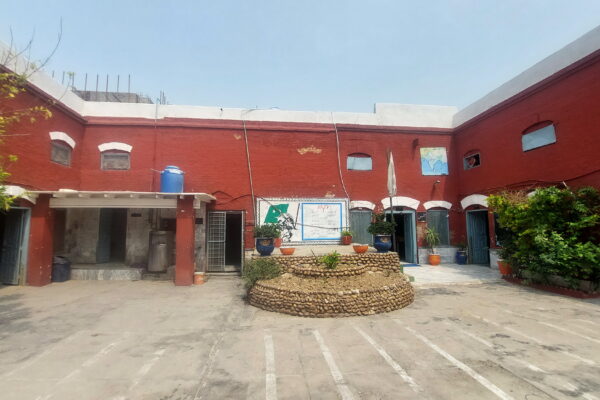
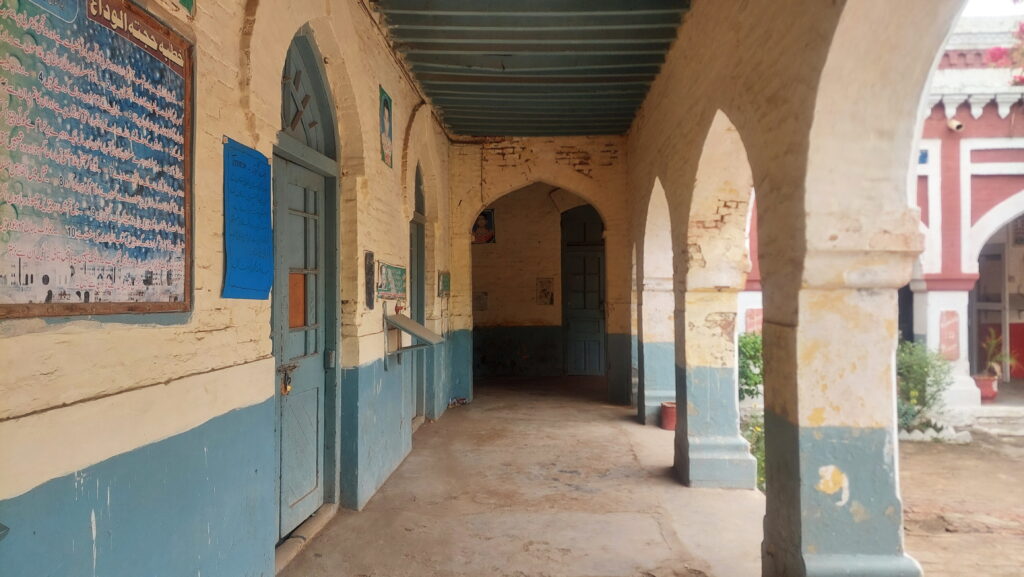
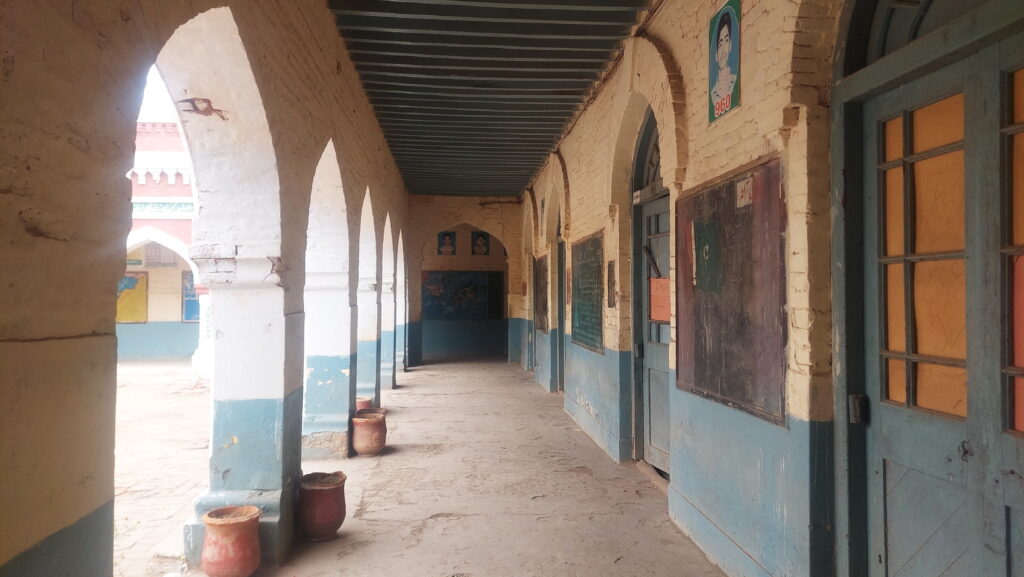
This building follows a late colonial style with clear influence of Indo-Saracenic architecture, adapted to a school setting. The overall layout is symmetrical, with a slightly raised and projected central portion and long single-storey wings on both sides. Both wings are in L shape. It is arranged around an open courtyard, which was a common feature in schools of that period, providing space as well as light and ventilation.
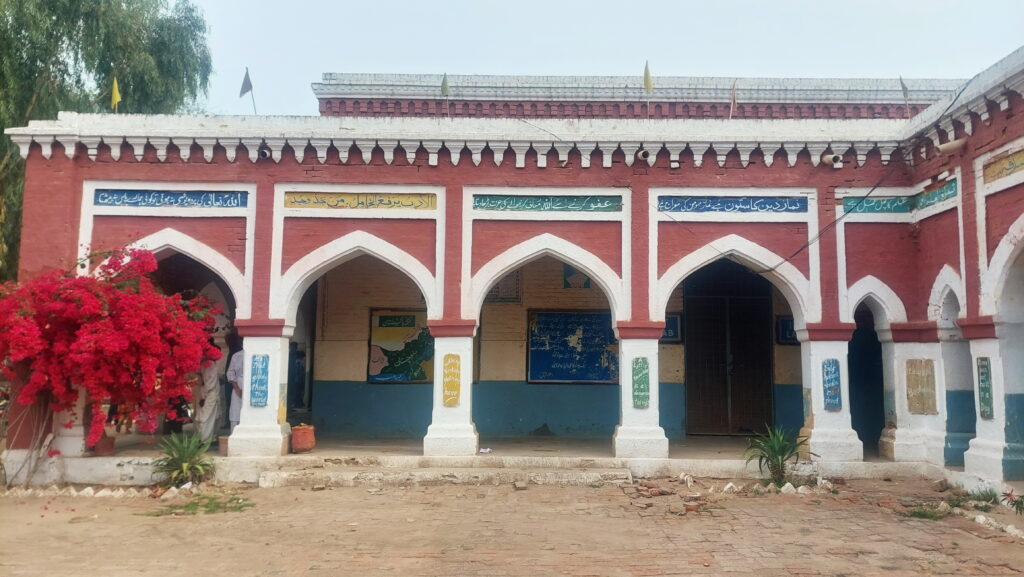
The most striking feature of the building is the continuous arcaded verandah, formed by a series of pointed arches of Indo-Islamic character. These arches rest on thick masonry piers and give the façade a balanced and rhythmic appearance. The central portion is further emphasized by a raised pavilion with a pediment-like top۔ The red brick structure is highlighted with white plaster bands around the arches and corners.
The building is constructed mainly of brick masonry, with thick walls and high ceilings suited to the local climate. The verandah provides shade and passage, while the courtyard allows proper airflow. Overall, it clearly appears to be a purpose-built school building, combining simple decoration with practical design, and reflecting the architectural character of the British period in Punjab. The woodwork, like doors and ventilators, is also of high quality.
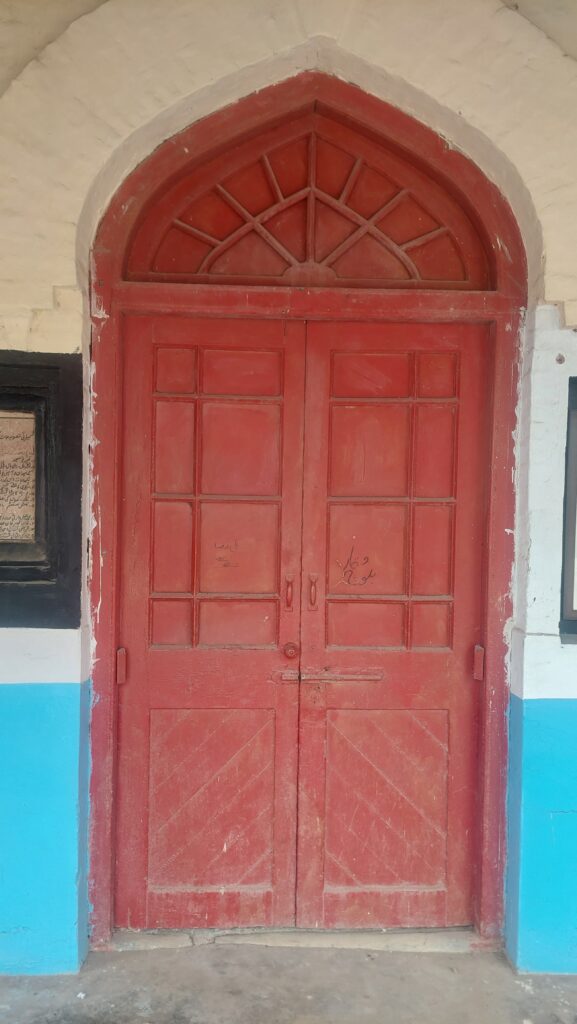
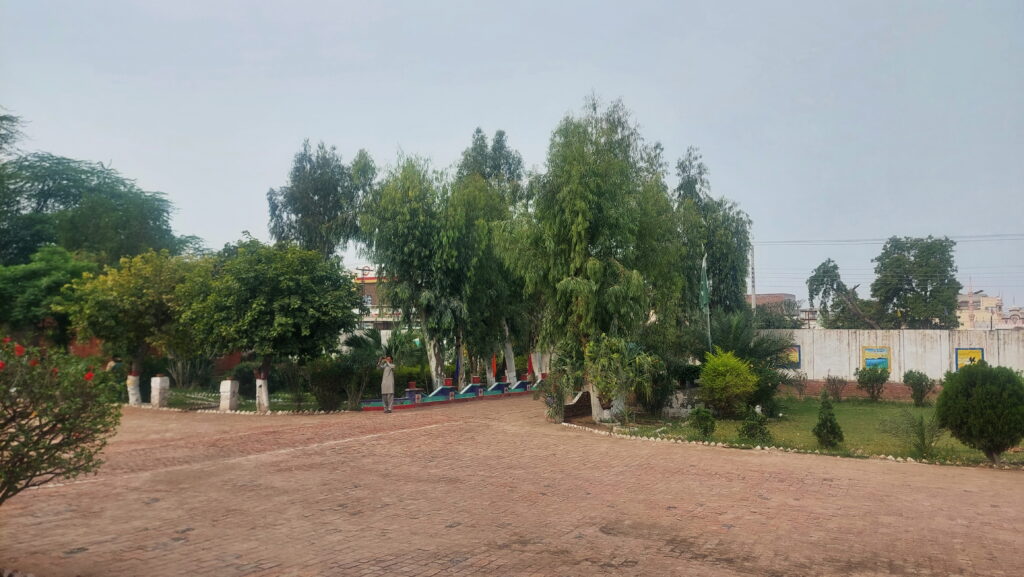
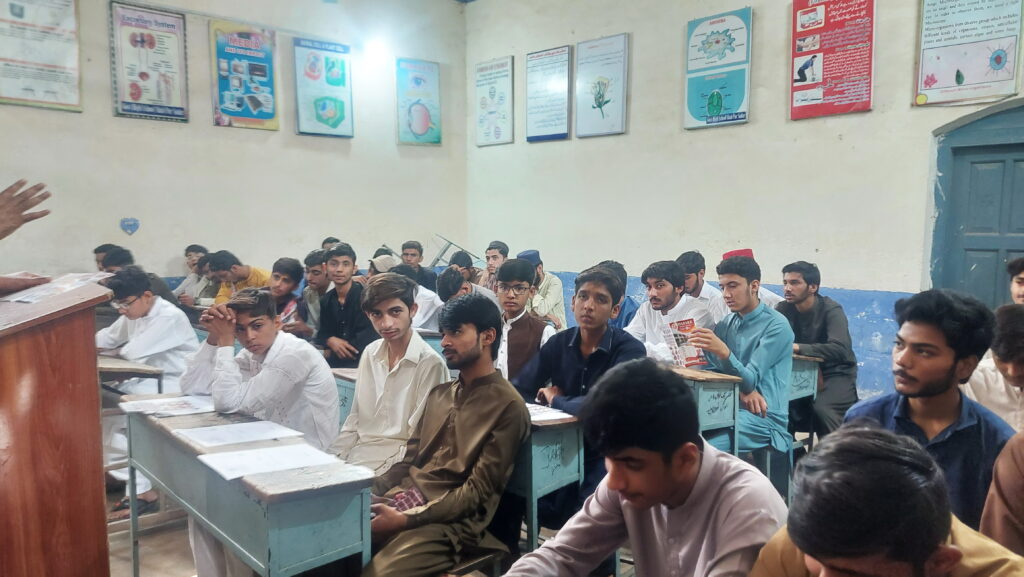
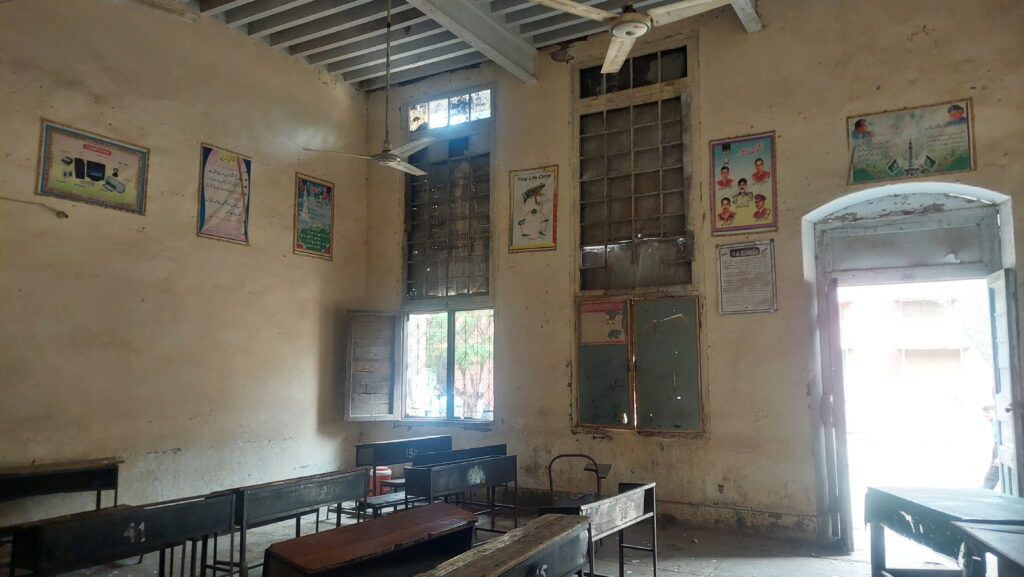
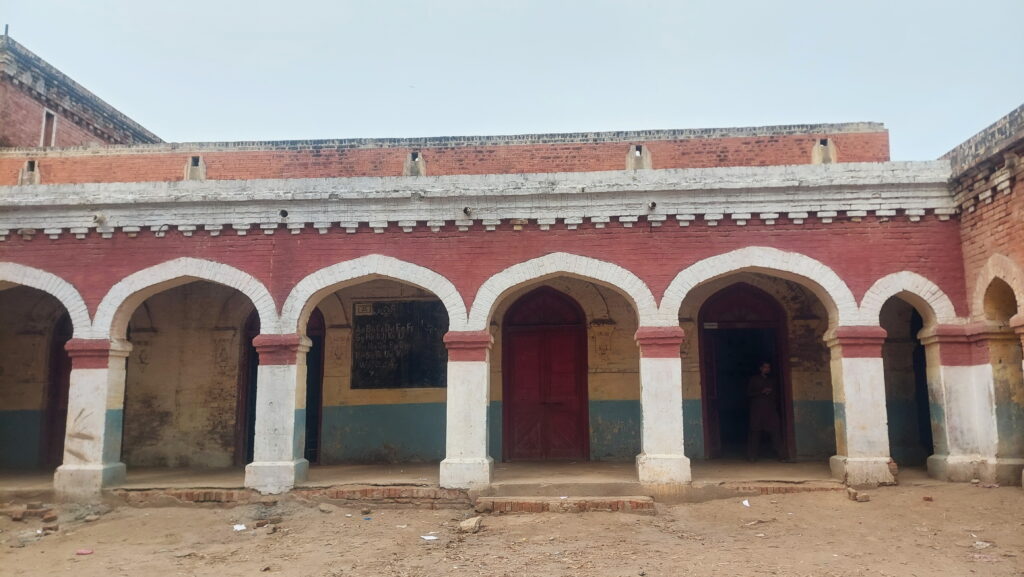
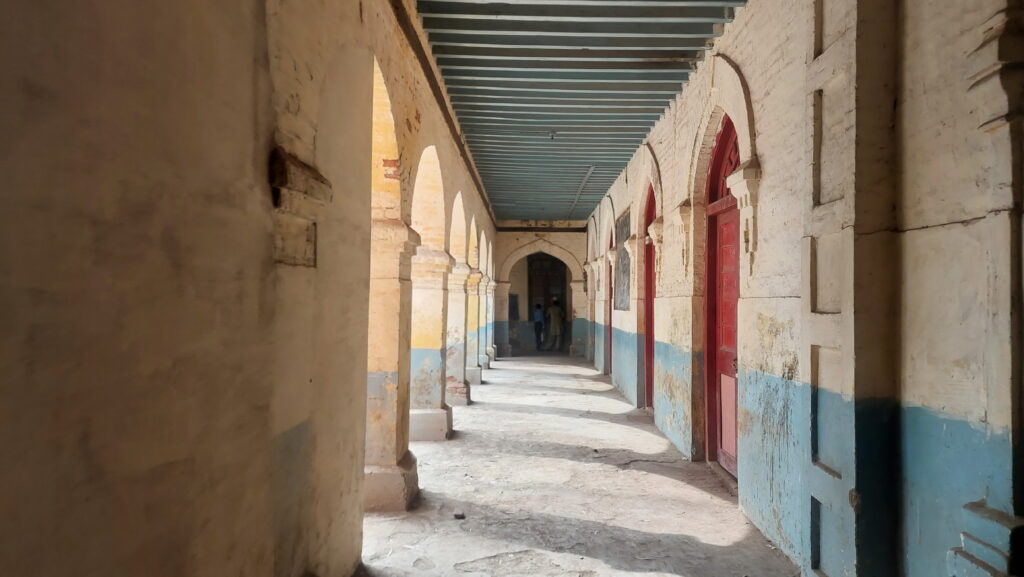
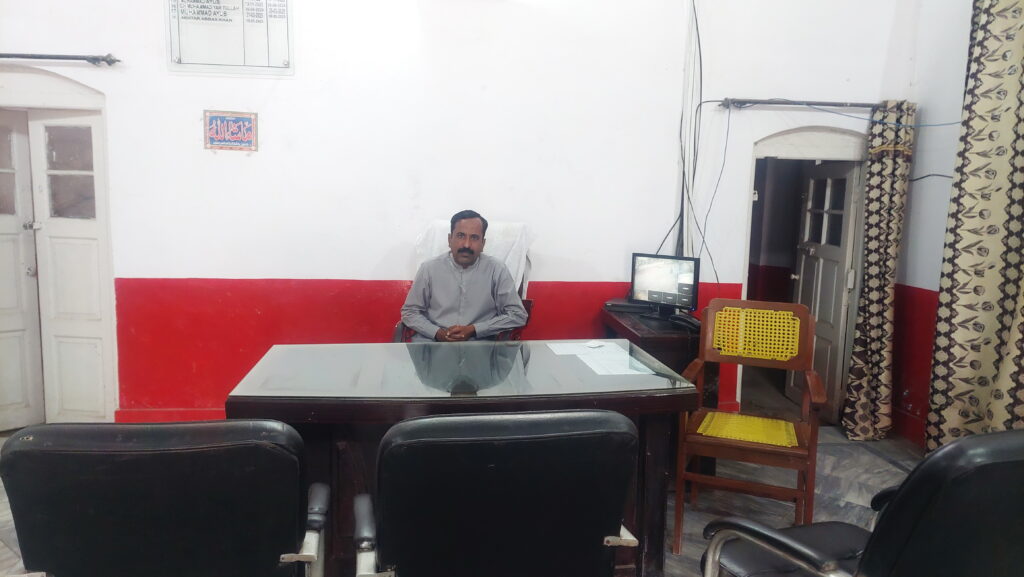
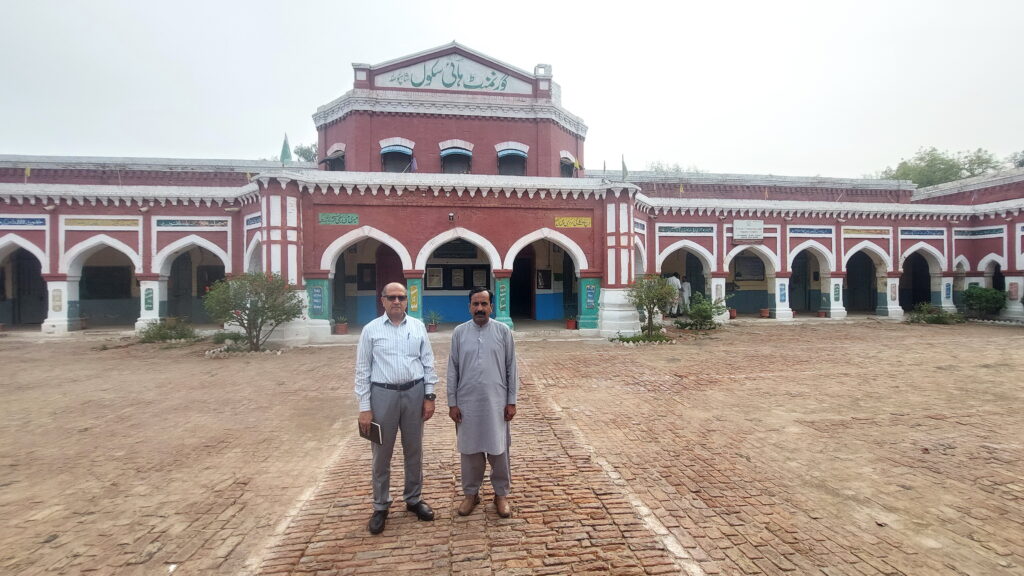
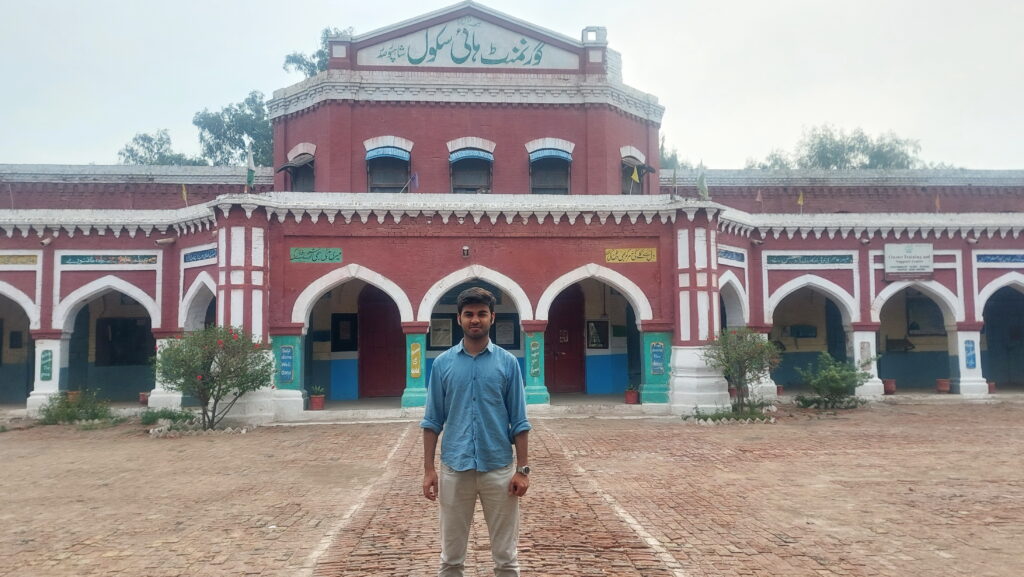
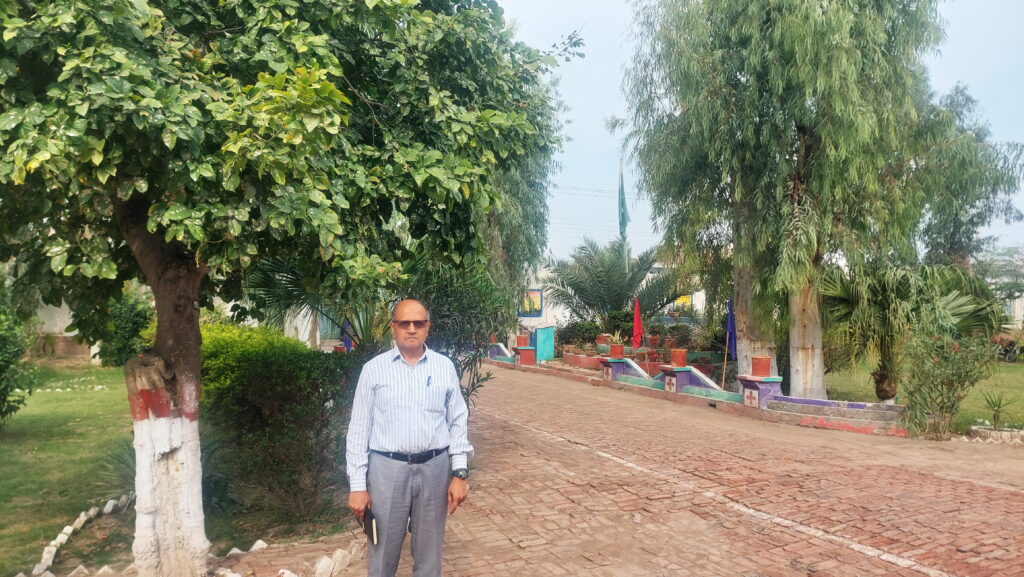
It was a cloudy, hazy day, which affected the photography. Even then, I hope the pictures show the beauty of the building. I also want to express my gratitude to the principal of the school, Mr. Muhammad Ayub, who kindly allowed me to tour the school and take pictures. Despite being busy, he personally showed me some parts of the school. I hope this great institution will continue to serve the coming generations of students of this region for a long time to come.
Tariq Amir
April 22, 2026.
Islamabad
Your message has been sent