
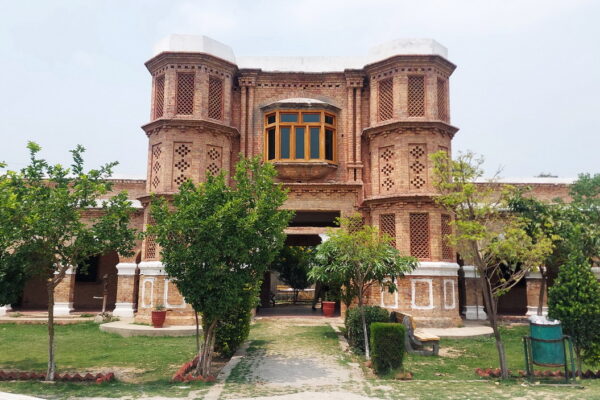
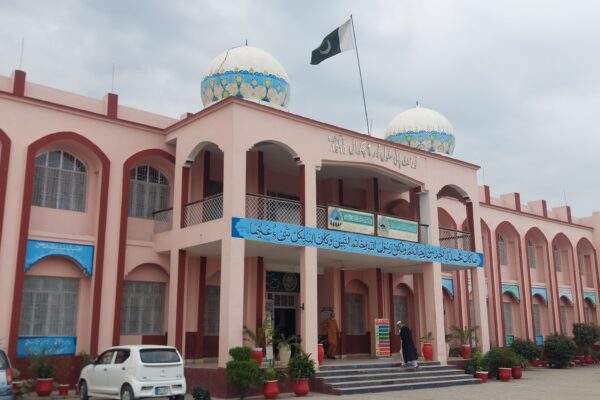
216. Shri Sanatan Dharma Lakshmi Narayan Mandir, Chiniot.
Chiniot is a historic city in the north-central Punjab province of Pakistan, about 165 kilometers west of the provincial capital, Lahore, near the banks of the Chenab River. It is an important historic town of Punjab, and its origins are ancient. During the Mughal rule, it was an important centre of administration and trade and was part of the Lahore Subah.
After the Mughal rule, Chiniot came under Sikh rule in 1803 and remained so until the whole of Punjab was annexed by the British in 1849. Under the new administration, Chiniot city and the surrounding areas were made part of Jhang District, and Chiniot became a tehsil of this district. Finally, in 2009, Chiniot was given the status of a district.
On 14 February 2026, I set out from Sargodha and first reached Sillanwali to visit Gurdwara Sri Singh Sabha. After that, my next destination was Chiniot. Here, after taking our dinner, we decided to hire a rickshaw to roam about in the winding streets of Chiniot. That decision proved to be correct, as instead of getting stuck and asking for directions to different places, we saved time and, in a short duration, visited several places of our interest. The first destination was a Hindu temple in the city, which now serves as a school.
Location & History:
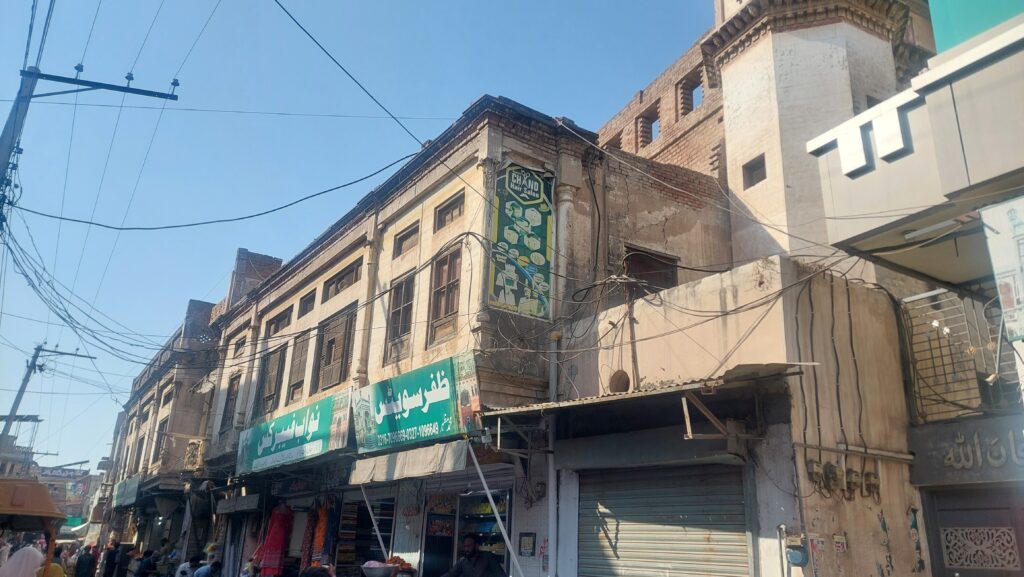
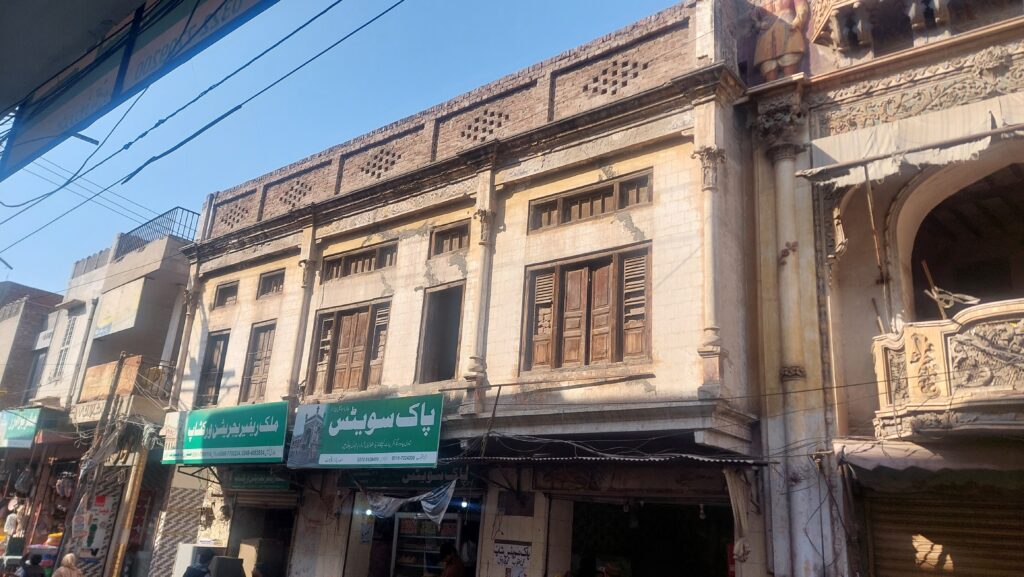
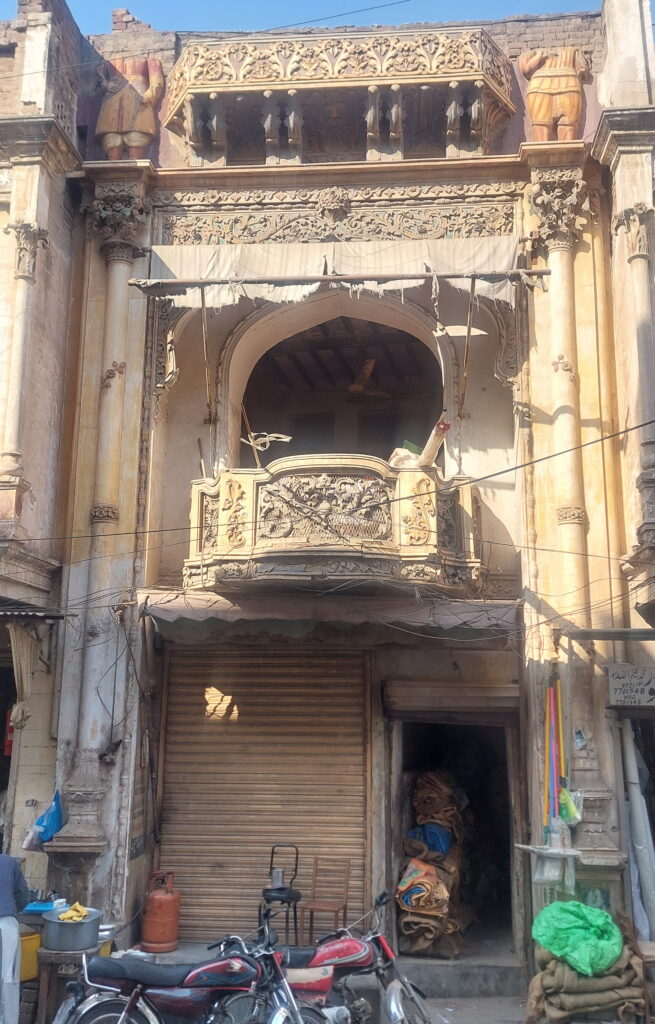
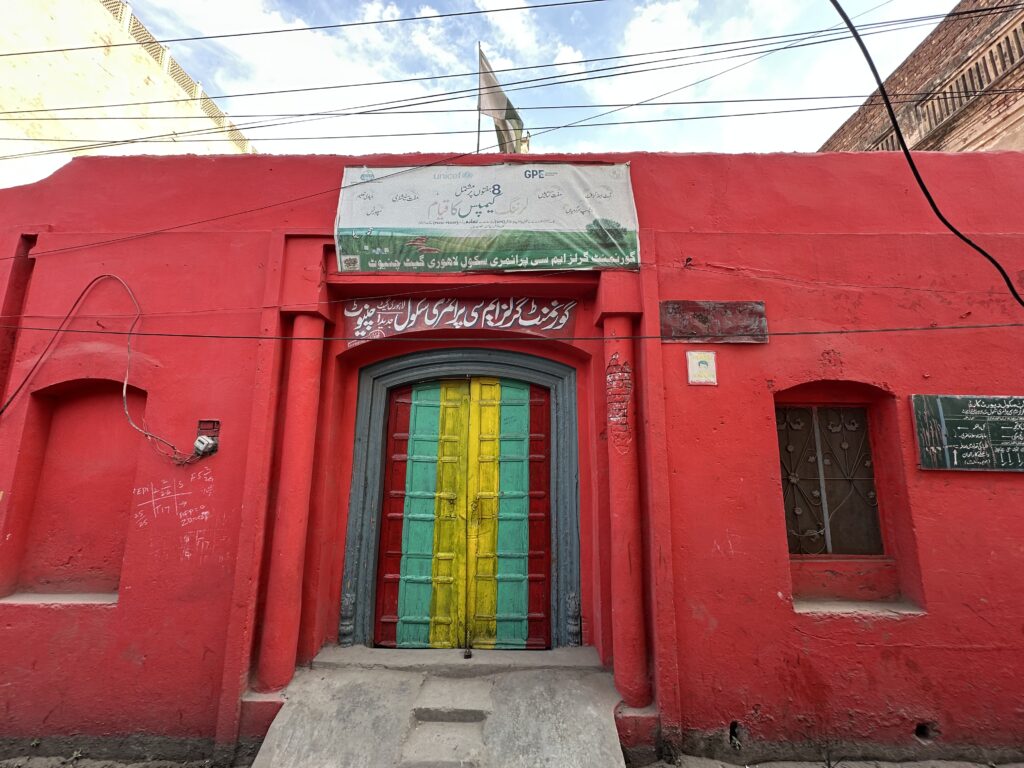
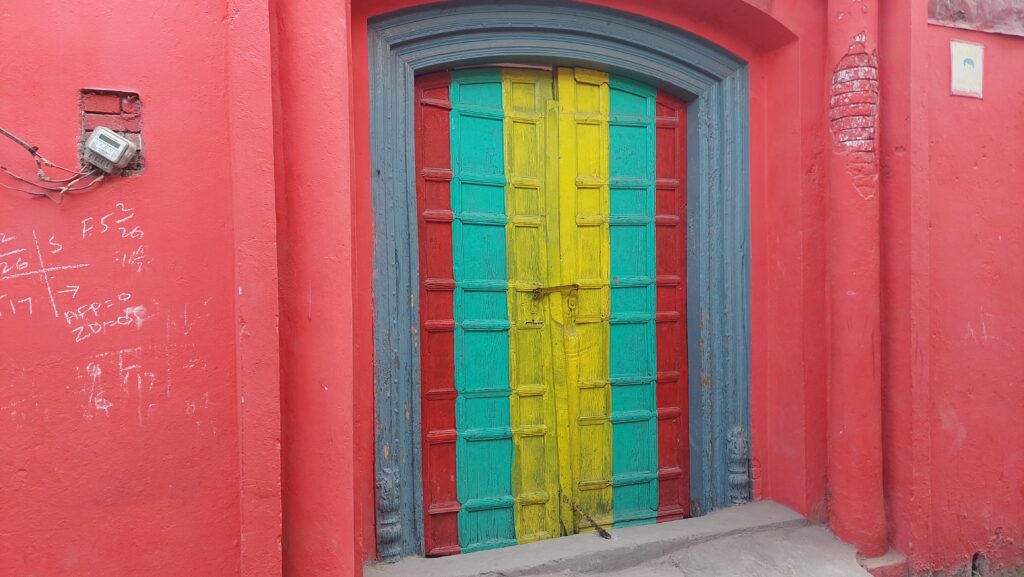
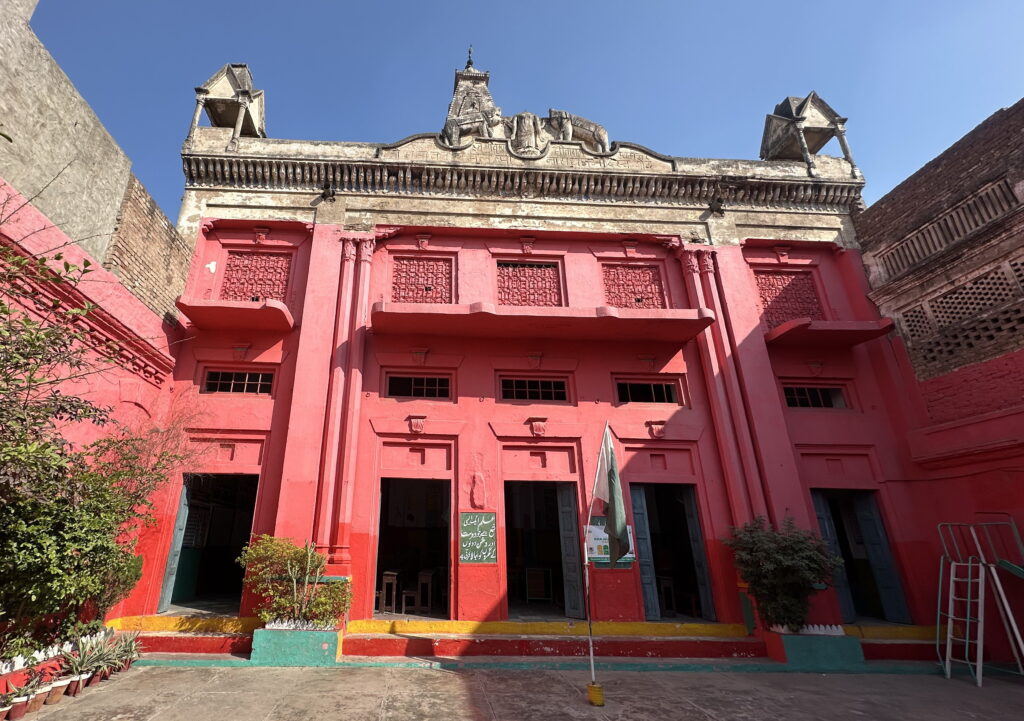
The temple is located in the eastern part of the city at 31°43’23.77″N, 72°58’56.80″E. The locality is known as Mohallah Lahori Gate, and the street is still called Mandir Road. I could not find any history or the exact date of construction of this temple; however, the style of construction clearly indicates that it was built in the 1930s or perhaps 1940s. The use of cement and concrete lintels and iron girders became popular during this period. However, an inscription on the facade of the temple provides its name as Sanatan Dharm Krishna Narayan Temple. Currently, the building of this magnificent temple serves as a girls’ primary school.
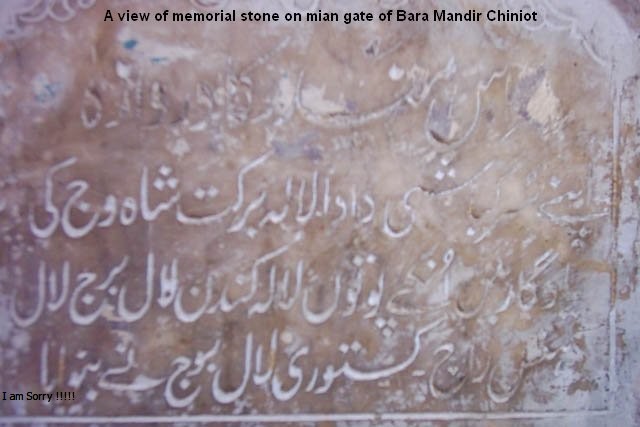
Though I could not find the exact date of its construction, I later met a tourist guide, Muhammad Zaheer, at Umer Hayat Palace in Chiniot. He informed me that the temple was built by four brothers—Lala Kundan Lal, Lala Brij Lal, Lala Hans Raj, and Lala Kasturi Lal—in memory of their grandfather, Lala Barkat Shah Vij. He later one sent me the following picture of a plaque, fixed somewhere in the temple. Though I myself did not see it.
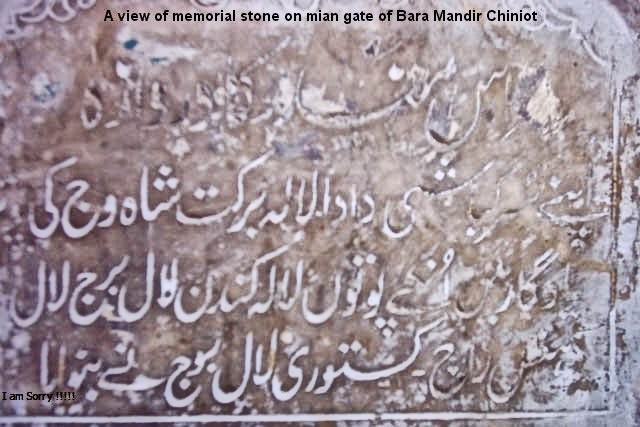
اپنے سُرگباشی دادا لالہ برکت شاہ وج کی
یاد گار میں اُنکے پوتوں لالہ کند لال برج لال
ہنس راج کستوری لال بوج* نے بنوایا
इस मन्दिर का दरवाज़ा
अपने सुर्गबाशी दादा लाला बरकत शाह विज की
यादगार में उनके पोतों लाला कुंद लाल, ब्रिज लाल
हंस राज कस्तूरी लाल बोज* ने बनवाया
The door of this temple, was got constructed by Lala Kund Lal, Brij Lal, Hans Raj, Kasturi Lal Boj*, in memory of their grandfather in heavenly abode,
Lala Barkat Shah Vij.
*Not sure about the correctness of this word.
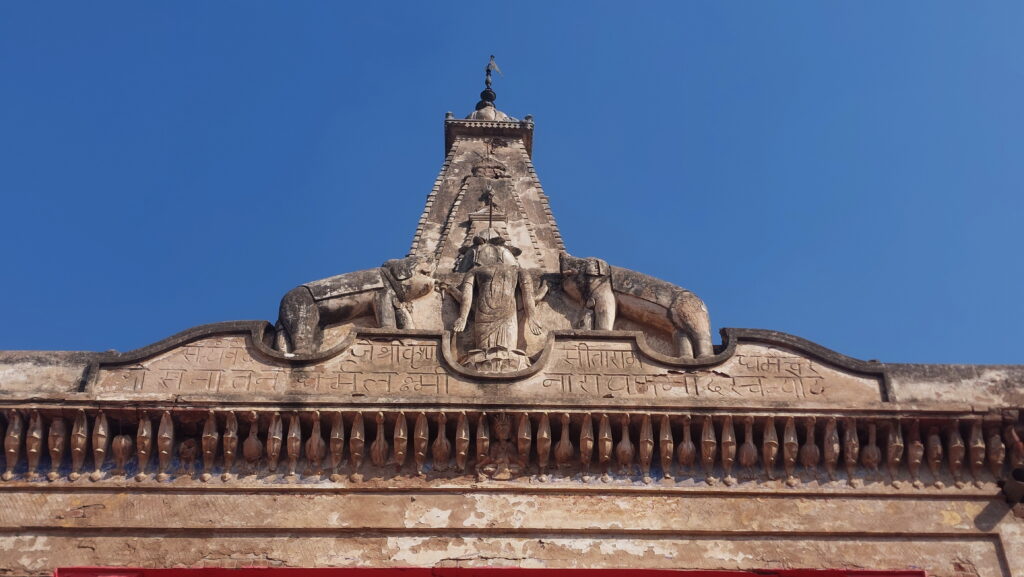
श्री सनातन धर्म लक्ष्मी नारायण मंदिर चिन्योट
ستوند جے شری کرشڑاں (کرشنا) سیتا رام دھرمچر
شری سناتن دھرم لکشمی نارائنڑ (نارائن) مندر چنیوٹ
Salutations to truth; victory to Lord Krishna, Sita and Ram, and to the followers of Dharma.
Shri Sanatan Dharma Lakshmi Narayan Temple, Chinot.
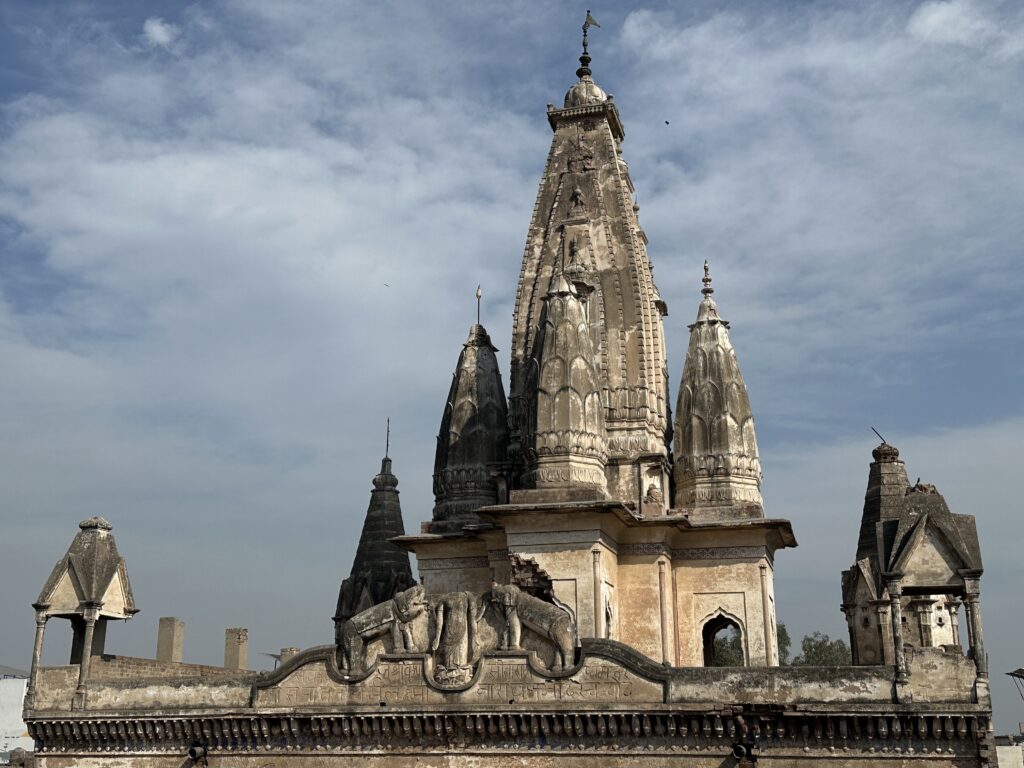
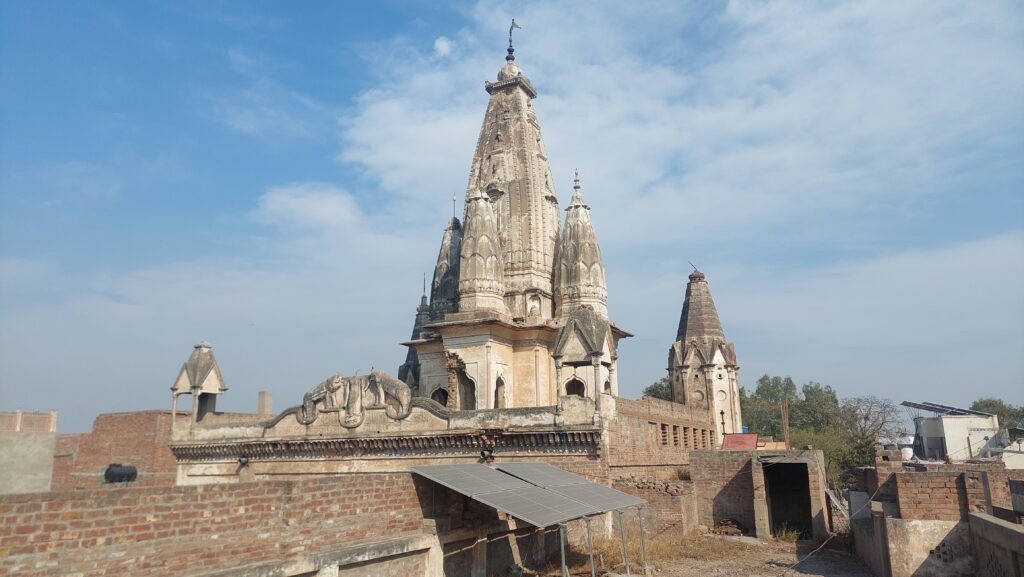
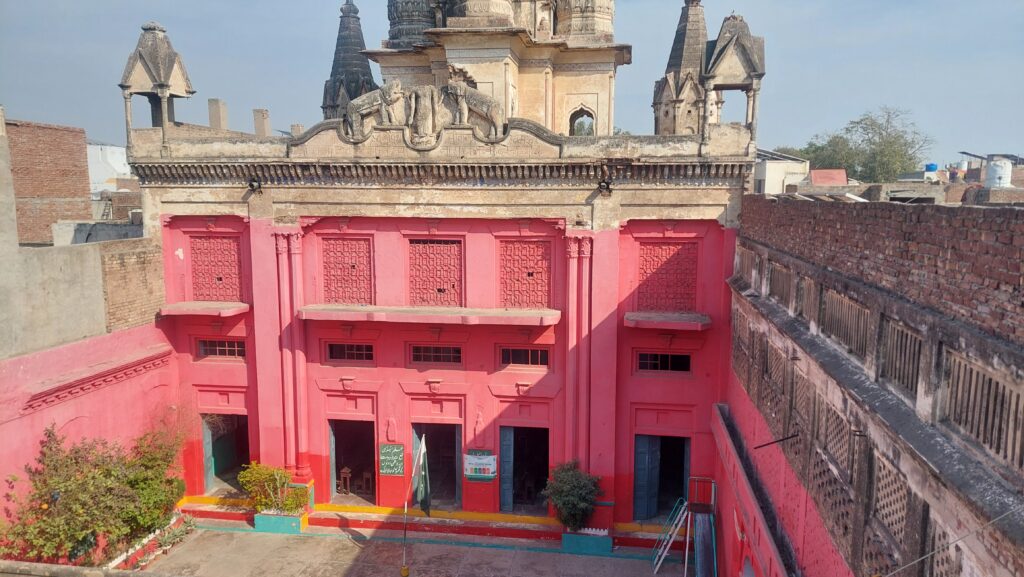
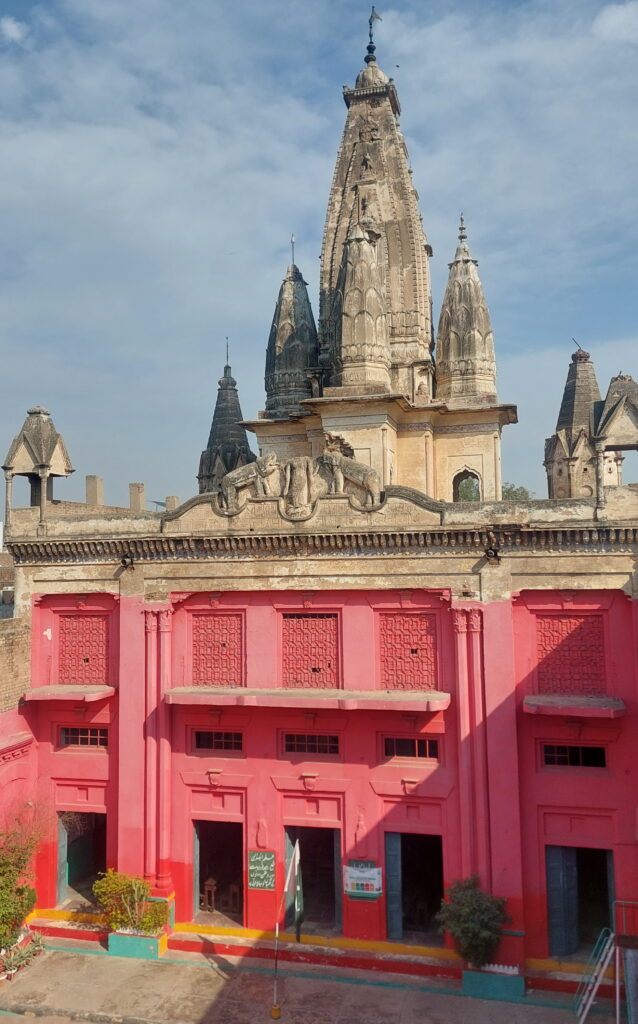
Layout and Architecture:
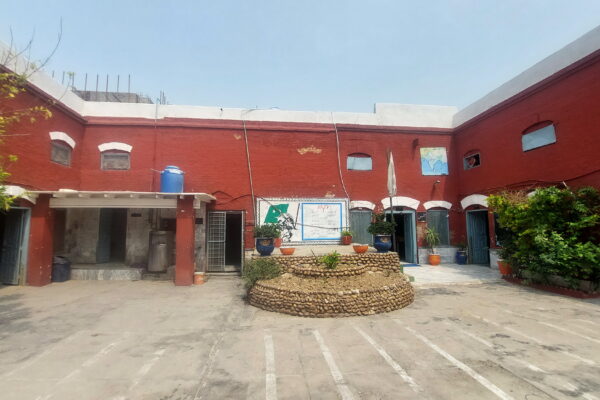
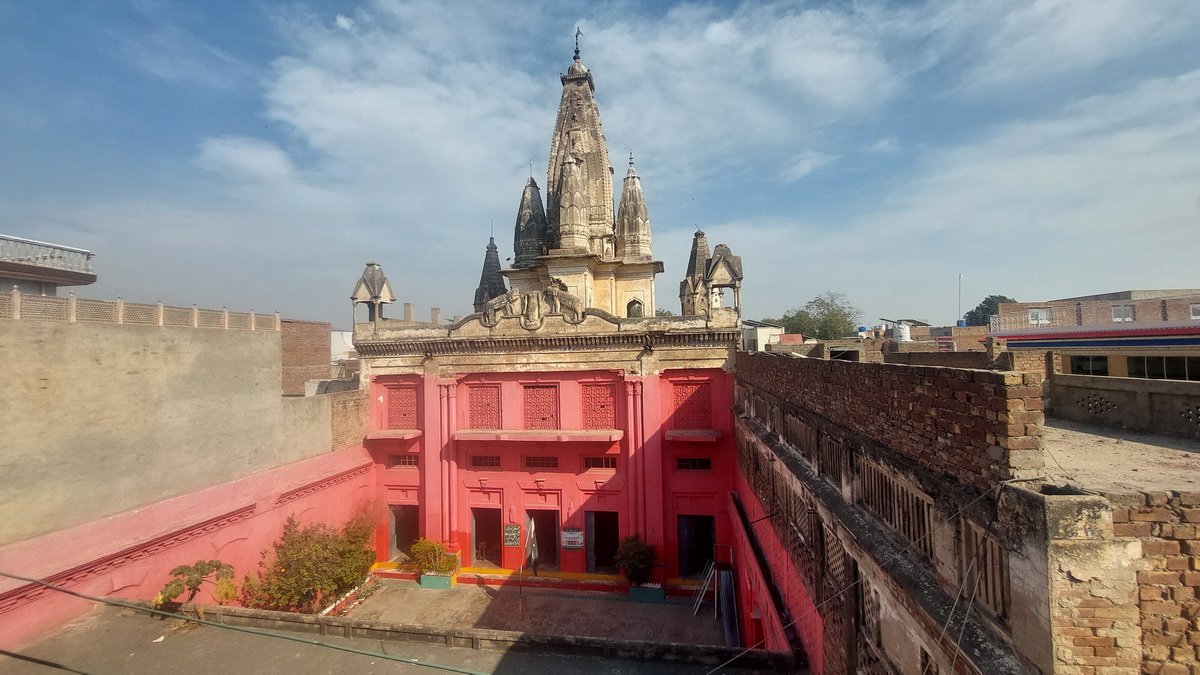
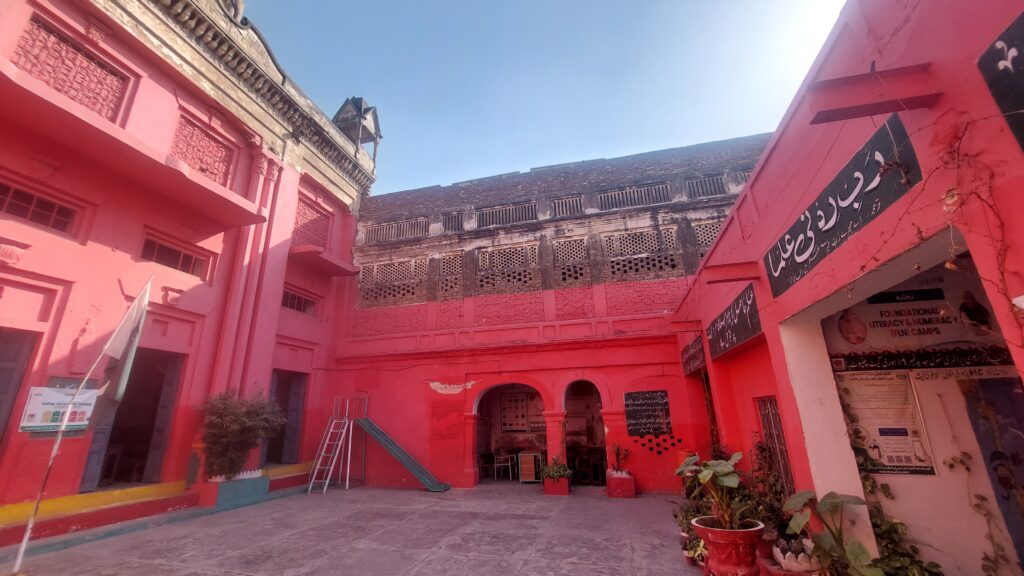
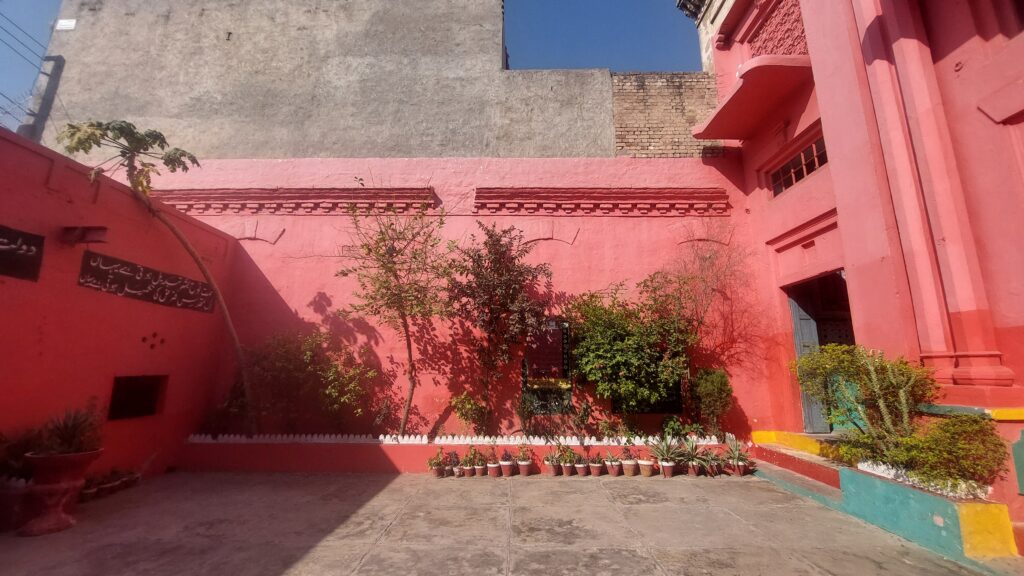
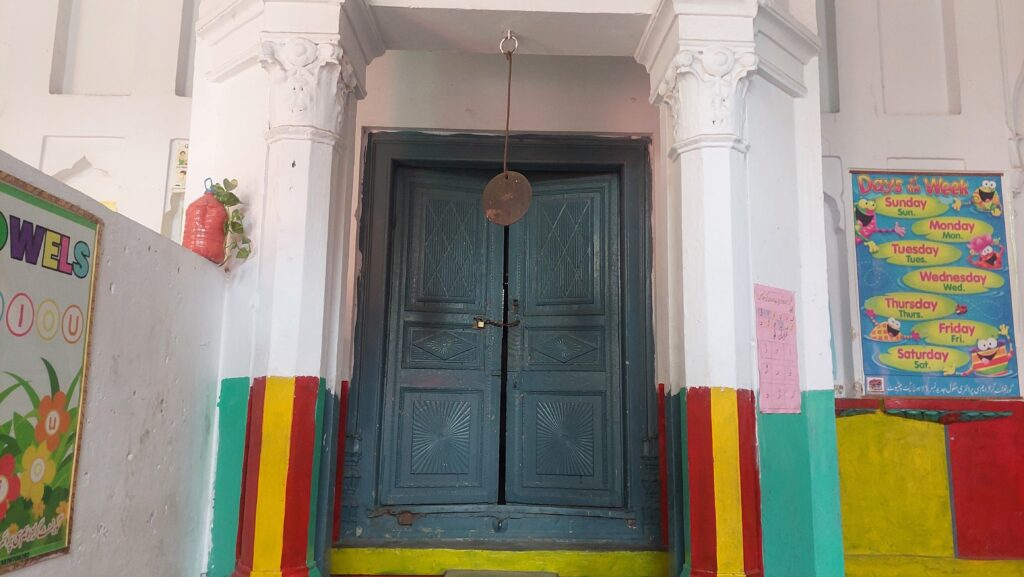
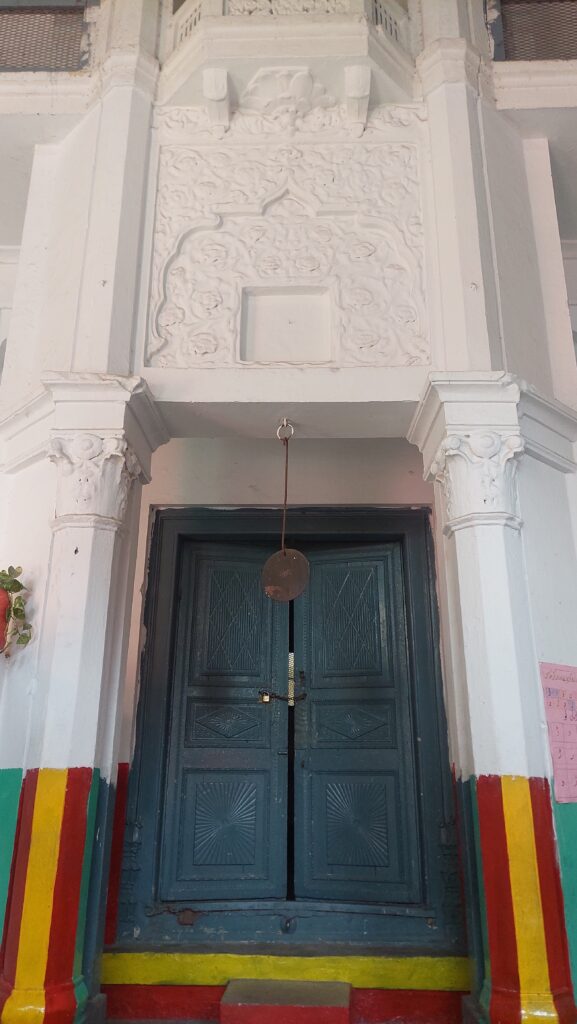
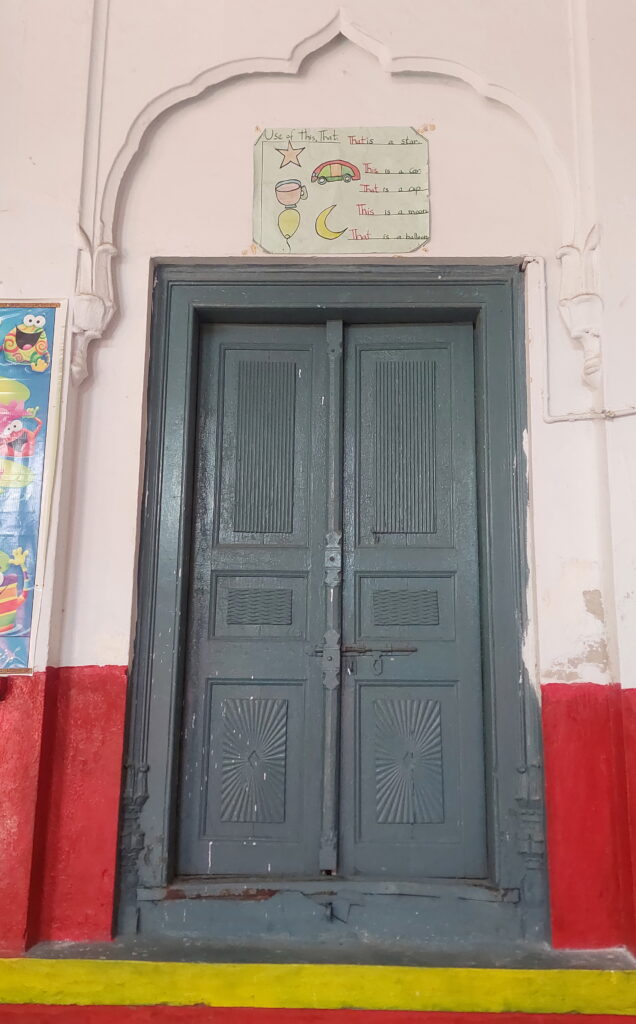
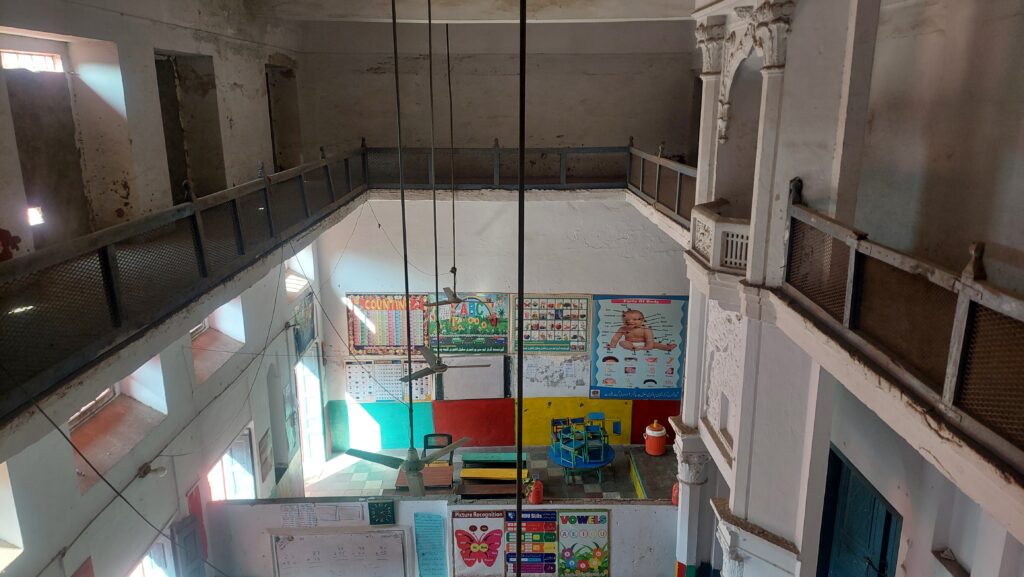
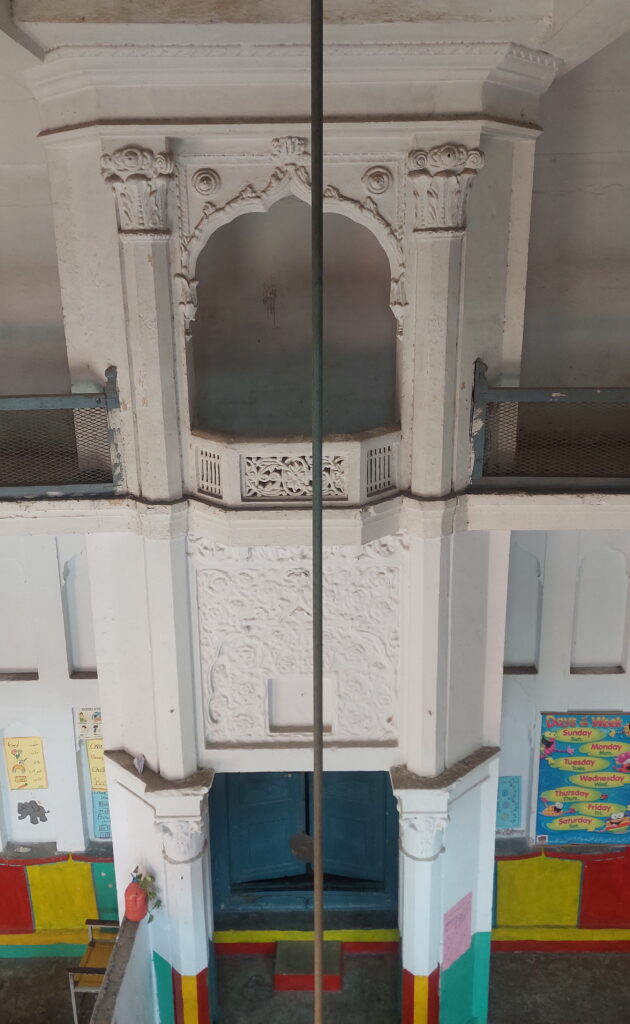
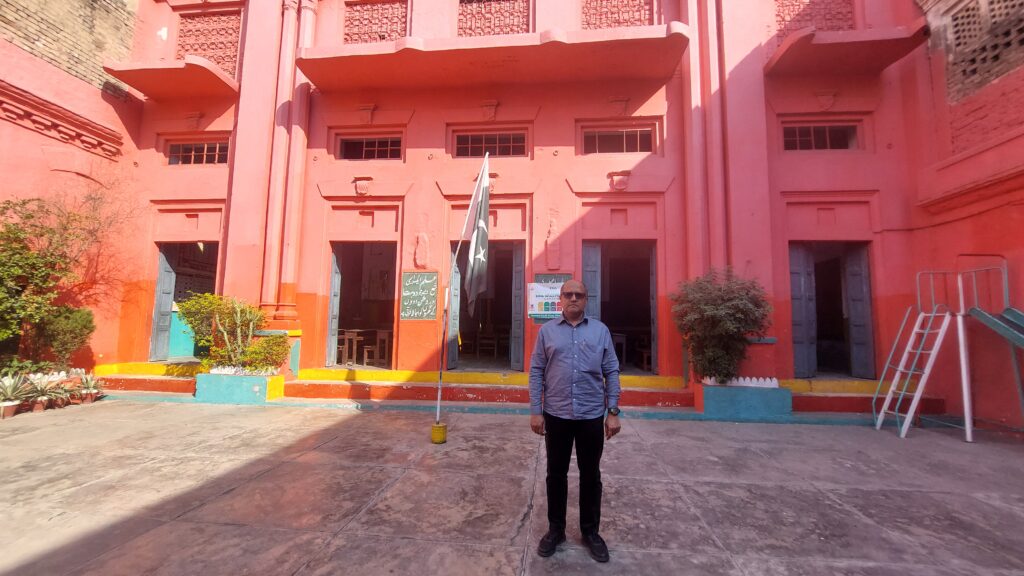
Currently, a primary school for girls is housed in this temple. At the time of my visit, the school was closed, but fortunately, someone from the neighbourhood arranged the key and allowed us to enter. The main entrance opens into a deorhi, a covered vestibule, which leads further into the courtyard.
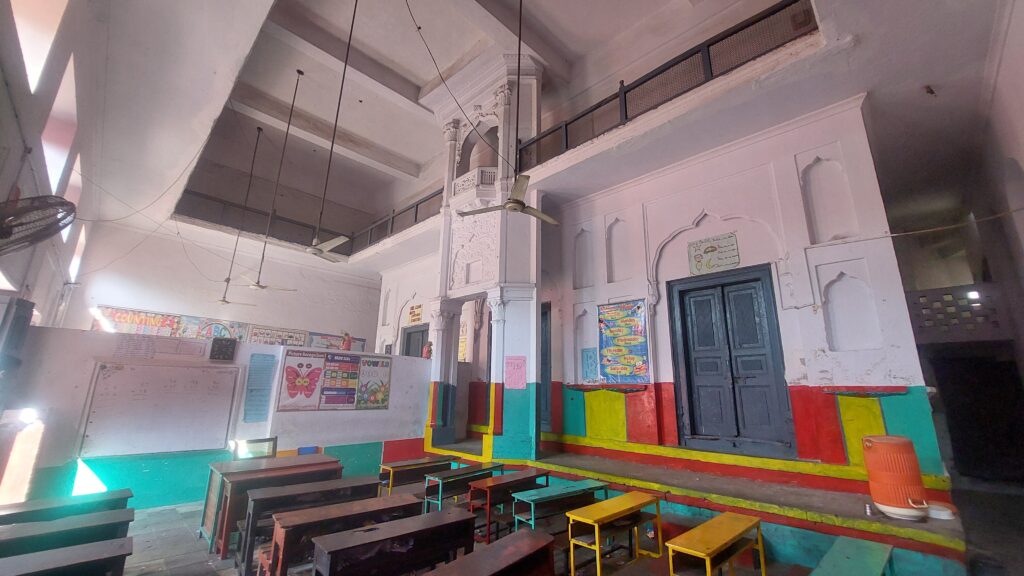
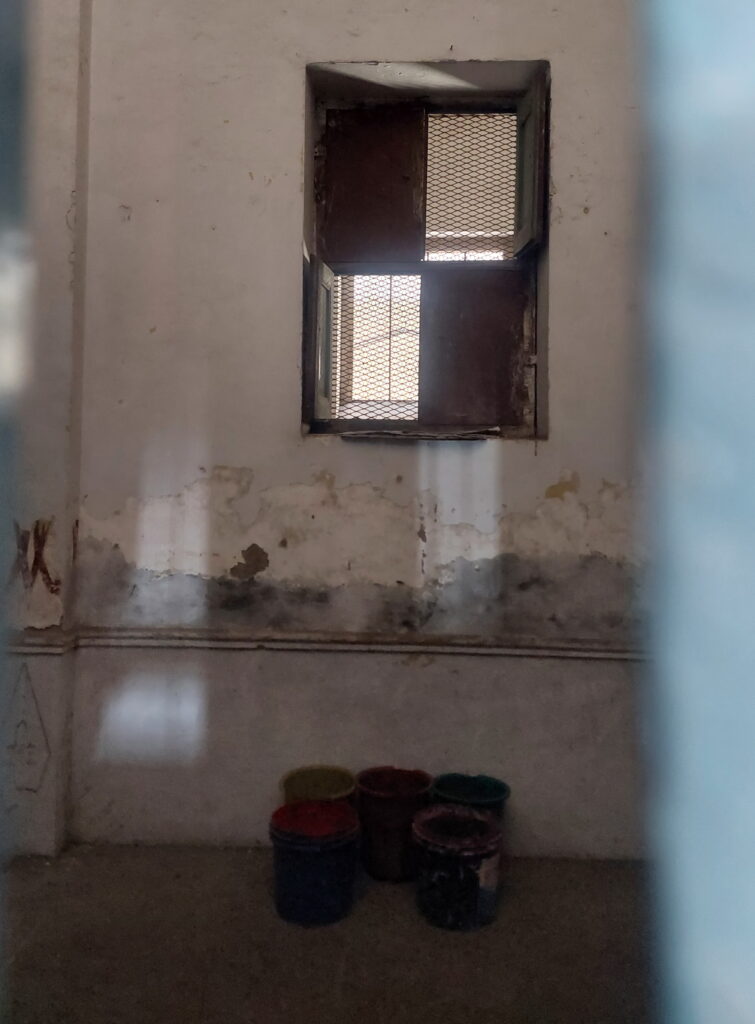
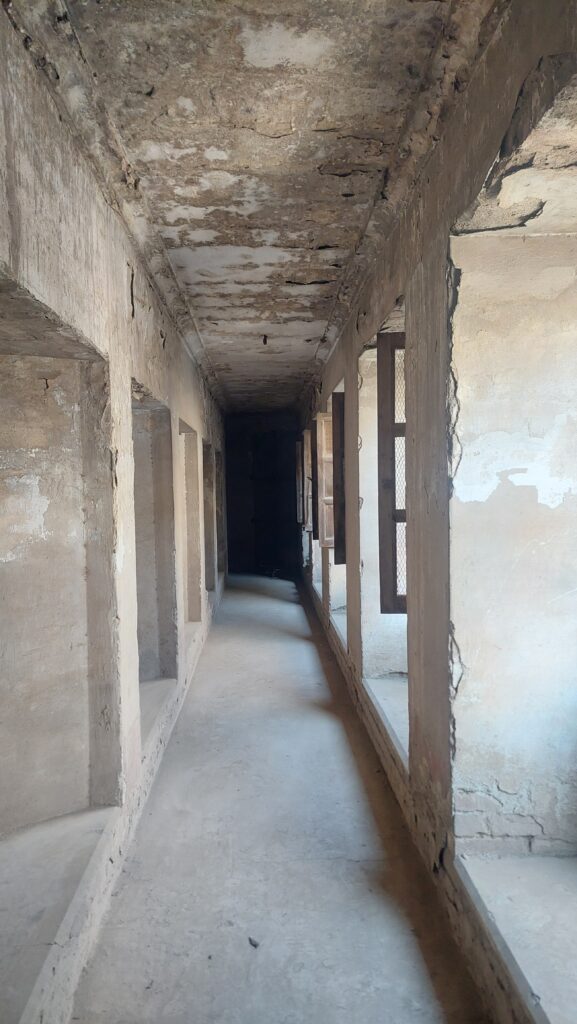
The temple building is quite impressive and still in excellent condition, showing signs of proper maintenance. Its doors open into a large, spacious hall with a high roof, giving a sense of openness. A gallery overlooks this hall from above, while a few rooms at the back remained closed during my visit. A staircase leads up to the gallery on the first floor and further to the roof.
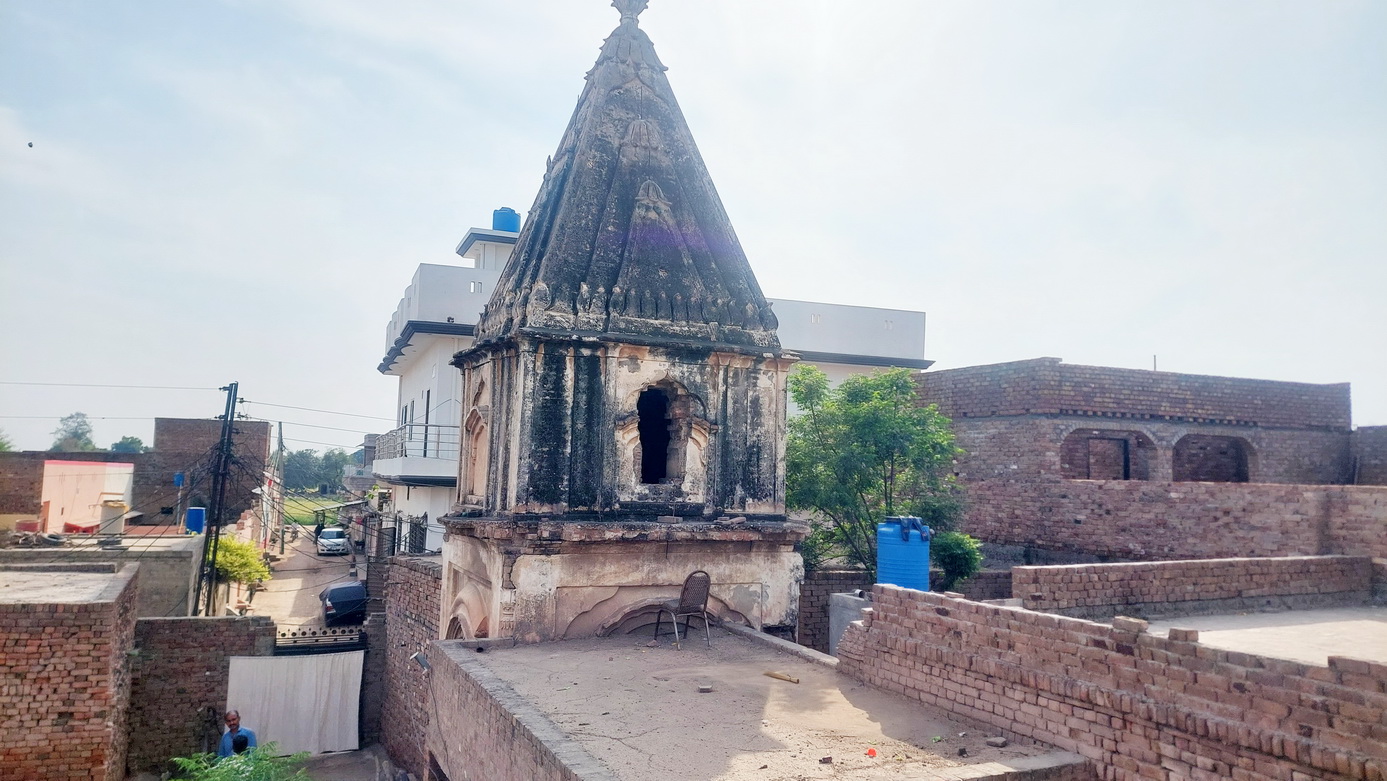
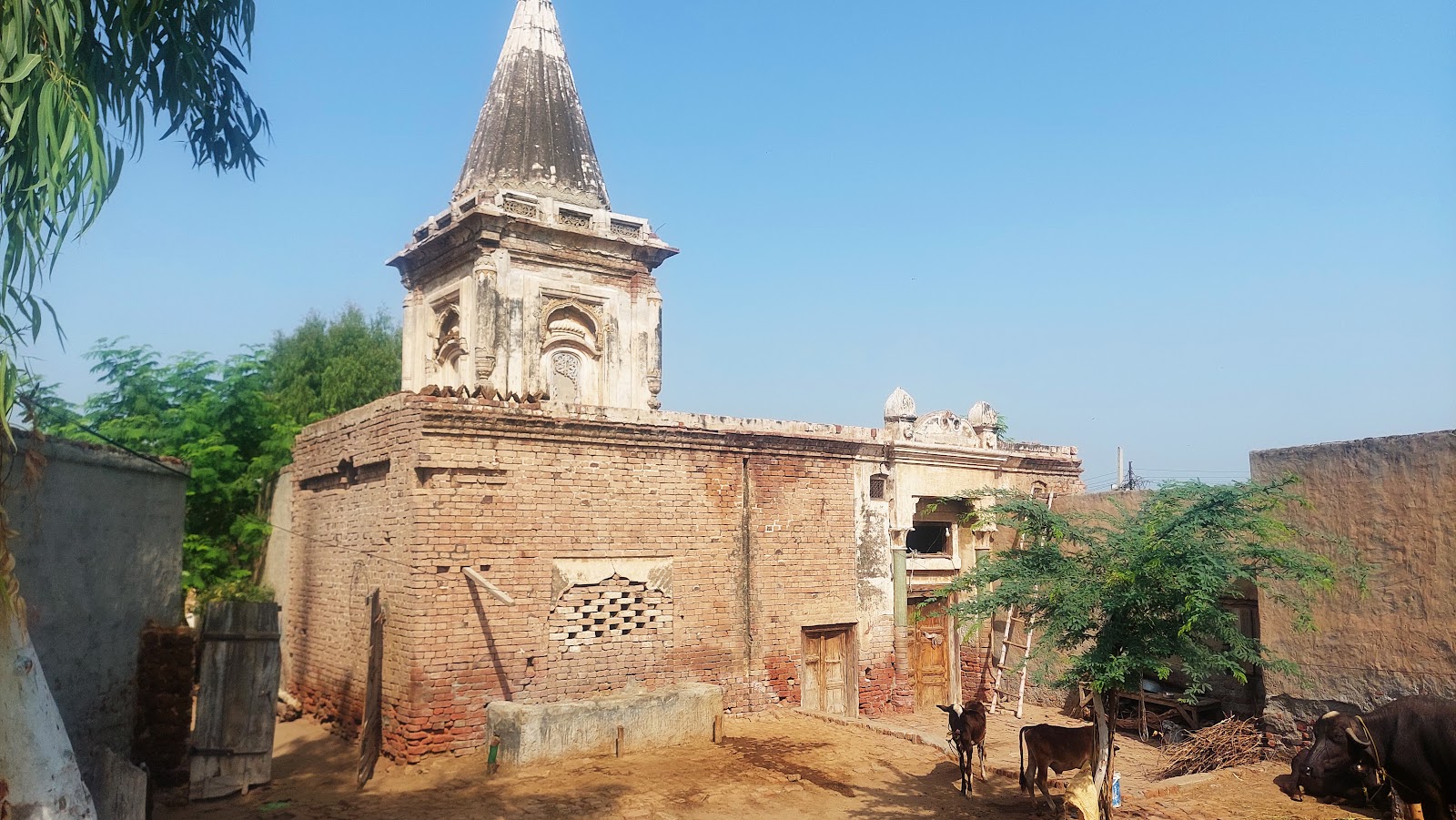
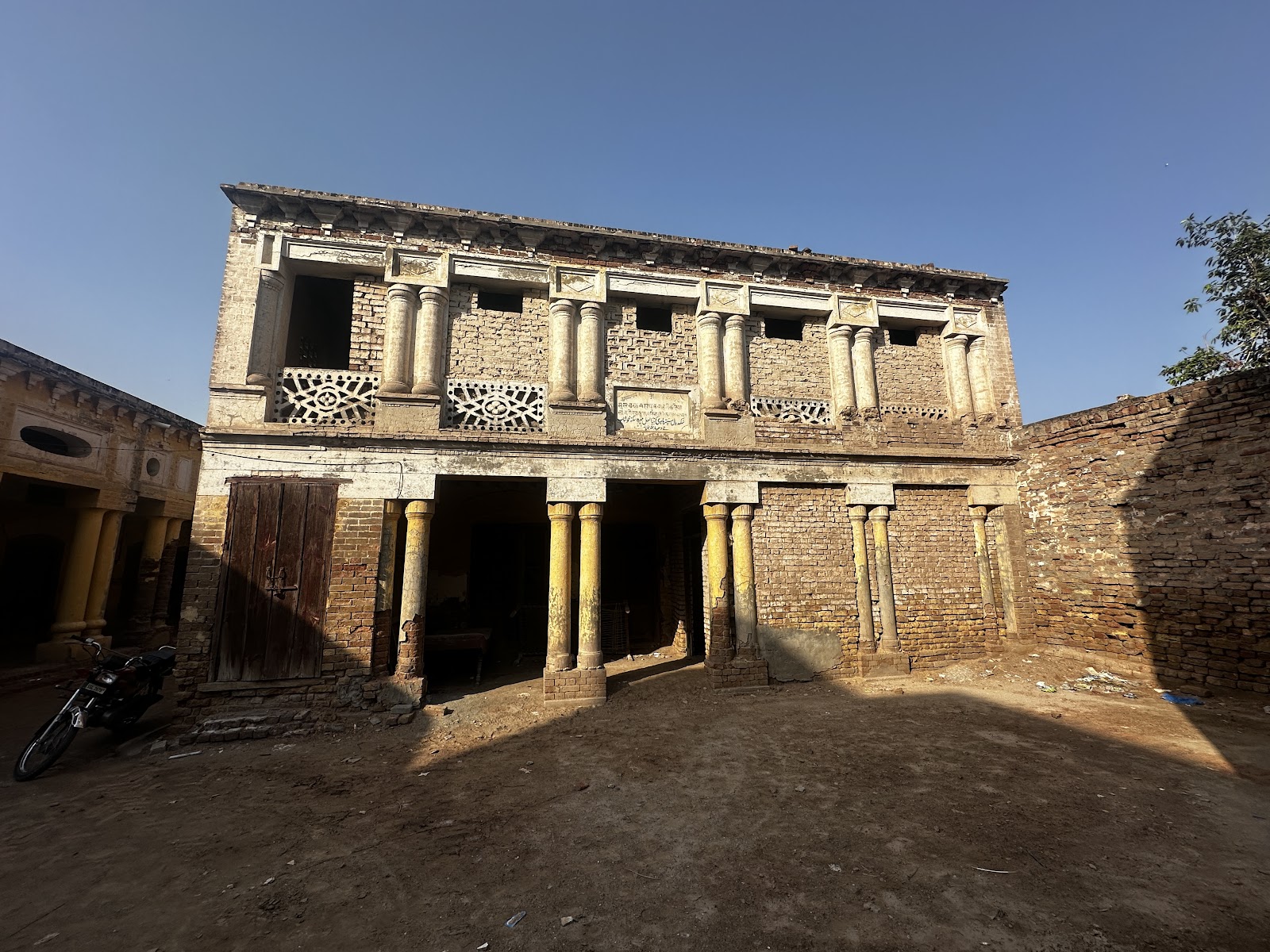
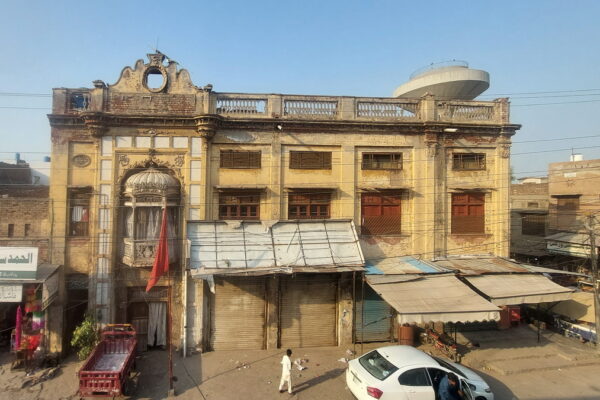
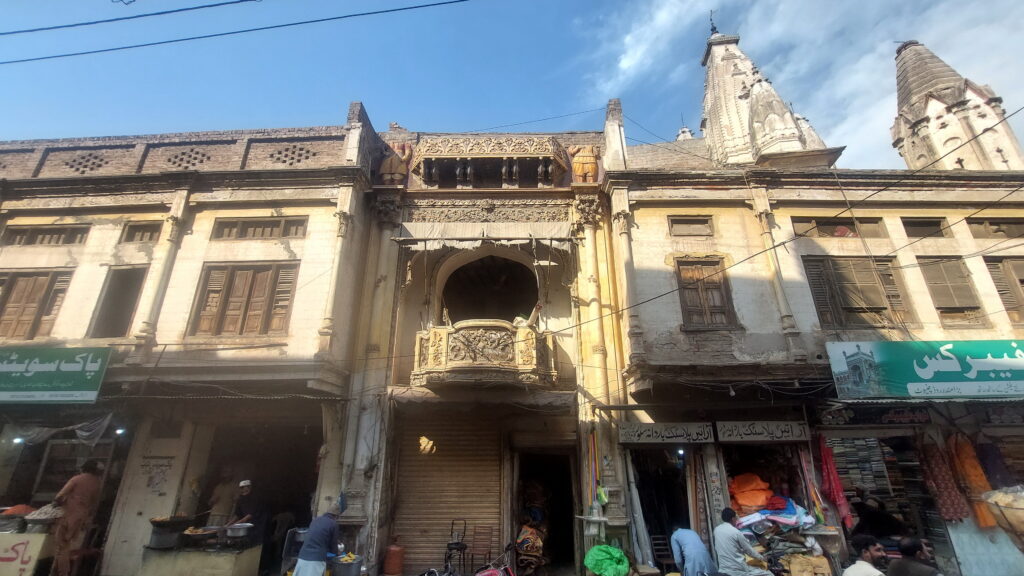
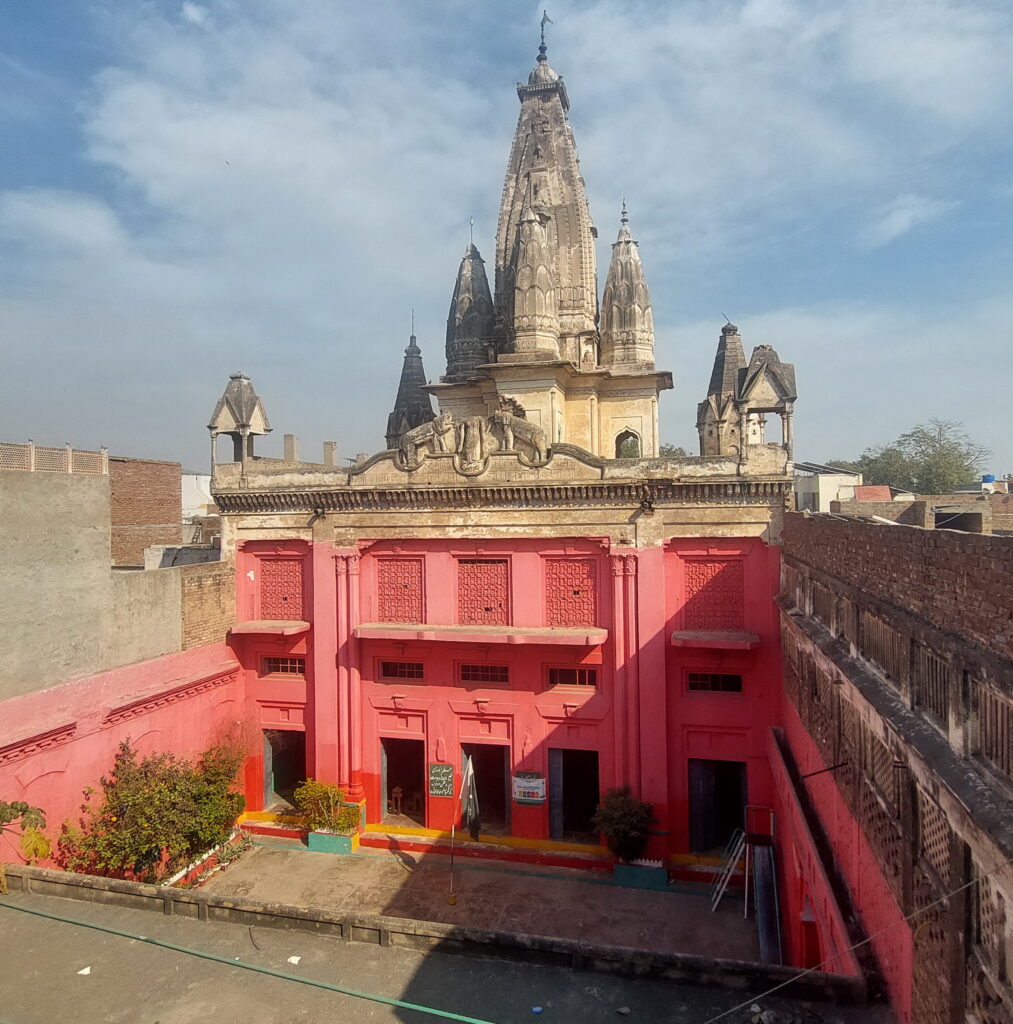
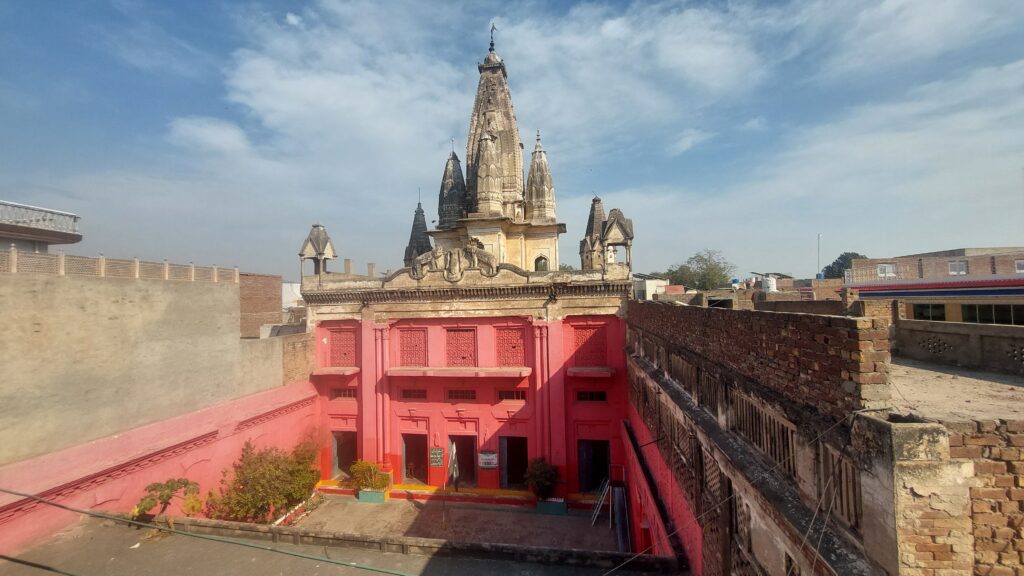
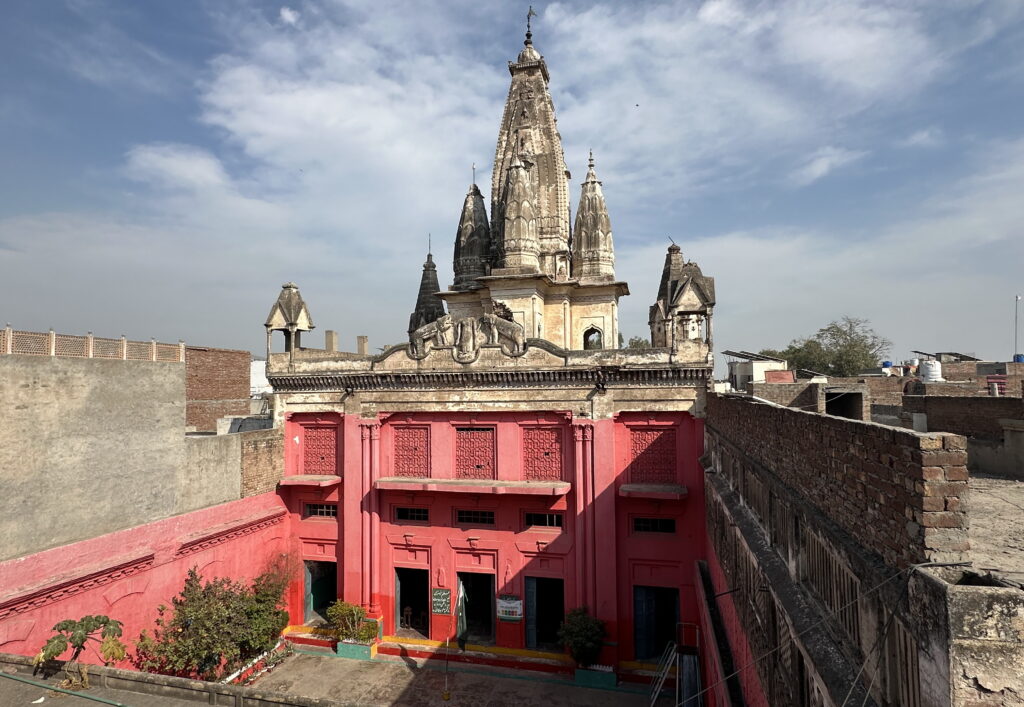
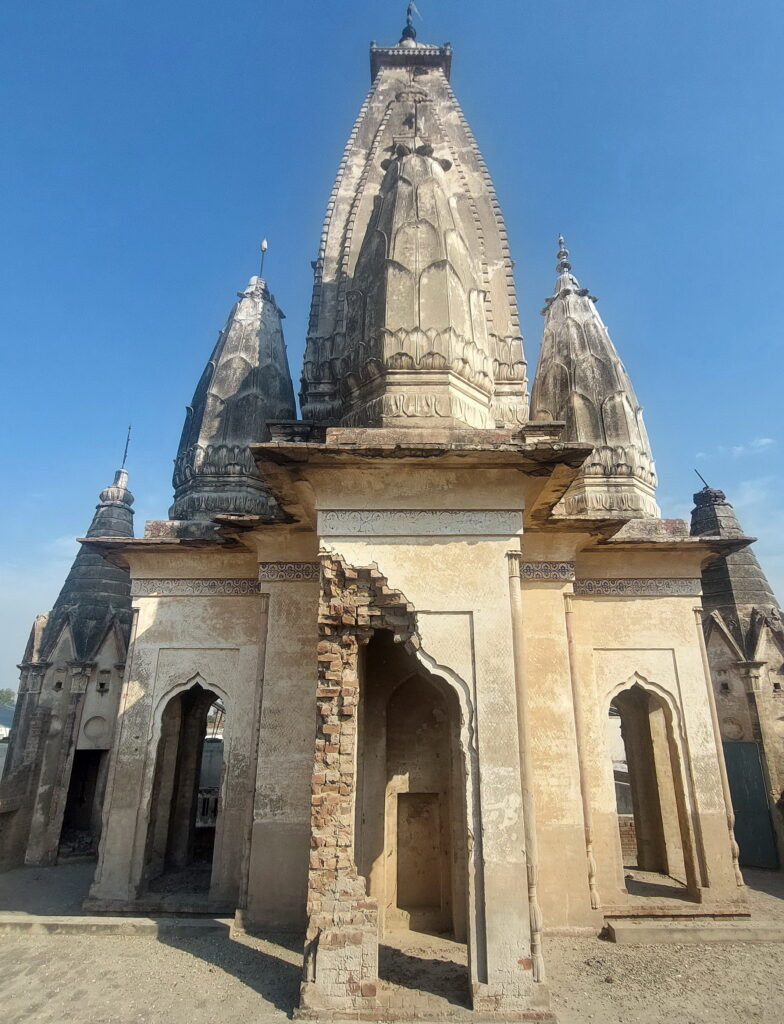
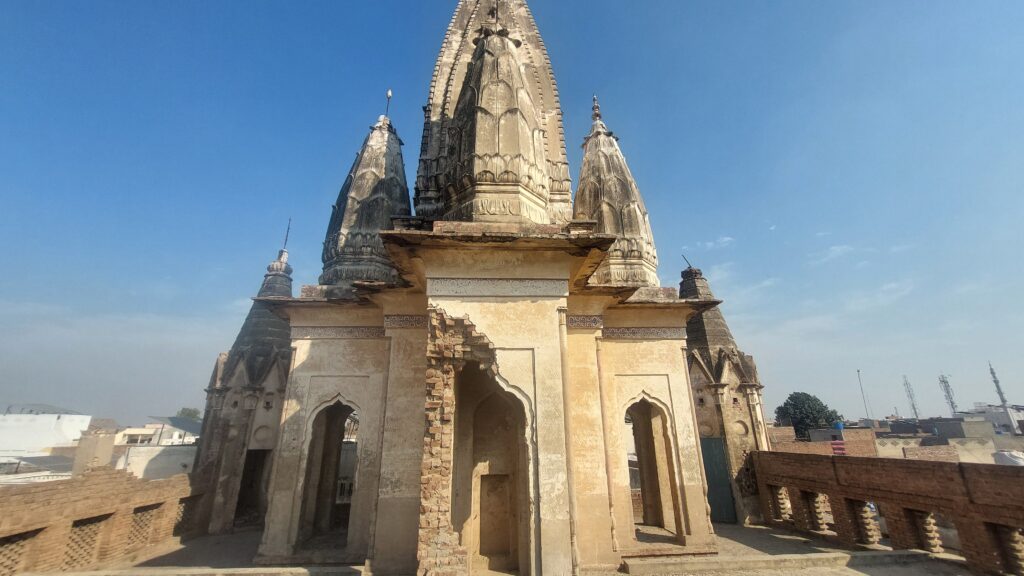
I could not fully explore the entire complex, but it appears to consist of at least two sections: the main temple structure, seen in most of the photographs, and another building along the main street, visible in the opening images of this article. This building was probably used as a residential complex for the staff and visitors.
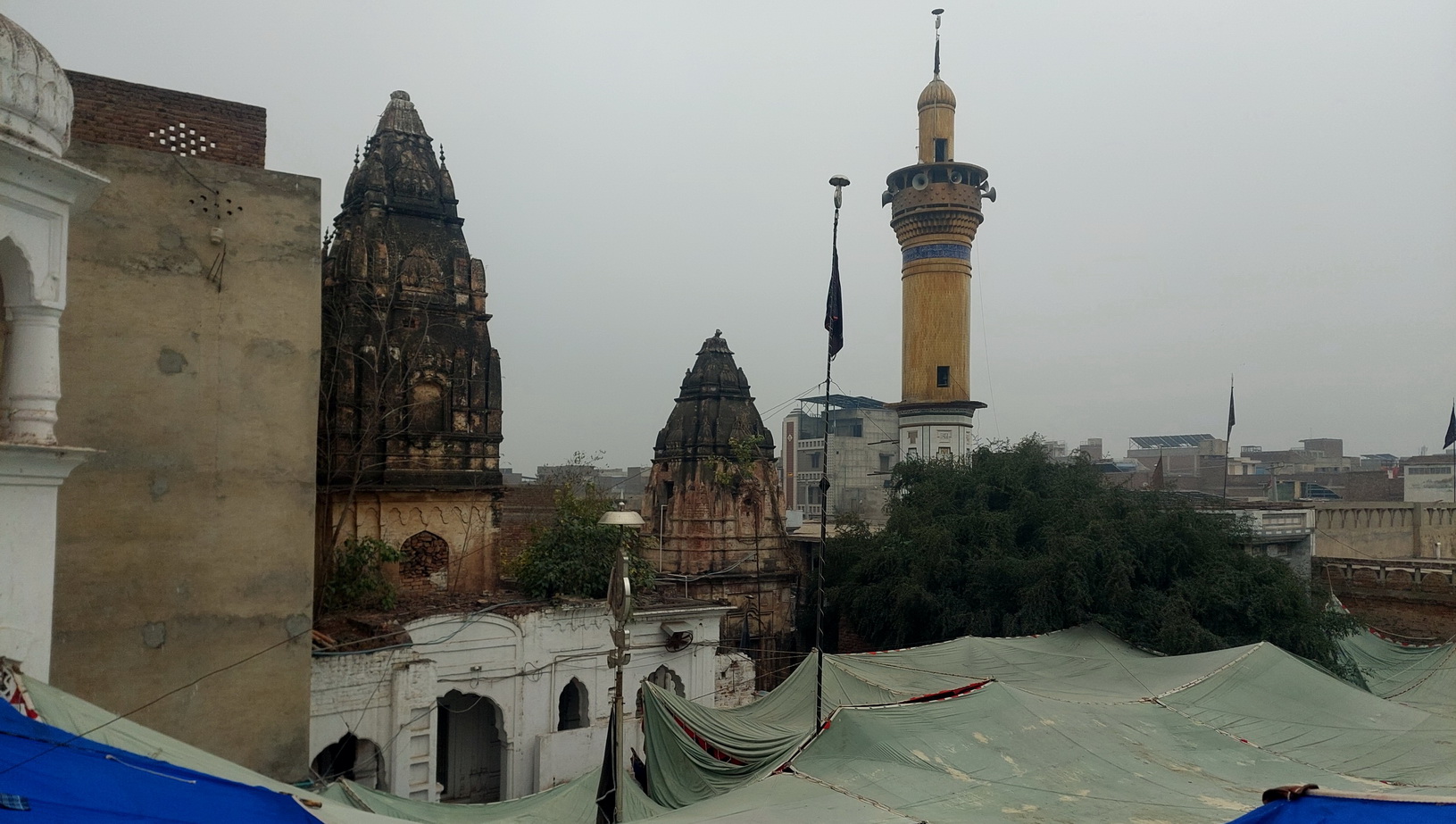
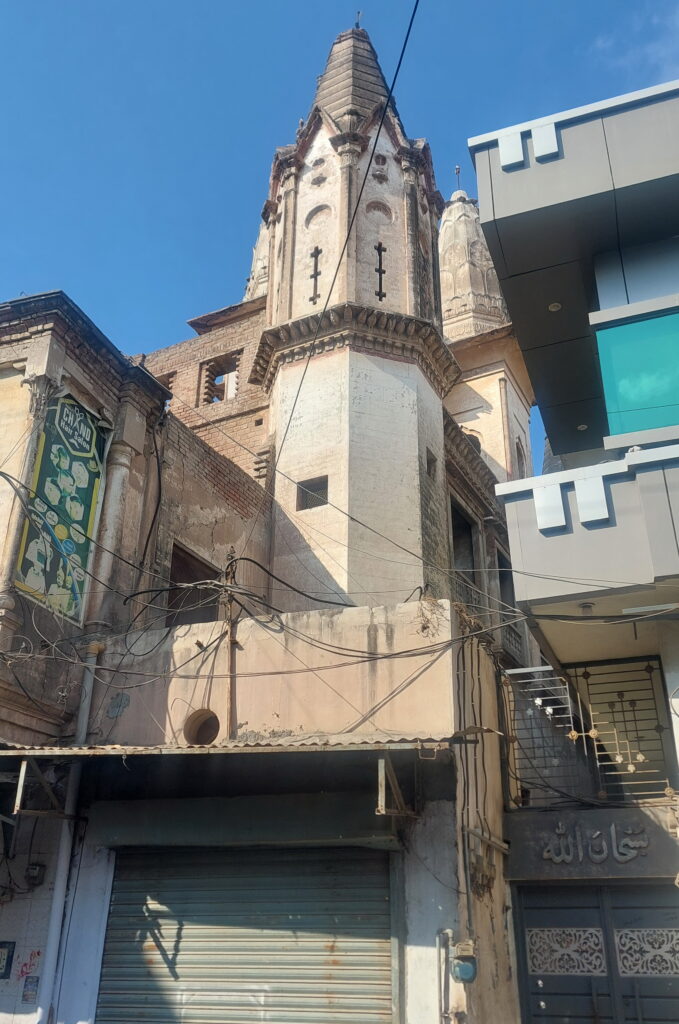
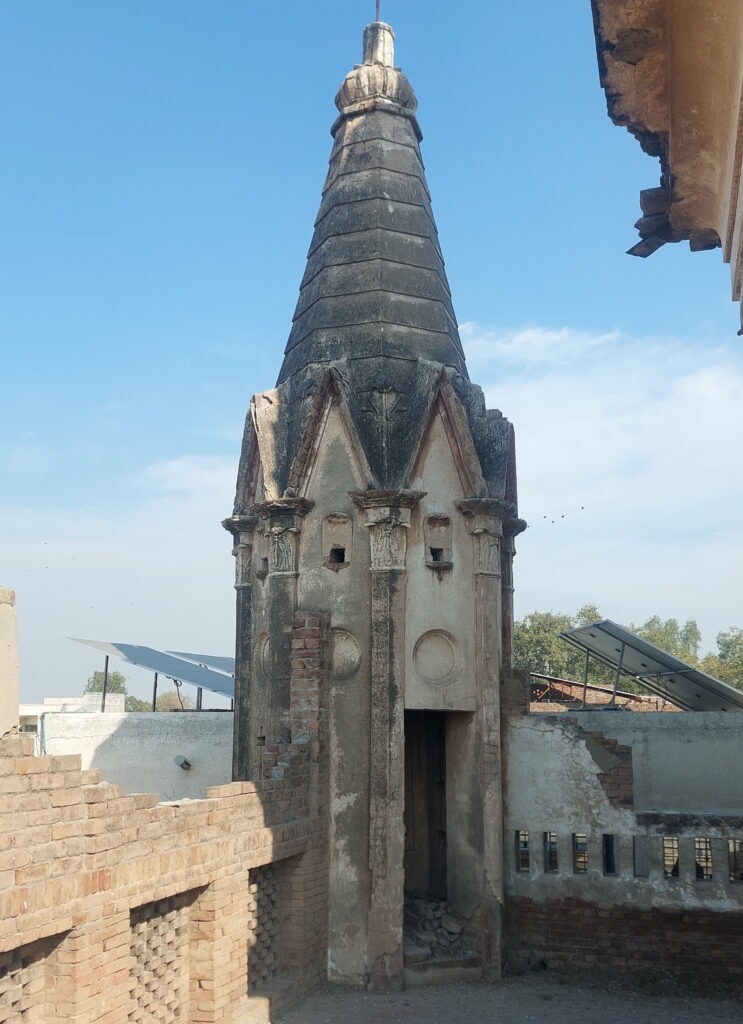
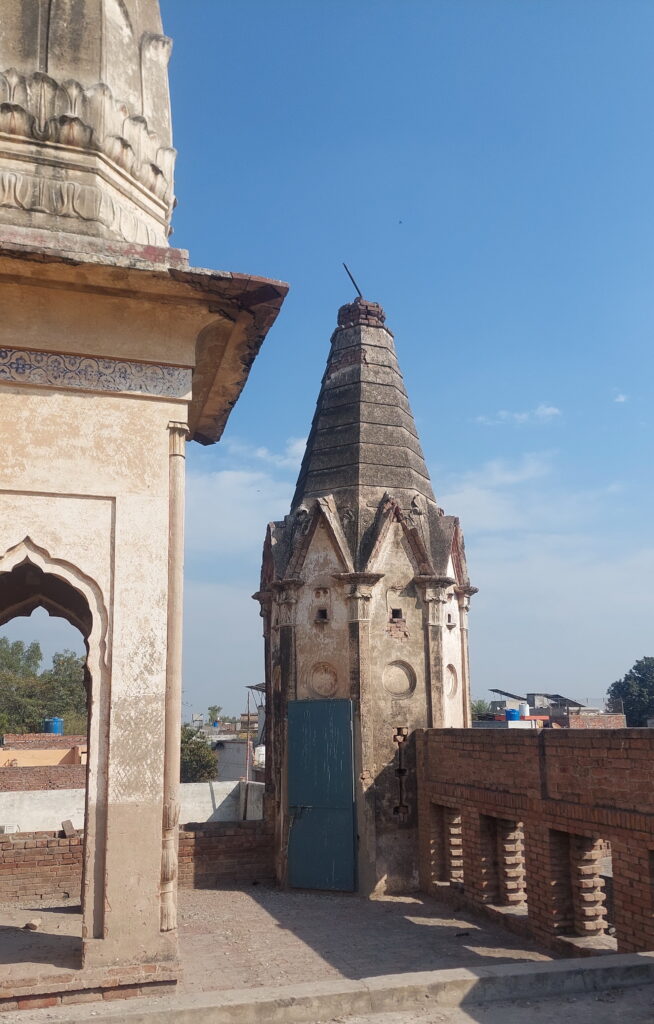
Its most prominent feature is the tall central shikhara, rising in a curving form above the sanctum, surrounded by smaller spires that create a balanced and graceful skyline. The upper structure is richly modelled with mouldings and niches, while the lower portion is comparatively simple and appears to have been altered later, as seen in the red-painted façade. The use of arched openings and subtle decorative elements reflects a blend of traditional Hindu design with local influences. Despite some damage and weathering, the temple still retains its strong vertical character and architectural beauty.
Demographics of Chiniot:
It would be interesting and pertinent to share the demographics of Chiniot, particularly before independence, when the city was religiously much more diverse. While Muslims formed an overwhelming majority in the district and tehsil as a whole, the city itself had a large Hindu majority.
| Population According to the Census of 1941 | |||||||
| Total | Muslims | % | Hindus | % | Sikhs | % | |
| Jhang District | 821,631 | 678,736 | 82.61 | 129,889 | 15.81 | 12,238 | 1.49 |
| Chiniot Tehsil | 324,945 | 259,320 | 79.80 | 57,968 | 17.84 | 7,564 | 2.33 |
| Chiniot City | 34,437 | 11,158 | 32.40 | 23,050 | 66.93 | 58 | 0.17 |
It was good to see the temple in good condition. I hope the same care will be taken in the future, and that one day it will be declared a heritage building and preserved for posterity. Such historic structures are an important reminder of the region’s rich and diverse cultural past.
Tariq Amir
April 5, 2026.
Islamabad
Your message has been sent