
143. Monuments of the Gandhara Civilization at Taxila – 03 (Pipplan)
I am continuing with writing about the monuments at Taxila. This is the fourth in the series and is about a site at Pipplan. It is less than a kilometer from Jaulian,at 33°45’56.4″N, 72°51’57.4″E, is another important site, known as Pipplan. The remains at Pipplan belong to two eras. To the East is a monastery…
142. Monuments of the Gandhara Civilization at Taxila – 02 (Mohra Moradu)
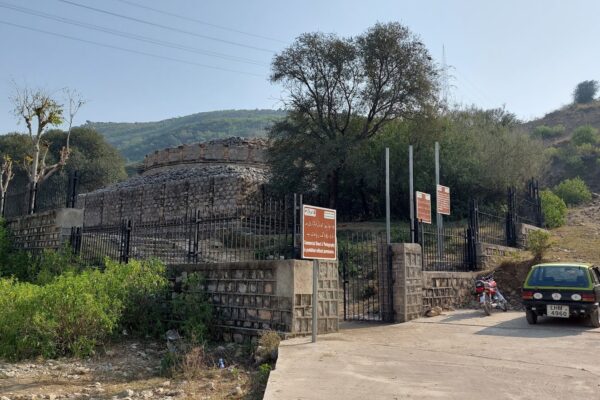
As we noted in the previous post, the Taxila area is dotted with almost two dozen monuments of the Gandhara Civilization. One of them, Mohra Moradu, named after a small nearby village, is located at 33°45’39.1″N, 72°51’39.4″E. It is a well-preserved site and one of the most important in the area. It stands on a…
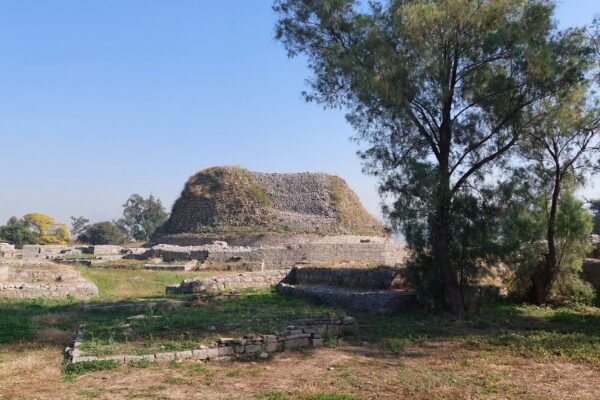
141. Monuments of the Gandhara Civilization at Taxila – 01 (Dharmarajika)
In my previous post “Taxila Museum: Treasure Trove of the Gandhara Civilization”, I gave a brief introduction to the Gandhara Civilization and took you on a tour of the Taxila Museum. This remarkable civilization flourished for almost a thousand years, from the 6th century BC to the mid-5th century AD. Alexander’s invasion of the region…
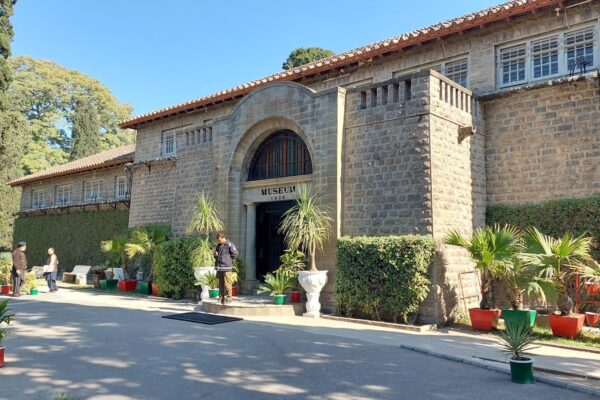
140. Taxila Museum: Treasure Trove of the Gandhara Civilization
Pakistan is home to some of the earliest civilizations in human history. Indus valley civilization is contemporary to Egyptian and Mesopotamian civilizations. Tens of sites, related to the Indus Valley Civilization, have been excavated or identified. Its two big centres are Harappa in Punjab and Mohenjodaro in Sindh. This great civilization flourished for two thousand…
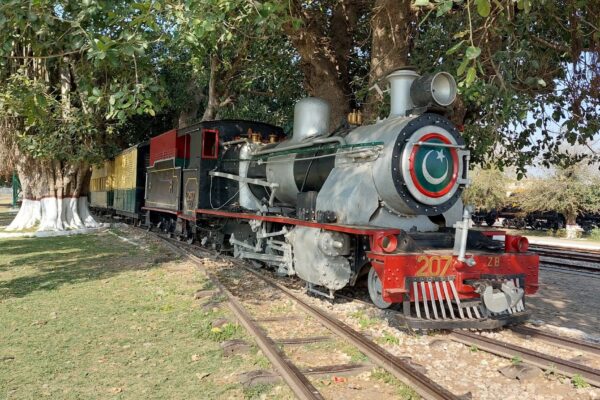
139. Golra Railway Station and Museum, Islamabad.
The Industrial Revolution, which started in England in the late eighteenth century, is a fascinating episode in human history. Within a few decades, it caused more changes in the world than had been witnessed in the previous many centuries, or perhaps even millennia. Many new machines were invented during the next half-century. Among the most…
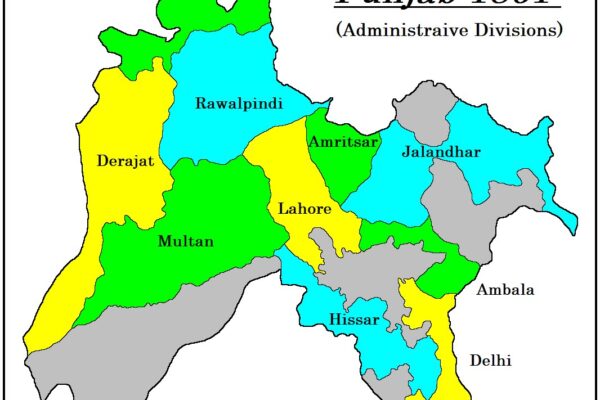
138. Delhi: When it was a district of Punjab
For some readers, this title would be intriguing. After all what Delhi, the capital of India for many centuries, has to do with Punjab. Moreover, in the popular imagination, Delhi and Punjab do not have much common in language and culture (that’s too is a misconception). But there is one close connection, which I would…
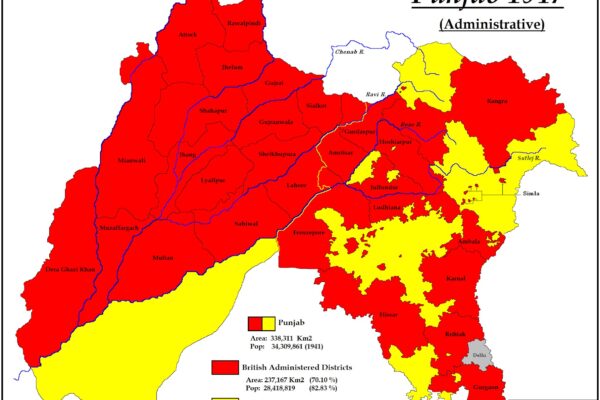
137. The Princely States of Punjab
The English reached the shores of India in 1608 at Surat. In 1612, the East India Company’s representatives met Emperor Jahangir and signed a commercial treaty. Gradually, they established “factories” (trading posts) at many places along the lengthy coast of India. For the next century, the British confined their activities to trade. However, by…
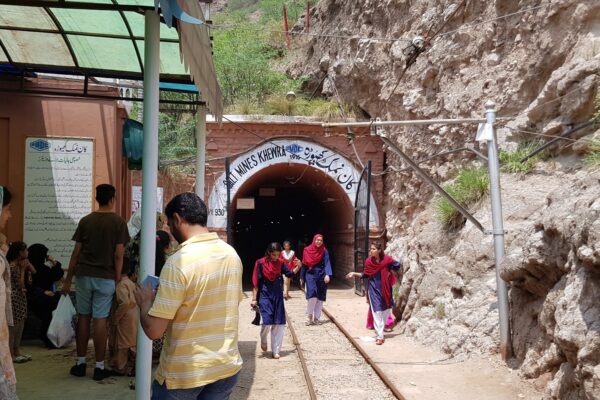
136. Khewra Salt Mines, District Jhelum, Pakistan!
Khewra is a town in the district of Jhelum, about five kilometers north of Pind Dadan Khan, at the foot of the Salt Range, or Kohistan-e-Namak as it is called in Urdu, i.e., “Land of Salt Mountains.” Whoever gave it this name could not have chosen a better one, because salt is found at dozens,…
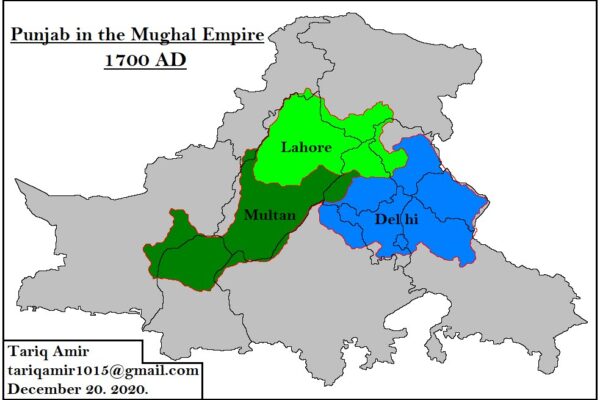
135. Everchanging Borders of Punjab (Historical Geography of Punjab)!
Punjab is a historically significant region in northern India, also known as Hindustan. The term Punjab, meaning “land of five rivers” in Persian, came into common use after the Muslim conquest of the region. Its natural boundaries are generally considered to be the Indus River in the west, the Yamuna River in the east, the…
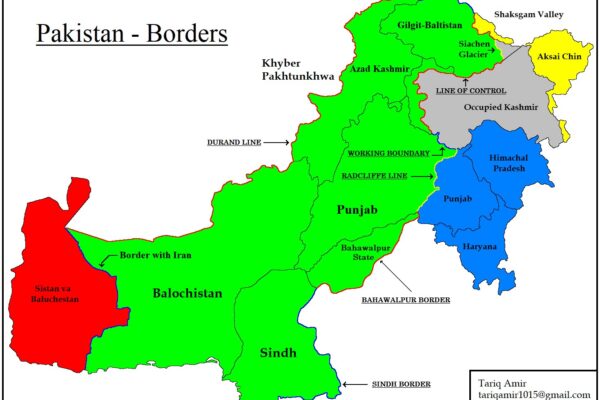
134. Borders of Pakistan
It is common knowledge that the state of Pakistan came into existence on 14 August 1947, following a long political struggle. Its creation was based on the two-nation theory, and on this principle, British India was divided into two separate countries. But have you ever wondered how and when the borders of this new state…