168. Ahmad Shah Abdali’s Ten Invasions of Punjab / North India!
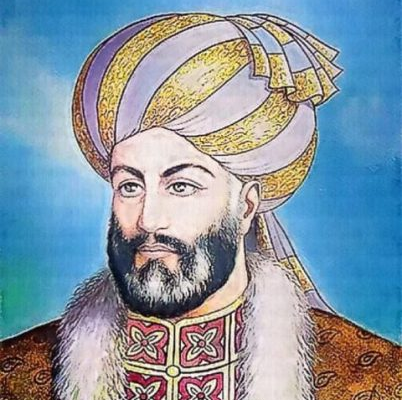
Ahmad Shah Abdali was a famous king of Afghanistan in the 18th century. He is considered the founder of modern Afghanistan and for Afghans, he is a national hero. Even in Pakistani mythology, he stands on a high pedestal. Though I am not sure why. After all, we the inhabitants of this region were at…
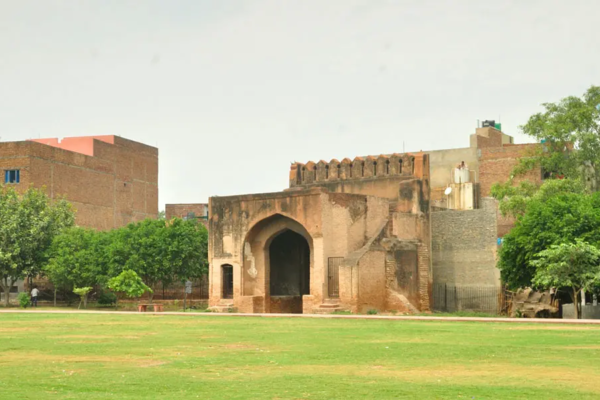
167. The Grand Trunk Road aka The Kings Road: Delhi To Kabul!
The Grand Trunk Road, running from Kabul in the rugged Hindu Kush mountains to Sonargaon in the verdant plains of Bengal, is definitely among the most famous highways in the world, if not the most famous. Let me add here that several termination points of this great thoroughfare are given in Bengal, including Teknaf. It…
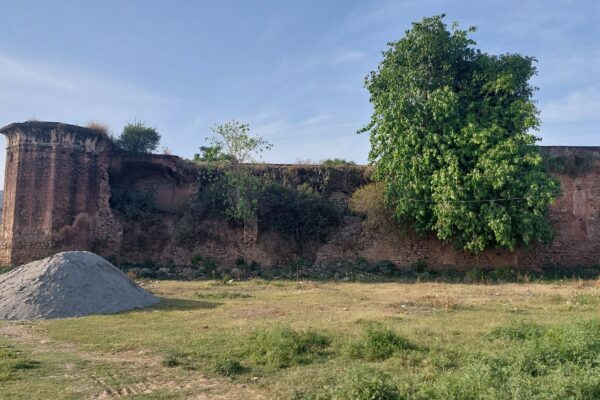
166. Sarai Kharbuza, Islamabad.
Islamabad is the newest city in Pakistan, but the history of this region is very old. Once it was part of the great Gandhara civilization, and some ruins dating back to that period are still found in the Margalla Hills. Many more historic buildings from later periods also exist in different parts of the capital…
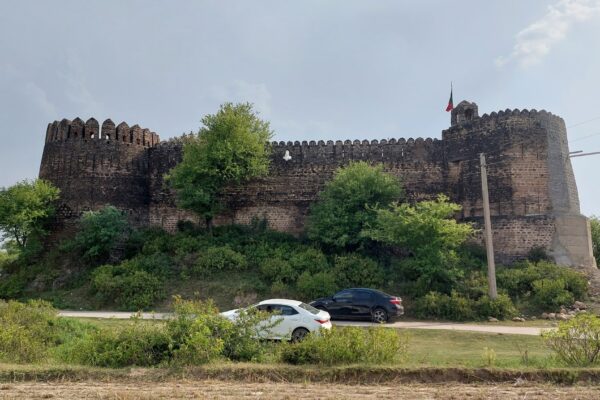
165. Sangni Fort, district Rawalpindi.
Sangni is a small fort located about 60 kilometers east of Islamabad and 10 km from Kallar Syedan in the district Rawalpindi, at 33°22’18.10″N, 73°27’0.38″E. Despite being several centuries old, it is in remarkably good condition. Who built it and when is not known; in fact, almost nothing is known about its history. Some writers…

164. Gurdwara Kanoha, district Rawalpindi!
Kanoha is 50 kilometers from Islamabad, near Kallar Syedan. It is a small village with a scattered population, possessing all the charm and beauty of the Potohar region. Besides that, the only significant feature of this place is an old and abandoned gurdwara. It is not a historic gurdwara in the sense that it is…
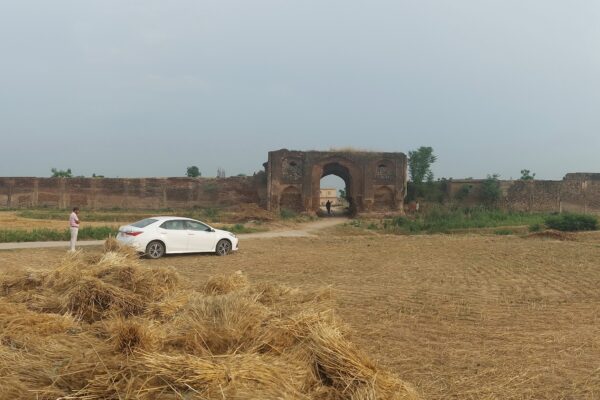
163. Serai Pakka, Khanpur, tehsil Gujar Khan!
Serais were normally constructed along the main highways. These fortified, fort-like buildings were large enough to accommodate entire caravans and provided various facilities for travellers. Their primary purpose was to offer a safe and secure place for caravans to rest at night. Serais were usually located at intervals of 25 to 30 kilometers. Unfortunately, only…

162. Shah Bagh Baoli, district Rawalpindi.
Baolis are stepwells that once dotted the entire length and breadth of the Indian subcontinent, especially along the main highways. A large number of them still exist, and many are architectural marvels. In Pakistan, too, several have been preserved and remain in good condition. Unfortunately, however, the vast majority are utterly neglected and either lost…
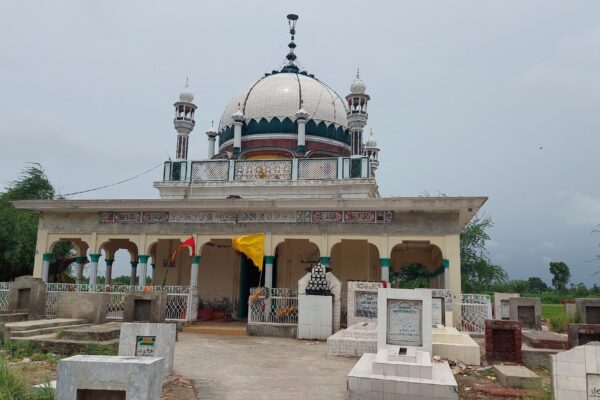
161. Tipu Sultan, the Lion of Mysore: His family origins in Punjab
A few years ago, I came across a very interesting piece of information about Tipu Sultan, the legendary ruler of Mysore. The writer claimed that the ancestors of Tipu Sultan had moved to the Deccan from Punjab. But neither the details nor the source of this information was given, nor did the writer mention the…
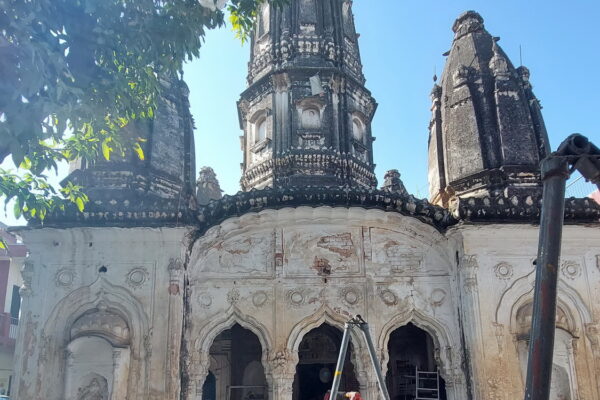
160. Temple of Kalyan Das Suri, Rawalpindi.
Before independence and the partition of the country in 1947, Hindus formed nearly one-third of the population of Rawalpindi city. They were an influential community and constructed many beautiful houses, several of which still survive today. These buildings remind us of the multi-religious character of the city in the past, as well as the rich…
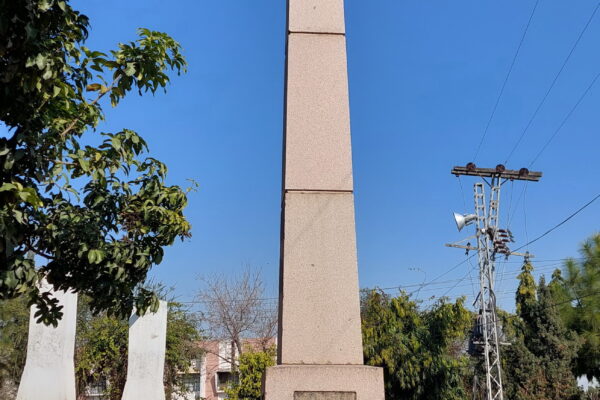
159. Lockhart Memorial, Rawalpindi.
Rawalpindi was an important military station during the British Raj, due to its proximity to the north-western frontier and as the headquarters of the Northern Command of the British Indian Army. After the defeat of the Khalsa Raj in 1849, this area came under British rule. Following independence, the city was made the General Headquarters…